Node-RED for the automations YAML couldn't handle
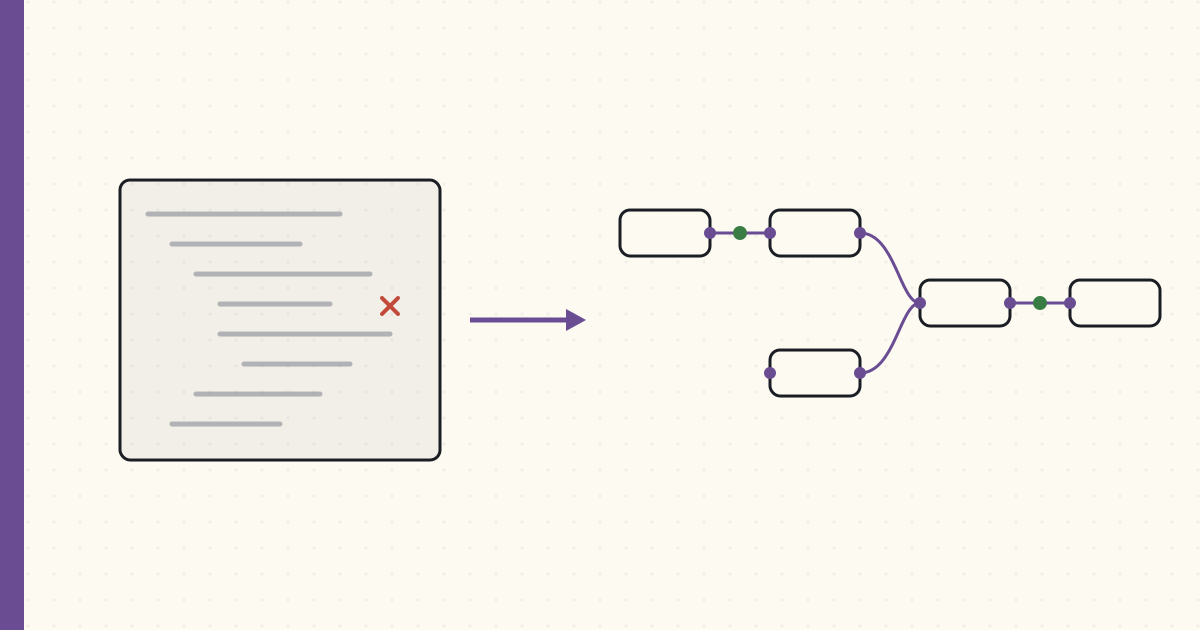
The day-job calendar is full (the connected medical device is eating Q1), so this is a quick one — but it solves the problem I flagged at year-end: the automations had outgrown YAML.
The problem with YAML automations
Home Assistant's YAML is great for "when X, do Y." It's miserable for "when X, if the house has been empty for 10 minutes and it's after sunset and nobody's phone is home, then arm — unless the guest mode flag is set."
My presence-arming automation had become a 60-line nested condition: block with three input_boolean helpers standing in for state I couldn't express cleanly. I stopped trusting it. When you're afraid to edit your own alarm logic, the tool is wrong.
Node-RED — flows you can watch
Node-RED is a flow-based programming tool — drag nodes, wire them together, watch messages move through in real time. It runs as a Home Assistant add-on now (Hass.io made this a one-click install), talks to HA over a websocket, and gives stateful automations a visual debugger.
The presence-arming logic, rebuilt as a flow:
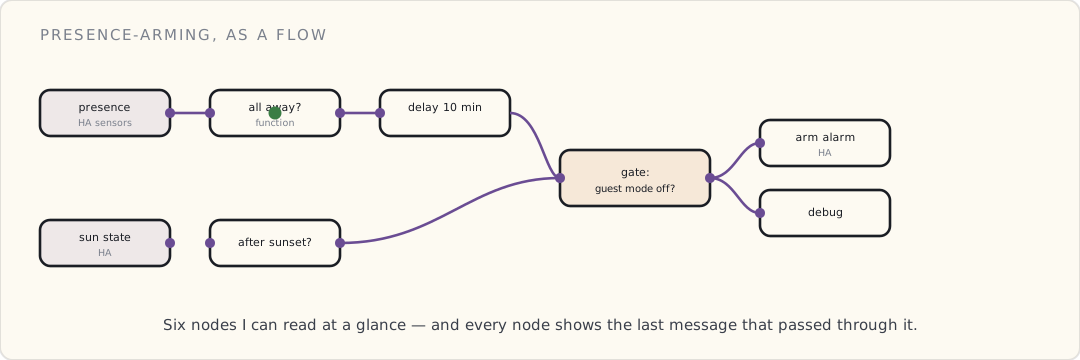
Every node shows its last message. When the alarm arms (or doesn't), I can see exactly which branch fired. The 60-line YAML template became six nodes I can read at a glance.
MQTT — the house's event bus
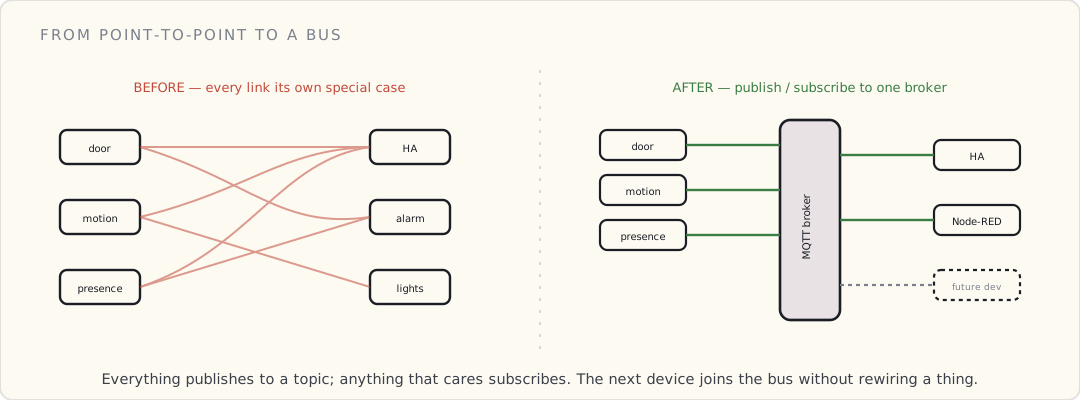
The bigger shift: I stood up an MQTT broker (Mosquitto, also a Hass.io add-on) and started routing events through it instead of wiring every device directly to every automation.
Before: SmartThings → HA → automation → device. Point to point. Every integration its own special case.
After: everything publishes to topics. A door sensor publishes home/frontdoor/contact → open. Anything that cares subscribes. Home Assistant subscribes. Node-RED subscribes. A future device I haven't bought yet can subscribe without me rewiring anything.
mosquitto_sub -t 'home/#' -v

home/frontdoor/contact open
home/presence/luke home
home/livingroom/motion detected
home/alarm/state disarmed
That home/# wildcard — watching every event in the house scroll past one terminal — is the first time the system felt like a system instead of a pile of rules.
Why this matters beyond convenience
The event-bus pattern is the same one I'm building professionally right now for a fleet of connected devices: devices publish telemetry to a broker, services subscribe, nobody's hard-wired to anybody. Doing it at home on Mosquitto and doing it at work on a managed broker are the same architecture at different scales. The house is a free testbed for the day job's patterns.
What I'd tell past-me
- Reach for Node-RED the moment an automation needs memory. Stateless → YAML. Stateful → flows.
- Stand up MQTT earlier than you think you need it. Retrofitting point-to-point integrations onto a bus is annoying; starting on the bus is free.
- Keep the YAML for the simple stuff. Not everything needs a flow. "Sunset → porch light on" is one line of YAML and should stay there.
What's next
The Zigbee radios are still trapped on the SmartThings hub. Getting them onto a coordinator I control — and onto this MQTT bus — is the project I keep deferring. Maybe before the day job swallows Q3.