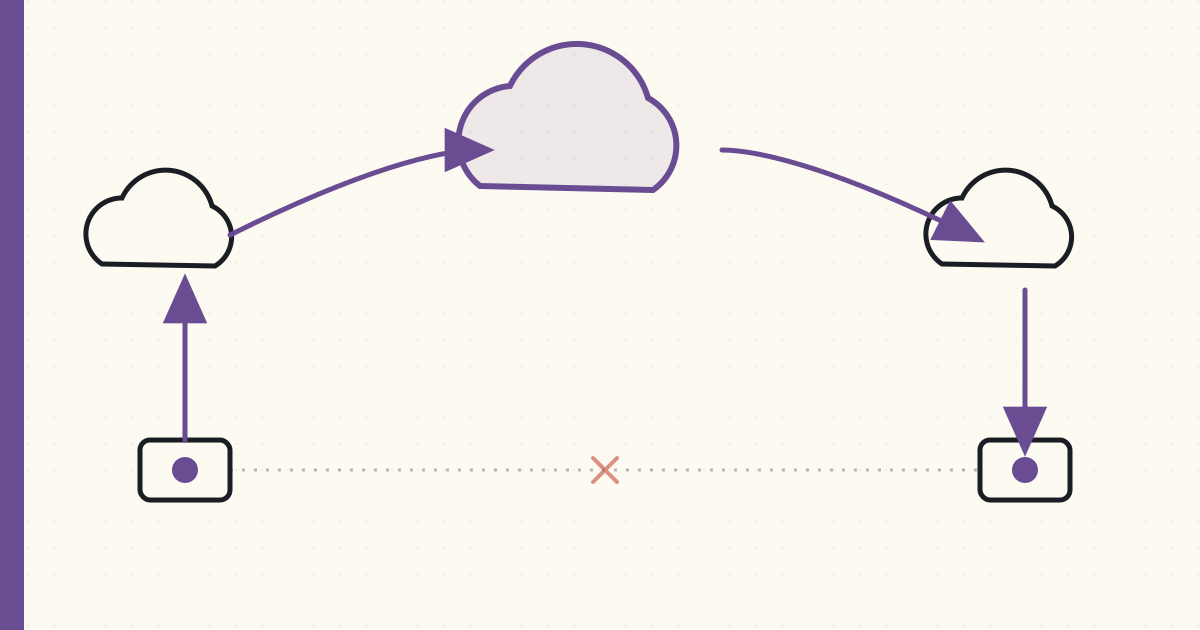
IFTTT — first cross-vendor automation attempt
IFTTT (If This Then That) launched in 2011 with Gmail as one of the original channels. They added channels for Philips Hue and Belkin Wemo this year — that's the cross-vendor unification I've been waiting for. A few months in — here's what I've built and what's broken.
How IFTTT actually works
IFTTT runs as a web service. Each "channel" (a vendor integration) is implemented on IFTTT's servers using whatever API the vendor exposes:
- Hue channel: IFTTT registered as an OAuth client with Philips's Meethue cloud. When the user authorizes Hue → IFTTT, IFTTT gets a token to call the Meethue API on the user's behalf. Commands route through Philips cloud → bridge → bulbs.
- Wemo channel: IFTTT calls a Belkin cloud endpoint that mirrors the local SOAP API. Belkin's cloud holds a persistent connection to the plug.
- Gmail channel: IFTTT polls Gmail via IMAP for new messages matching a filter.
An IFTTT "Recipe" is a {trigger, action} pair:
TRIGGER: New email arriving in Gmail with label "package-delivered"
ACTION:  Hue → blink "Living Room" three times
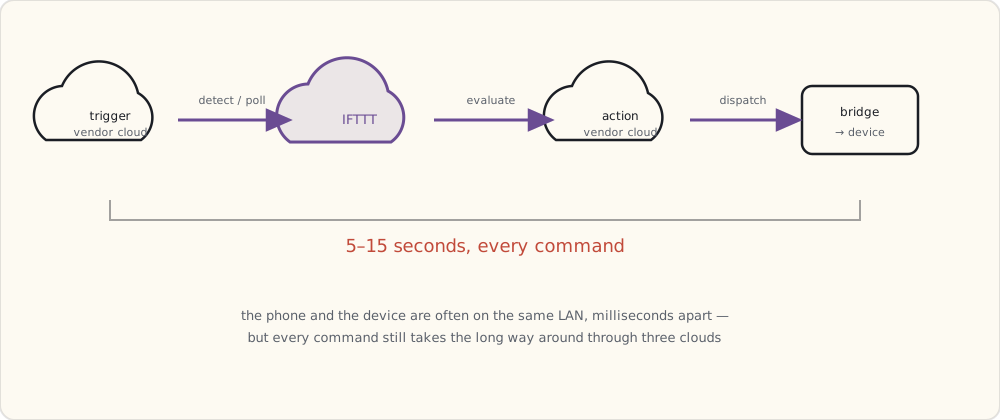
When the trigger fires, IFTTT calls the action's API. End-to-end latency: poll Gmail (~1 min), match filter, dispatch action, action vendor's cloud, action vendor's bridge/cloud, action device. Total: 60-180 seconds for email triggers, 5-15 seconds for instant-trigger Recipes.
Three working Recipes
1. Weather → porch light on at sunset (Hue)
Replaces my Python cron job. IFTTT's "Weather" channel triggers at sunset for my zip code.
IF (Weather: Sunset for 02139)
THEN (Philips Hue: Turn "Porch" on, brightness 200, color "warm")
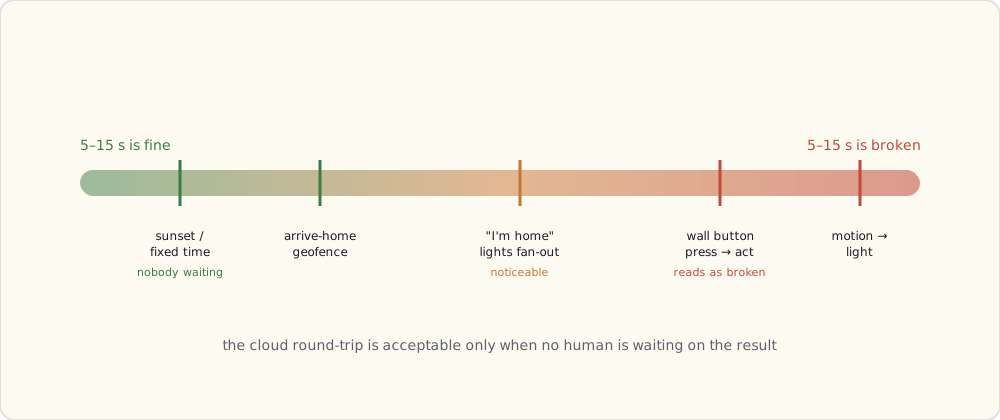
Latency: 1-3 minutes after actual sunset. Acceptable for a porch light.
2. Weekday alarm time → Wemo coffee plug on
There's no physical button I can wire into IFTTT yet — Hue has no switch accessory, and IFTTT has no "button" trigger — so the closest thing to "start the coffee on my way out of bed" is a time trigger. The Date & Time channel fires at a fixed weekday time and flips the Wemo coffee plug.
IF (Date & Time: Every day at 06:30 on weekdays)
THEN (WeMo Switch: Turn "Coffee Maker" on)
Latency: 5-15 seconds from the scheduled minute to the plug actually clicking. For a fixed-time trigger it doesn't matter — but it's a preview of why this won't work for anything I want to feel instant. A rigid clock is a poor substitute for "when I actually get up," and there's no way today to make that the trigger.
3. iPhone geofence → multi-device "I'm home"
iPhone GPS geofence (via IFTTT iOS app) → fan-out to Hue (3 bulbs) and Wemo (1 plug). Implementation: two separate Recipes because IFTTT doesn't support multi-action triggers yet.
Recipe A:
IF (iOS Location: Enter area "Home")
THEN (Philips Hue: Turn "Living Room" on, brightness 200)

Recipe B (same trigger, second action — IFTTT doesn't fan-out, so two Recipes):
IF (iOS Location: Enter area "Home")
THEN (WeMo Switch: Turn "Hallway Lamp" on)
Latency: 30-60 seconds for the geofence to fire, then 5-15 s per device. Total: a minute before the lights are actually on.
What's broken
Latency. A 5-15 second delay is invisible on a sunset or a fixed-time trigger and intolerable on anything I'd want to feel immediate. The router-LAN ping to both endpoints is < 5 ms; IFTTT inserts 5-15 seconds of internet round-tripping on top. The day I want a real button — press, and the thing happens now — this architecture can't deliver it.
Reliability. IFTTT misses about 5-10% of triggers in my logs. The Hue trigger side is polled, not pushed — the cloud checks bridge state only every so often, so a fast-changing condition can slip through the gap and never fire. Wemo's cloud has nightly maintenance windows where Recipes silently no-op.
No conditionals. A 2013 Recipe is one trigger and one action. No if it's already on, skip. No between sunset and 11 pm. No unless I'm not home. Chaining Recipes is brittle and hard to debug.
No native scene support. I can turn one Hue bulb on through the Hue channel, but there's no action for "recall a Hue scene" — so a multi-bulb scene means one Recipe per bulb, and they fire raggedly one after another instead of snapping on together.
What this tells me about the unifier
IFTTT works. IFTTT is not the unifier. The latency floor (5-15s cross-vendor) is too high for "real" smart-home use; it's fine only for time-based or location-based automations where seconds don't matter.
The real unifier needs to:
- Run locally (no cloud round-trip for cross-vendor commands).
- Speak multiple protocols natively (Zigbee, Z-Wave, WiFi — at minimum).
- Allow conditional logic and scenes.
- Survive vendor cloud outages.
That's a hub. SmartThings is the only thing shipping that close to this spec in 2013, and even they haven't shipped to the general public yet (Kickstarter backers got units this summer; retail availability is pending Samsung's acquisition).
I'll wait until next year.
What's next
End-of-year wrap-up coming. Three vendors, three apps, one annoyed homeowner. Predicting how 2014 plays out.