Water leak sensors + automatic shutoff
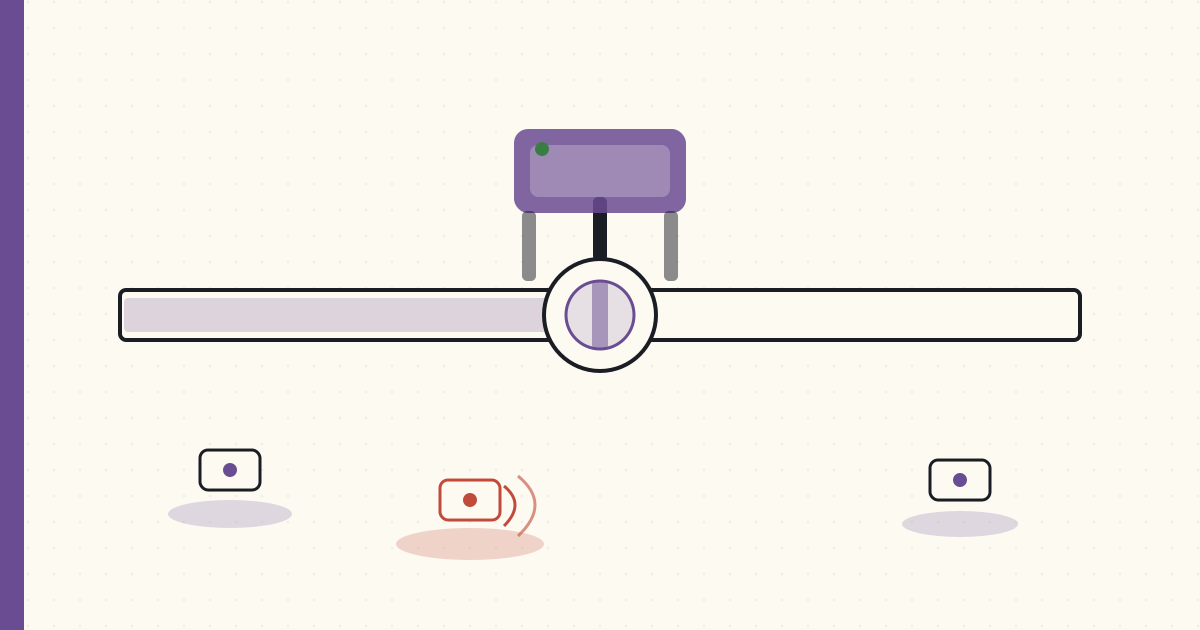
Five water leak sensors. One motorized actuator clamped over the main shutoff valve. A screwdriver, no plumber. The house can now shut its own water off when something leaks — and shut it off fast enough to matter.
The hardware
Leak sensors (5×):
- Aeotec Water Sensor 6 — Z-Wave Plus, CR123A battery (claimed ~2-year life on default settings), four sensing points, detects as little as half a millimetre of water and reports within a couple of seconds. It also has a built-in 60 dB siren, which matters more than I expected — see below.
- ~$35 each. $175 total.
Main-water shutoff:
- Dome Home Automation Water Main Shut-Off (DMWV1) — Z-Wave Plus. This is the part that surprised me. It's not a valve you plumb in; it's a motorized actuator that clamps over your existing quarter-turn ball valve and physically turns it. Works on any standard ball valve up to 1½", mounts with two pipe clamps and a screwdriver, no cutting, no soldering, no draining the system.
- $100.
Install:
- Forty-five minutes with a screwdriver and a level. The actuator straddles the existing valve's lever; you set the open and closed end-stops once during pairing and it remembers them.
- $0 — no plumber. That clamp-on design is the whole reason this project went from "schedule a plumber" to "do it Saturday morning."
Total: ~$275. Worth keeping that number in mind against what a single water-damage claim runs.
Sensor placement
Where I put them and why:
- Basement floor near the water heater. The water heater is the most-likely-to-fail item in the house. Tanks corrode through. Pinhole leaks turn into flooded basements overnight.
- Laundry room behind the washer. Hoses degrade. The braided stainless ones I have are rated for 5 years; I've had them for 7. (Replacing them is on the list.)
- Under the dishwasher. Dishwashers leak around the inlet valve solenoid. Sensor sits right under the door area.
- Under the master bath vanity. P-trap, supply lines, shutoff valves — three failure points within 18 inches of each other.
- Under the half-bath vanity downstairs. Same.
That covers ~90% of the residential water-leak failure modes. Anything happening in a wall (slab leak, freeze-burst inside framing) is invisible to floor-mounted sensors — that's why the main-valve shutoff is critical: it stops a wall-leak the floor sensors never saw, because closing the main cuts pressure to everything.
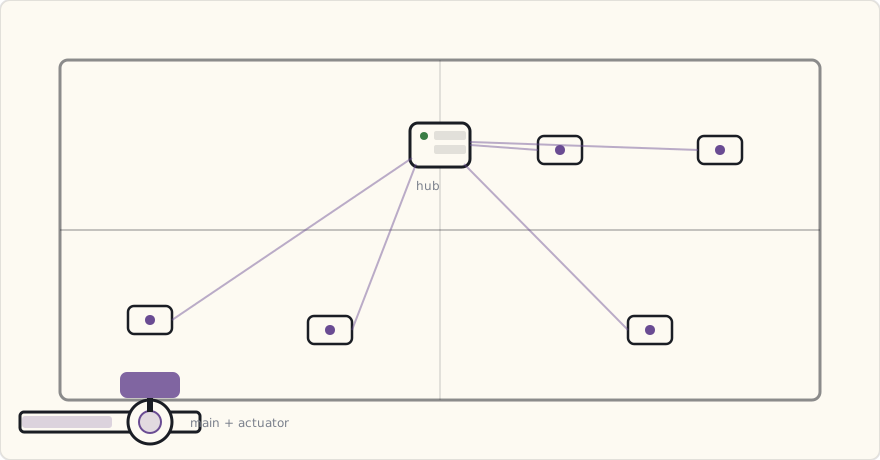
One thing I underrated: the Aeotec's onboard 60 dB siren. The valve closing is silent, and a push notification is easy to miss in another room. The local siren is what actually gets someone's feet moving toward the basement. I leave it enabled on every sensor.
The automation
- alias: "Water leak detected — shut off main"
  description: "Any sensor reports water → close main valve + notify"
  trigger:
    - platform: state
      entity_id:
        - binary_sensor.water_leak_basement
        - binary_sensor.water_leak_laundry
        - binary_sensor.water_leak_dishwasher
        - binary_sensor.water_leak_master_bath
        - binary_sensor.water_leak_half_bath
      to: "on"
  action:
    - service: switch.turn_off
      data:
        entity_id: switch.main_water_valve  # the Dome actuator, "off" = valve closed
    - service: notify.ios_luke_iphone
      data:
        title: "🚰 LEAK + MAIN VALVE CLOSED"
        message: >
          {{ trigger.to_state.attributes.friendly_name }} at
          {{ now().strftime('%H:%M') }}. Main water shut.
        data:
          push:
            sound: "default"
            badge: 1
          category: "leak"
    - service: notify.ios_wife_iphone
      data:
        title: "🚰 LEAK + MAIN VALVE CLOSED"
        message: >
          {{ trigger.to_state.attributes.friendly_name }}. Main water shut.
    - service: light.turn_on
      data:
        entity_id: group.all_indoor_lights
        rgb_color: [255, 0, 0]   # all lights red
        brightness: 255
    - service: persistent_notification.create
      data:
        title: "💧 Leak event"
        message: >
          Sensor: {{ trigger.to_state.attributes.friendly_name }}.
          Time: {{ now() }}.
          Action taken: main water shut off; lights red.
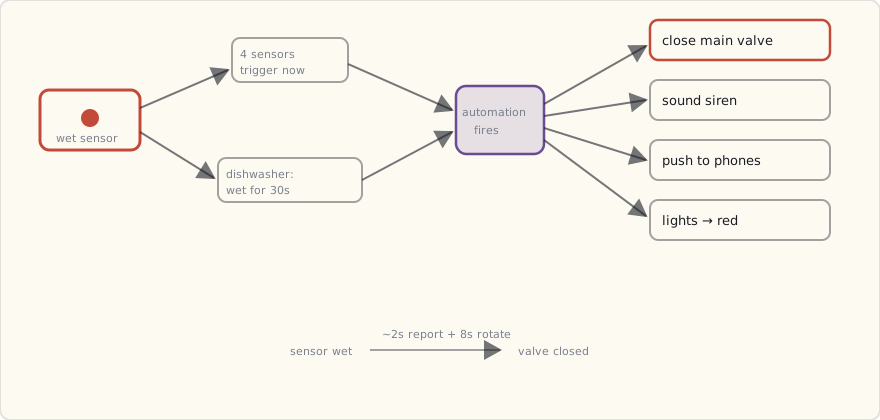
End-to-end latency from sensor wet to valve fully closed: about 10 seconds. The sensor reports within a couple of seconds, the automation fires instantly, and then the slow part is mechanical — the Dome actuator drives the ball-valve lever through its 90° arc in roughly eight seconds. That's the trade for a clamp-on actuator versus a plumbed-in motorized valve: it's torquing a stiff manual lever, not spinning a purpose-built motor, so it's deliberate rather than fast. Ten seconds is still orders of magnitude faster than "nobody's home for the weekend."
The "we just turned the dishwasher on" false-positive problem
The dishwasher inlet, when running, sometimes drips a few drops onto the sensor. Initial deployment fired the leak automation twice in the first week — both times during normal dishwasher runs.
Fix: the dishwasher sensor reports only after the same sensor reports wet for 30 continuous seconds. Brief moisture (a drop or two) doesn't trigger; a continuous flow does. YAML:
- alias: "Water leak — debounced"
  trigger:
    - platform: state
      entity_id: binary_sensor.water_leak_dishwasher
      to: "on"
      for: "00:00:30"
  # ... rest of action ...
The 30-second debounce is unique to the dishwasher sensor; the other four trigger immediately because their false-positive risk is much lower. A basement floor next to the water heater either is wet or isn't.
What about the "valve closed when I want water" problem?
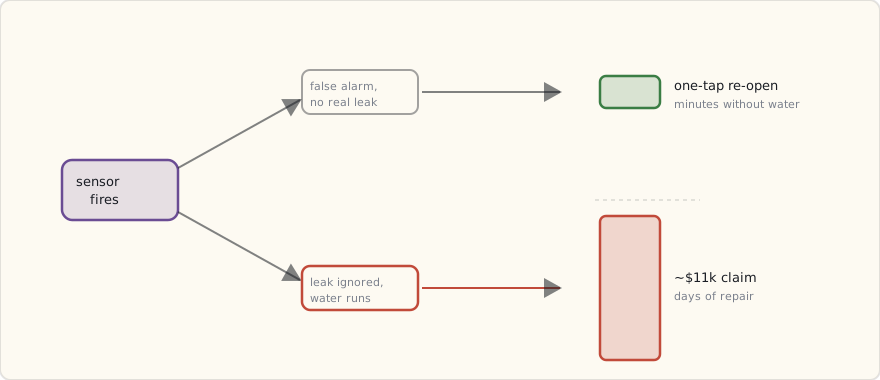
The main valve closed automation runs even if I'm home. Which means: someone is washing dishes, the dishwasher leaks, valve shuts, all water in the house stops.
The recovery flow:
- Push notification arrives on both phones.
- Tap "investigate" link — opens HA dashboard showing the sensor that triggered.
- Manually inspect the leak. Fix or contain.
- From the HA dashboard, tap "Open main valve."
- Actuator drives the lever back open (about eight seconds), water flows again.
This is exactly the friction I want. The default is "shut things down and ask questions later"; the recovery is one tap from a phone. The Insurance Information Institute puts the average non-weather water claim around $11,000 — I'll happily walk to the basement to re-open a valve to never file one of those.
The whole design comes down to which failure you'd rather have, and the two are not symmetric: a false shutoff costs you a one-tap re-open, while a missed leak costs a five-figure claim. When the downside of one branch is a minor annoyance and the downside of the other is the basement, you bias hard toward shutting off.
What's next
- The other major leak risk: refrigerator water line. Ice maker + filtered water dispenser. Adding a sensor behind the fridge this weekend.
- The hot water heater itself. I have a sensor next to it; I don't yet have an "interior temperature" sensor that would catch a burst pipe inside the heater jacket. Putting that on the list.
- A drain backup sensor. I have a sump pump in the basement; if the sump backs up because the float switch dies, I'd like to know. A sensor in the sump pit would catch the rising water before it reaches the floor.
- Eventually: a flow meter on the main inlet. Detecting "any flow lasting more than 2 hours" would catch slow leaks the threshold-sensors miss. The Flo by Moen device does this. Pricey ($300) but interesting.
What this changes about the smart-home math
Water-leak shutoff is the first piece of smart-home automation where the insurance value clearly exceeds the cost. Every other piece (security, convenience, scenes) is a quality-of-life argument. This one is an insurance argument.
If I had to recommend one piece of smart-home automation to a non-enthusiast, this is now it. Not the bulbs. Not the voice assistant. The leak detection + main valve shutoff.