Z-Wave vs Zigbee vs WiFi — a year on SmartThings
A year with all three radio protocols running in the same house. The SmartThings hub carries Z-Wave + Zigbee HA; the Hue bridge carries Zigbee Light Link separately; Wemo plugs and a new LIFX bulb hang off WiFi. Time for a proper comparison.
The three at a glance
| Protocol | Band | Topology | Practical range | Power | Throughput |
|---|---|---|---|---|---|
| Z-Wave Plus 500-series | 908.4 MHz (US) | Mesh | 30 m / wall | Sleep-friendly, years on coin cell | ~40 kbps |
| Zigbee HA / ZLL | 2.4 GHz | Mesh | 10-15 m / wall | Sleep-friendly | ~250 kbps |
| WiFi 802.11n | 2.4 GHz / 5 GHz | Star (router) | 30 m / wall | Always-on, no sleep | 50+ Mbps |
The 908 MHz advantage Z-Wave has
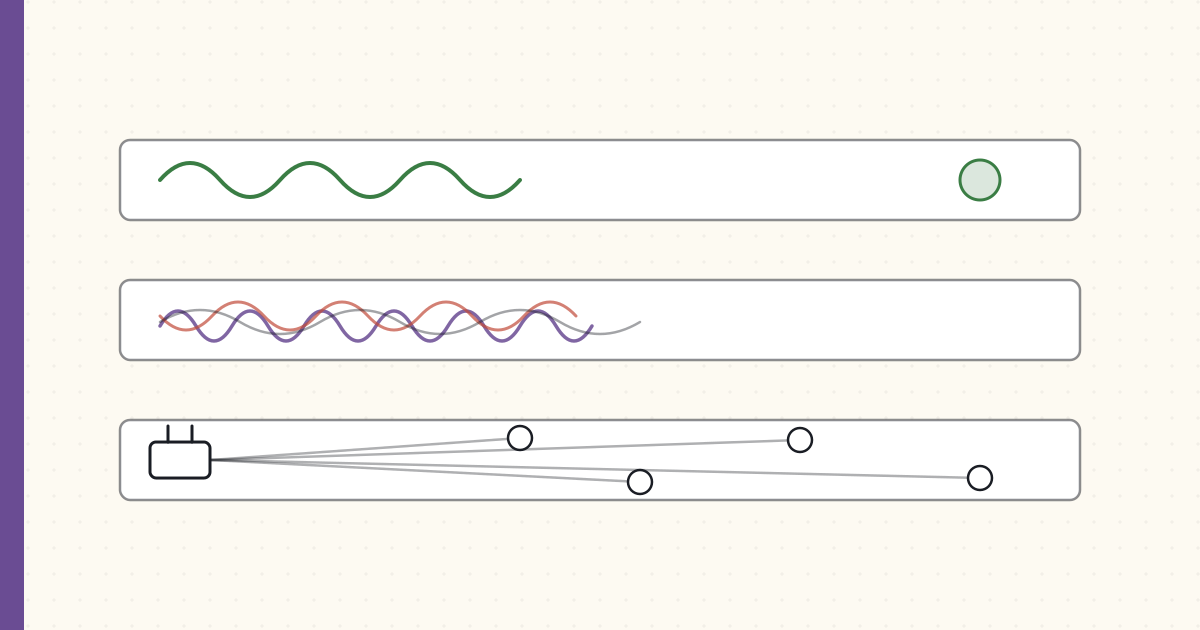
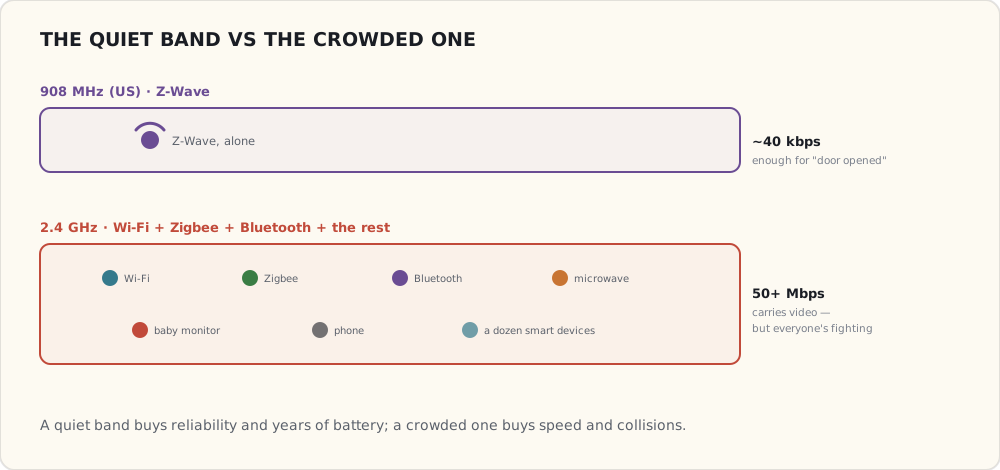
The biggest reason I now reach for Z-Wave on every battery-powered sensor: 908 MHz lives in its own world. WiFi, Zigbee, and Bluetooth all share the 2.4 GHz band — which in a typical home is already packed with the router, the laptop, the phone, the microwave, the baby monitor, and now a dozen smart-home devices.
Z-Wave Plus on 908.4 MHz US sees almost no other RF traffic. The result: Z-Wave sensors report reliably, with 5-year battery life, where a Zigbee version of the same sensor might drop messages once a week and chew through a coin cell every nine months.
The tradeoff: throughput. Z-Wave maxes out around 40 kbps; useless for video, fine for "the door just opened."
Zigbee's two profiles, still not interop
A year in, the most persistent annoyance: Zigbee HA (Home Automation) and Zigbee Light Link (ZLL) are still separate profiles and they don't natively talk to each other.
- Hue bulbs speak ZLL. They join the Hue bridge.
- SmartThings Zigbee sensors speak ZigBee HA. They join the SmartThings hub.
If I add a non-Hue Zigbee bulb (e.g., a GE Link bulb), it speaks ZHA — joins SmartThings fine, but doesn't appear in the Hue app. If I want everything in one app, I have to bridge through SmartThings's Hue integration (cloud-mediated, 2-3s latency).
Zigbee 3.0 is supposed to unify these (spec was ratified late last year). No devices ship Zigbee 3.0 yet. Coming, but not here.
Mesh behavior in practice
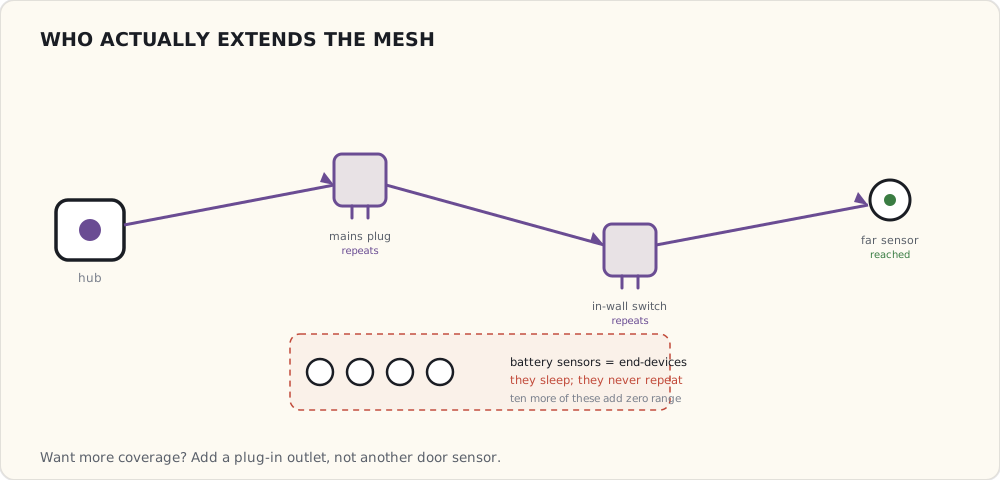
Both Z-Wave and Zigbee are mesh protocols. In theory, every mains-powered node is a repeater; the more nodes you have, the better the coverage.
In practice:
- Mesh healing is slow. When I added a new Z-Wave switch, the mesh didn't re-route to use it for two days. SmartThings has a "repair Z-Wave network" command that forces it; never run it during the day because it takes 20 minutes and pauses normal operation.
- Battery-powered devices don't repeat. They're end-devices only. Adding ten more door sensors does not extend your coverage; only mains-powered devices (switches, outlets, plugs) do.
- Zigbee mesh through walls is meh. 2.4 GHz hates drywall. I've got a Zigbee sensor 12 meters from the SmartThings hub, line-of-sight; works fine. The same sensor 8 meters away through two walls drops messages.
WiFi as the "what else" option
WiFi for everything I haven't figured out how to put on Z-Wave or Zigbee:
- LIFX bulb (just got the first one — six months late from their Kickstarter). WiFi-only. Bright. Hot to the touch.
- Foscam IP camera in the nursery. WiFi.
- Wemo plugs that I haven't replaced yet.
WiFi means each device is on my home network with its own IP and its own always-on radio (the always-on tax from the 2013 primer). I'm now seeing real impact: my 2.4 GHz channel is congested enough that my laptop sometimes prefers 5 GHz even when 2.4 GHz would have been faster.
What I'd pick for which job, today
- Door / window sensor: Z-Wave (low traffic, long battery, dedicated band).
- Motion sensor: Z-Wave or Zigbee. Z-Wave if battery; Zigbee if mains-powered.
- Light bulb: Zigbee (Hue or HA). Avoid WiFi bulbs unless the form factor demands it.
- In-wall switch: Z-Wave (mains-powered, reliable, good ecosystem) — or Lutron Caseta on its own 434 MHz protocol if the box has no neutral.
- Camera: WiFi. No other protocol carries the throughput.
- Plug-in outlet: prefer Z-Wave (Aeotec, GE) over WiFi (Wemo). Less always-on draw, more reliable.
What's not here yet
- A real protocol unifier. Zigbee 3.0 promises to fix the ZHA/ZLL split; not shipping yet.
- Thread. The Thread Group (Nest + Samsung + ARM + others) formed last year and is supposed to ship a low-power IPv6 mesh protocol for smart home. No products yet; rumors say 2016.
- A way to run Z-Wave commands locally without the SmartThings cloud. Still working on it.
The protocol stack is fine. The architecture above it (hub-mediated, cloud-required for custom logic) is what's going to need to change.