Humidity-triggered bathroom fans — the daily automation
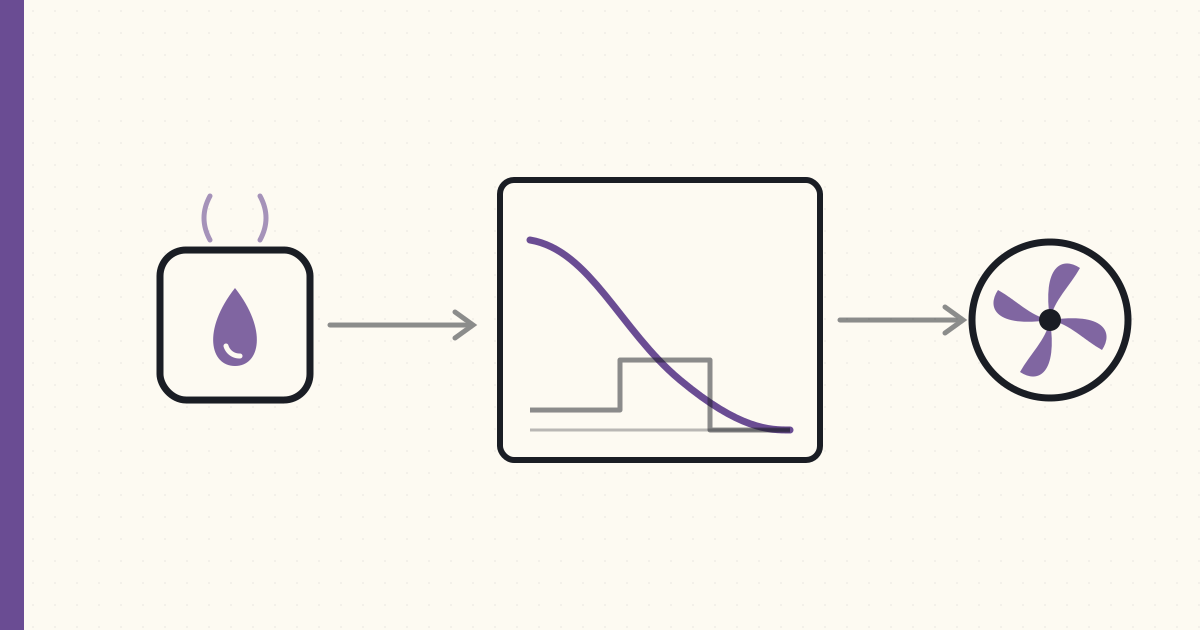
The humidity-triggered bathroom fan automation has been running in some form since October 2015. It’s evolved through three sensors and two fan controllers. The current version, finally, works correctly.
The wrong way to do this — fixed timers
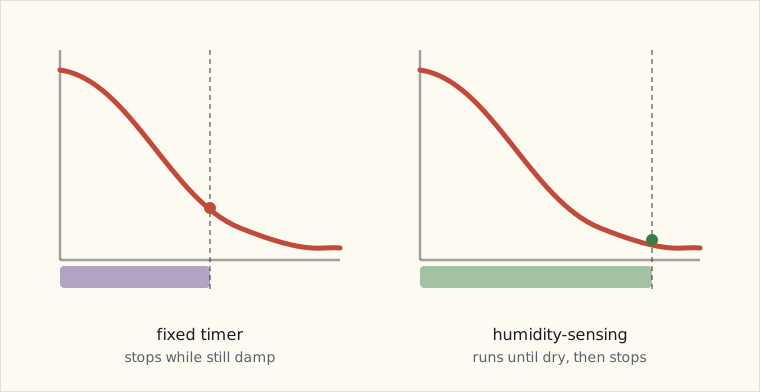
Most “smart” bathroom fan switches are just digital timers. Push the button, fan runs for 20 minutes, turns off. This is what came with my house.
The problems:
- Fixed time doesn’t account for weather. A 20-minute fan run in winter (cold outside, low humidity) overshoots — the bathroom is dry in 8 minutes and the fan runs another 12 wasting energy and noise.
- Fixed time doesn’t account for shower duration. Five-minute shower vs 25-minute shower: very different post-shower humidity load. The 25-minute shower can leave the bathroom still at 80% RH after a 20-minute fan run.
- Doesn’t run when nobody pushes the button. Someone leaves a damp towel on the floor → no button push → humidity sits at 70% all day → mold starts on the grout.
A humidity-sensing automation does all three correctly.
Sensors I’ve used
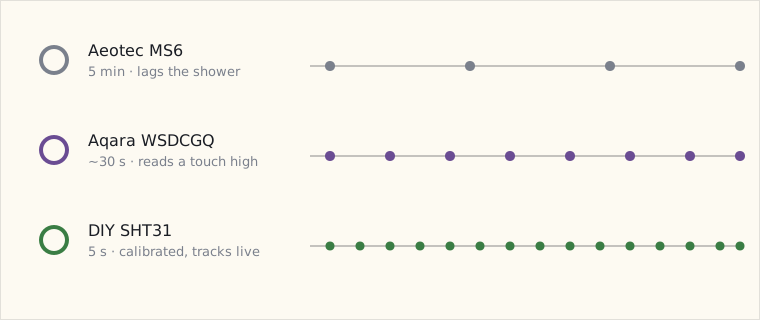
v1 (2015): Aeotec Multisensor 6.
- USB-powered, 5-minute reporting interval.
- 5-minute reporting is the problem — humidity changes fast in a bathroom (10% RH per minute is normal during a shower). Fan response lagged behind the actual humidity by up to 5 minutes.
v2 (2017): Aqara temperature/humidity sensor WSDCGQ11LM.
- Battery-powered, faster reporting (default 30s when humidity is changing).
- Better, but the sensor is small and tends to read a few percent off — usually reads 5% higher than reality because it’s mounted near the shower.
v3 (2019, current): Sensirion SHT31 on a Wemos D1 Mini, MQTT to HA.
- DIY. Calibrated SHT31 sensor (±2% RH accuracy).
- ESP-based, reports every 5 seconds to HA’s MQTT broker.
- Cost: $8 total. Cheaper than either commercial option, more accurate, much faster.
// Wemos D1 Mini sketch (essentials)
#include <ESP8266WiFi.h>
#include <PubSubClient.h>
#include "Wire.h"
#include "Adafruit_SHT31.h"

const char* MQTT_HOST = "192.168.1.10";  // Pi running HA + Mosquitto
const char* MQTT_TOPIC = "bathroom/sht31";

Adafruit_SHT31 sht = Adafruit_SHT31();
WiFiClient wifi;
PubSubClient mqtt(wifi);

void setup() {
  WiFi.begin("home-iot", "..."); // dedicated IoT VLAN
  Wire.begin(D2, D1);
  sht.begin(0x44);
  mqtt.setServer(MQTT_HOST, 1883);
}

void loop() {
  if (!mqtt.connected()) mqtt.connect("bathroom-sht31");

  float t = sht.readTemperature();
  float h = sht.readHumidity();

  char payload[64];
  snprintf(payload, 64, "{\"temp\":%.1f,\"humidity\":%.1f}", t, h);
  mqtt.publish(MQTT_TOPIC, payload);

  delay(5000);  // every 5s
}
HA’s MQTT integration auto-discovers this when configured correctly:
mqtt:
  sensor:
    - name: "Bathroom Temperature"
      state_topic: "bathroom/sht31"
      value_template: "{{ value_json.temp }}"
      unit_of_measurement: "°C"
    - name: "Bathroom Humidity"
      state_topic: "bathroom/sht31"
      value_template: "{{ value_json.humidity }}"
      unit_of_measurement: "%"
Fan controllers I’ve used
v1: GE Z-Wave 12722 switch (a regular light-switch wired to the fan circuit).
- Z-Wave Plus, works fine, but it’s a relay — fan is either on or off at full speed.
v2 (current): Lutron Caseta PD-5NE fan controller.
- Specifically for variable-speed bathroom fans.
- Three speed levels.
- Same ClearConnect Type A protocol as my other Caseta switches — local-fast control.
- $80.
Variable-speed lets the fan ramp up during peak humidity and down as it clears — quieter on average + lower energy use.
The algorithm — dewpoint-targeting
Bathrooms grow mold when relative humidity stays above ~60% for extended periods. But RH alone isn’t quite the right metric — what matters is dewpoint differential between the bathroom and the rest of the house.
If the bathroom is at 75% RH at 24°C, dewpoint is ~19°C. The bedroom next door is at 45% RH at 21°C, dewpoint ~9°C. The 10°C dewpoint differential means moisture migrates from the bathroom to the bedroom walls and condenses on the cooler-side wall surface — that’s where mold grows.
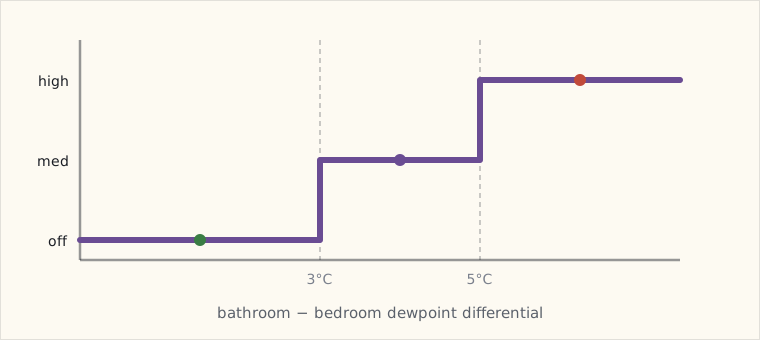
The automation targets bathroom dewpoint ≤ bedroom dewpoint + 3°C:
sensor:
  - platform: template
    sensors:
      bathroom_dewpoint:
        value_template: >
          {% set t = states('sensor.bathroom_temperature') | float %}
          {% set h = states('sensor.bathroom_humidity') | float %}
          {{ (t - (100 - h) / 5) | round(2) }}
      bedroom_dewpoint:
        value_template: >
          {% set t = states('sensor.master_bedroom_temperature') | float %}
          {% set h = states('sensor.master_bedroom_humidity') | float %}
          {{ (t - (100 - h) / 5) | round(2) }}
      bathroom_dewpoint_delta:
        value_template: >
          {{ (states('sensor.bathroom_dewpoint') | float
              - states('sensor.bedroom_dewpoint') | float) | round(2) }}

automation:
  - alias: "Bathroom fan — humidity"
    trigger:
      - platform: state
        entity_id: sensor.bathroom_dewpoint_delta
    action:
      - choose:
          - conditions:
              - condition: numeric_state
                entity_id: sensor.bathroom_dewpoint_delta
                above: 5
            sequence:
              - service: fan.set_speed
                data:
                  entity_id: fan.bathroom
                  speed: "high"
          - conditions:
              - condition: numeric_state
                entity_id: sensor.bathroom_dewpoint_delta
                above: 3
              - condition: numeric_state
                entity_id: sensor.bathroom_dewpoint_delta
                below: 5
            sequence:
              - service: fan.set_speed
                data:
                  entity_id: fan.bathroom
                  speed: "medium"
        default:
          - service: fan.turn_off
            data:
              entity_id: fan.bathroom
The fan runs at high when dewpoint differential > 5°C (active shower), medium when 3-5°C (post-shower drying), off below 3°C (normal residual humidity).
Side benefits
- Energy use down. The fan runs ~12 minutes per shower instead of the 20-30 minutes the dumb timer would have. Combined with variable-speed, the fan’s monthly kWh dropped by ~60%.
- The bathroom is quieter. Variable-speed fan at low is whisper-quiet; the old single-speed fan at full was noticeable from the master bedroom.
- Bathroom paint lasts longer. No more peeling near the shower ceiling.
- The mirror clears faster after showers — because the fan ramps up during the peak rather than running constant.
What this changed about the platform
This was the first automation where the sensor data quality was the limiting factor. The Aeotec Multisensor 6 was technically capable; its 5-minute reporting was the wrong shape for the problem.
Moving to a DIY ESP-based sensor reporting every 5 seconds changed the automation from “best effort, mediocre” to “actually correct.”
Pattern I’m taking forward: when an automation isn’t working, the first place to look is the sensor’s reporting cadence, not the automation logic.
What’s next
- A second SHT31 in the kid’s bathroom. Same automation, separate fan.
- An outdoor SHT31 to measure dewpoint outside. When outside dewpoint > indoor, opening windows would add moisture; bathroom fan should not vent to outdoors during high outdoor dewpoint (humid summer day). Adds an outdoor-dewpoint condition to the automation.
- Move to ESPHome instead of hand-rolled Wemos sketches. ESPHome’s YAML-based ESP firmware is more maintainable for the dozen or so DIY sensors I’m planning.