Petivity smart-litter — multi-cat analytics, built by Purina
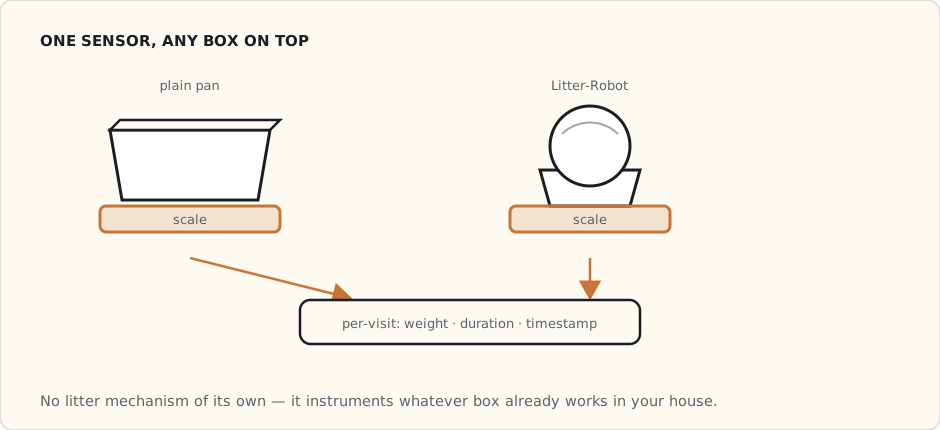
Purina's Petivity Smart Litterbox Monitor launched a couple of weeks ago — late September — and I bought one immediately, because it claims to do the thing this notebook has wanted for years: tell two same-weight cats apart at the litter box with no microchip and no collar. It's a flat scale that slides under any existing box — a regular pan, a Litter-Robot, whatever — and watches who steps on.
Two weeks in. First impressions, with the honest caveat up front: two weeks is a baseline, not a verdict. But the shape of what it does — and what it's for — is already clear.
What Petivity is
Hardware:
- A flat plastic base, roughly 23 × 18 inches, a couple inches tall.
- Weight sensors under the platform.
- 2.4 GHz Wi-Fi; runs on a power cord or batteries (not both).
- No litter mechanism of its own — you set any box on top.
Software:
- iOS / Android app.
- Multi-cat setup: you enter each cat's weight, and the app builds a per-cat model from there.
- Per-visit logs: timestamp, weight, duration.
- AI "wellness" signals — frequency and duration anomalies against a learned baseline.
- All of it cloud-side; the multi-cat attribution is an ML model running on Purina's servers.
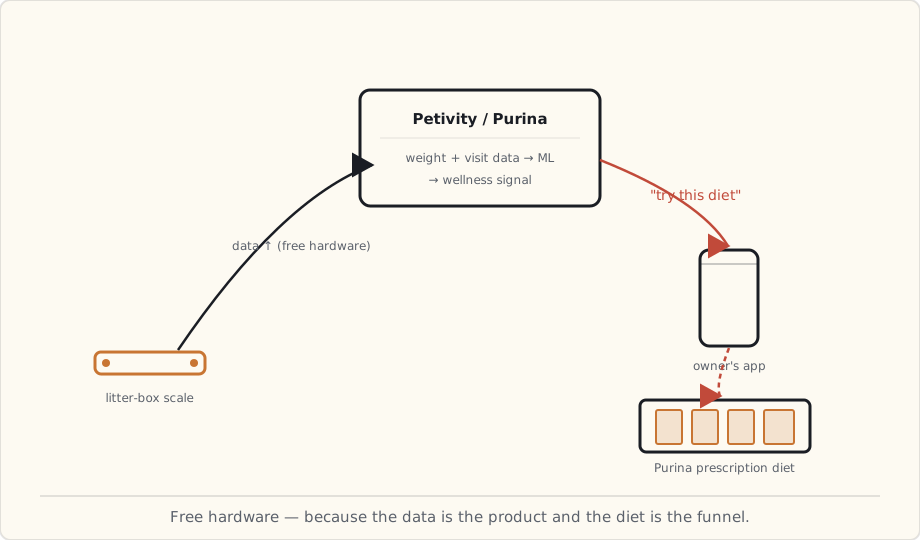
The pricing surprised me, in a good way: about $200 for the hardware, and no subscription — the tracking, alerts, monthly reports, and multi-cat profiles are all included. That's a notably different posture from Mars-owned Whistle's monthly-fee model. Which raises the obvious question of how Purina plans to make its money back, and the answer is in the recommendation layer — more on that below.
The multi-cat profiling is the real trick
The differentiator against my weight-only Litter-Robot attribution is that Petivity does explicit, model-driven multi-cat identification, and Purina says it can split up to five cats with no chip or collar — built by analyzing thousands of litter-box visits from thousands of cats.
The hard case is mine: Joule (~9.5 lb) and Boson (~9.0 lb) are both adult now and have converged to within half a pound of each other. At that gap, entry weight alone can't reliably tell them apart — my own script struggles exactly here. So the model has to lean on the secondary signals:
- Entry weight — the primary axis, but nearly useless when two cats weigh almost the same.
- Visit-duration distribution per cat.
- Time-of-day patterns per cat.
- Sequence patterns — who tends to follow whom.
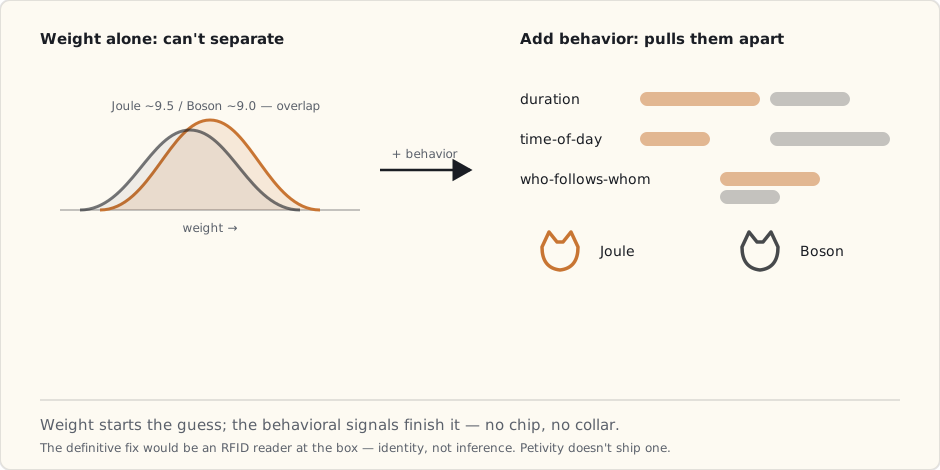
Two weeks isn't enough to grade the accuracy hard, but the early read against my own script is encouraging-not-perfect: across the visits so far, the two methods agree on the clear majority and disagree on a minority — and the disagreements cluster exactly where you'd expect, the near-identical-weight visits with no distinguishing duration or timing. For weight-similar cats, neither approach is definitive, and I suspect neither ever fully will be. The truly definitive answer is RFID — read the cat's existing microchip at the box entry, the same trick the SureFlap door already uses on these two cats. Petivity doesn't do that. It's solving by inference what a $5 chip reader would solve by identity.
The wellness signals
Petivity watches for deviations from each cat's baseline — the kind of changes that can point at a problem: more frequent or longer visits (a UTI tell), weight loss plus increased frequency (kidney), high-volume frequency (diabetes-range polyuria), long-duration low-frequency visits (constipation). The framing is appropriately hedged: "consider veterinary attention," not "your cat is sick."
Two weeks gives me exactly one data point on the signal quality, and it was a false positive: the app flagged Boson's visits trending high right as we'd switched litter brands — she was investigating the new substrate, not unwell. That's the expected failure mode of an anomaly detector during a baseline it hasn't finished learning, and I won't hold an early false positive against it. The thing I can say is that it leans sensitive, which for a screen-don't-diagnose tool is the right direction to err — better a few "go check" nudges than a missed one.
Petivity vs the Litter-Robot, side by side
The cats use both — the Litter-Robot III Connect for the not-scooping-daily virtue, the Petivity scale under a second, plain box. They're complements, not rivals.
| Litter-Robot III Connect | Petivity | |
|---|---|---|
| Hardware role | Self-cleaning box | Multi-cat scale under any box |
| Per-visit weight | Yes | Yes |
| Per-cat attribution | None native (my CSV + script) | ML-driven, native, up to 5 cats |
| Anomaly detection | None | Yes (included, no fee) |
| Vendor | Whisker (independent) | Purina (Nestlé) |
| Subscription | None | None |
| Local API / automation | Unofficial only | None |
Petivity's attribution is the genuinely useful part for a multi-cat house; the Litter-Robot's mechanism is useful for not living next to a scoop. I'm keeping both.
The Purina-ownership catch
Here's where the no-subscription generosity gets explained. Petivity exists, in part, because Purina wants to surface cats with health signals who could be sold a prescription diet — Pro Plan Veterinary Diets, a Purina line. When a wellness signal fires, the app's next move is a nudge:
- "Boson's pattern suggests increased water intake. Consider a urinary-health diet."
- And the recommended diet is, of course, Purina's own.
It's the exact shape of the Mars/Whistle conflict: the company measuring the animal also sells the remedy. The free hardware isn't charity — the data is the business, and the recommendation is the funnel. My rule holds the way it did for Whistle: the signal is real and worth having; the recommendation is a sales channel wearing a lab coat. Use the trend, take it to your own vet, ignore the suggested SKU.
What the right product would look like
If I were drawing it up: Petivity's scale-plus-analytics, but with the diet recommendations stripped out and replaced by "here's the trend, show your vet"; an RFID reader at the box entry to make attribution a matter of identity instead of inference; and a local API so the data lands in my home automation instead of only Purina's cloud. None of those are commercially incentivized — vendor-neutral advice sells nothing, open APIs reduce lock-in, and an RFID reader is a few dollars of bill-of-materials a vendor would rather not spend. So the product I want doesn't exist. The one I have gets most of the way there, and I can supply the skepticism myself.
What's next
The 2022 year-end review. It was the year the household went to four animals and the cat side finally got the analytics layer the dog side had for years — Quark arrived, and Halo and Petivity both got real evaluations. The cat-IoT category, thin for so long in this notebook, finally has some depth to write about.