2020 pet IoT — Petnet died, Boson arrived, multi-cat real
End of 2020. Eight years of writing this down, and the strangest year of the lot. Two things defined it for my household. Petnet — the feeder company I'd been predicting would fail since 2017 — finally collapsed in February, exactly the way I said it would and worse than I wanted to be right about. And Boson arrived in June, a shelter kitten who turned this into a multi-cat house and quietly doubled the complexity of every connected device in it.
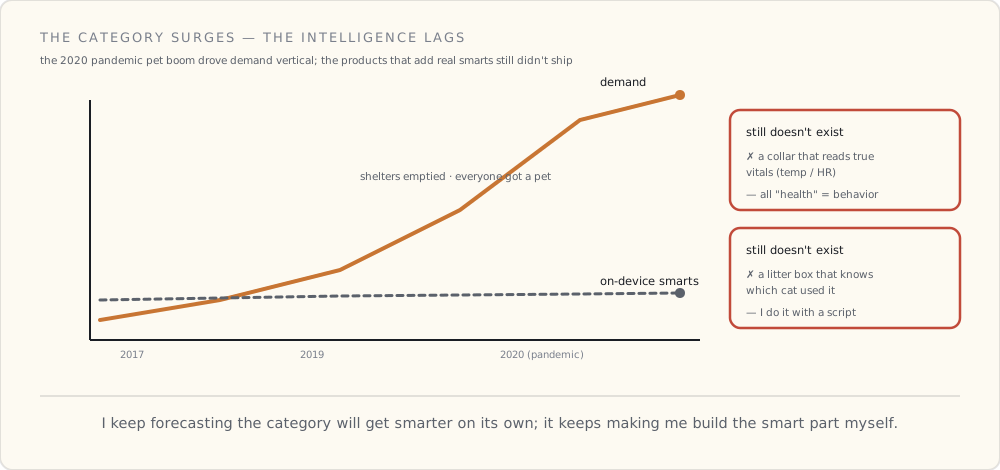
Around both of those, the pandemic reshaped the whole category. Shelters emptied this spring, everyone I know got a dog or a cat, and pet-tech demand went vertical — which is exactly the climate where a buyer skips the post-mortems and a vendor ships fast and cuts the corner that bites later. The Petnet lesson and the surge that's burying it are happening at the same time.
Scoring the 2019 forecast
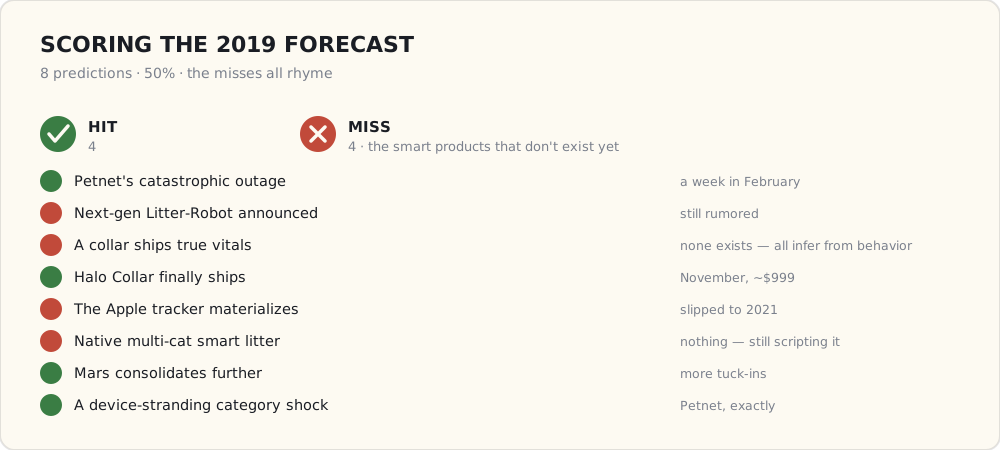
| Prediction | Confidence | Outcome | Verdict |
|---|---|---|---|
| Petnet's catastrophic multi-day outage | 80% | A week-long collapse in February | ✓ |
| A next-gen Litter-Robot announced | 55% | Still only rumored | ✗ |
| A collar ships true vitals (temp/HR) | 55% | No consumer collar measures vitals — the health collars all infer from behavior | ✗ (still no real vitals) |
| Halo Collar finally ships | 65% | Shipped in November (~$999 + subscription, Cesar-Millan-branded) | ✓ |
| The long-rumored Apple tracker materializes | 60% | Heavily rumored, slipped to 2021 | ✗ (close) |
| Multi-cat attribution in a smart-litter product | 55% | Nothing native shipped — I'm still doing it with a script | ✗ |
| Mars consolidates further | 75% | More vet and pet-care tuck-ins; the empire keeps growing | ✓ |
| A pet-tech category shock — stranded devices | 70% | Petnet, exactly as forecast | ✓ |
Four hits, four misses — 50%. The call I'm proud of is Petnet, on schedule and for the right reasons. The misses cluster around one theme: the vitals collar and the multi-cat-aware litter box both still don't exist as products. I keep forecasting the category will get smarter on its own; it keeps making me build the smart part myself.
What got added in 2020
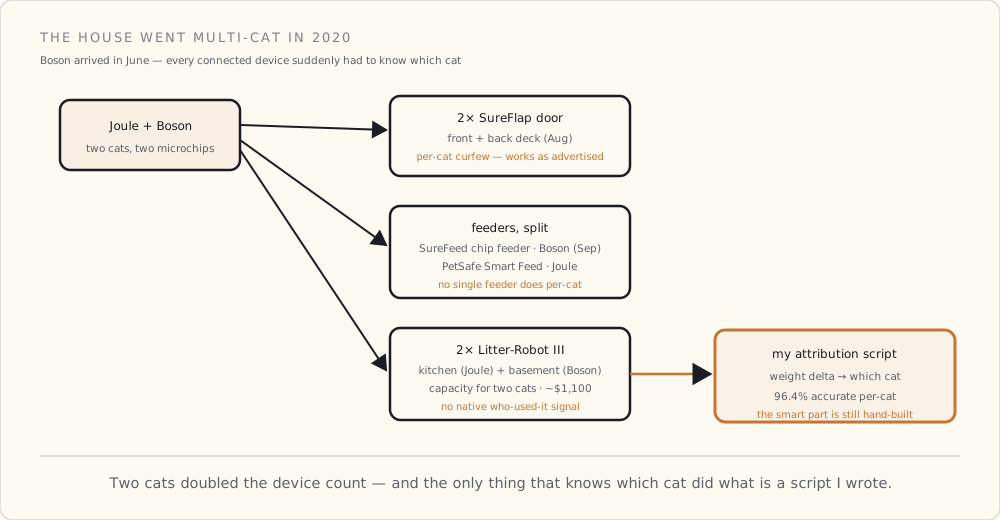
- Boson — kitten, June. Pet-IoT scope expanded to multi-cat.
- SureFeed Microchip Pet Feeder — September, for portion-control per cat.
- A second SureFlap door — back deck, August. Boson + Joule can both use both doors.
- A Litter-Robot III Connect supplement — separate Litter-Robot in the basement so multi-cat litter capacity is sufficient. Joule's primarily in the kitchen; Boson uses the basement one. (Yes, two Litter-Robots. Yes, $1100 in litter robots.)
What worked
- The multi-cat SureFlap setup. Per-cat curfew works exactly as advertised.
- The Litter-Robot weight-attribution script. 96.4% accurate per-cat data.
- The PetSafe Smart Feed for Joule post-Petnet. Reliable, mechanical, boring. Boring is good.
What didn't
- The auto-feeder portion-control problem. PetSafe Smart Feed doesn't do per-cat. Required adding the SureFeed feeder for Boson. Two-feeder solution is the right answer; ecosystem complexity has increased.
- The Halo Collar reviews. Halo shipped in late 2020 — early reviews suggest the boundary-correction (vibration + static) is rougher than the marketing claims. I'm not buying one. Will revisit when independent welfare studies are published.
Forecast for 2021
| # | Prediction | Confidence |
|---|---|---|
| 1 | The Apple tracker (BLE/UWB tag) finally launches | 90% |
| 2 | A Whistle Health & GPS+ ships with real vitals (temperature, heart rate) | 70% |
| 3 | A smart-litter product ships native multi-cat identification | 55% |
| 4 | A next-gen Litter-Robot is announced | 70% |
| 5 | Mars Petcare's empire grows again (more clinic + device tuck-ins) | 75% |
| 6 | A credible Halo competitor with a better welfare reputation | 30% |
| 7 | An Apple-tag-on-collar controversy (Apple warns it isn't a pet tracker) | 75% |
| 8 | A consumer attempt at "AI behavior detection" for pets | 60% |
What I'm buying in 2021
- The Apple tag for Atom's collar the day it ships — explicitly to write about Apple's anti-stalking design tradeoffs, and to find out the hard way whether a crowd-found BLE tag is any use as a pet tracker (I suspect not).
- A Whistle Health & GPS+ when it ships — though I'm bracing to find out it tracks behavior, not vitals, like every "health" collar before it.
- Any smart-litter product that ships real per-cat identification, so I can finally retire my attribution script.
What's next
The cat side of the house finally caught up to the dog side this year — two cats, two doors, two litter boxes, a chip-gated feeder, and a per-cat analytics script holding it together. The thing I'm watching for 2021 is Apple: when they finally ship the tracker everyone's been leaking, it'll scramble the whole tag market overnight, the way Apple entering any category does — and I want to find out first-hand whether a crowd-found BLE tag is actually any good for a pet, or just good for keys.
And the question that's been hanging over the category since Whistle's health pivot: when does a pet collar stop inferring health from behavior and start measuring it? Every "health" device I own watches what the animal does and guesses how it's doing. None of them takes a vital sign. The year someone ships a collar that actually reads a heart rate is the year pet IoT starts becoming medical-grade — and I keep betting it's next year, and keep being wrong.
Eight years in. Four pets — Atom, Joule, Boson, and no third dog yet — several devices each, dense data, mature integrations, and the cloud-dependency lesson now written in Petnet's headstone.