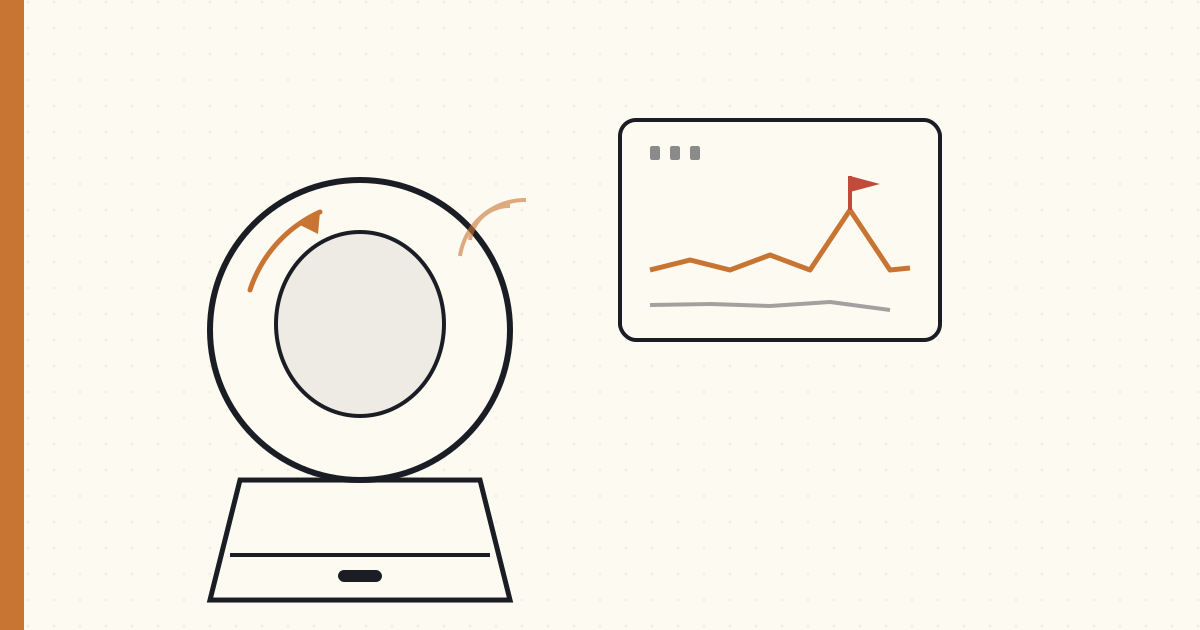
Litter-Robot III Connect — the first pet IoT device with real medical telemetry
The Litter-Robot III Connect arrived this month — Whisker's globe-shaped self-cleaning litter box, the one that's existed in some form for years, now with the Wi-Fi "Connect" upgrade they added in 2017. It's not cheap, around $500. Joule spent a fortnight side-eyeing the rotating spaceship in the corner before committing. Two weeks in, and the surprise isn't the convenience — it's that this is the first pet device I've owned whose data could plausibly save the cat's life.
The mechanism, briefly
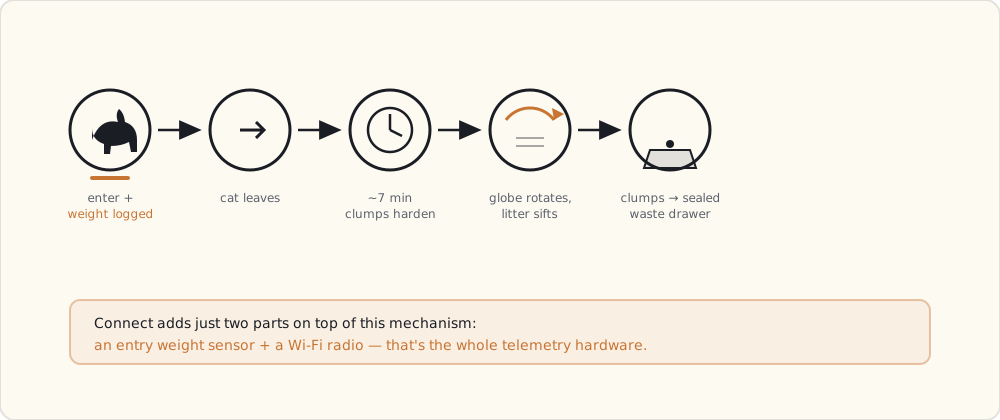
The unit is a rotating globe on a weighted base:
- The cat steps in; the base weight sensor registers the entry.
- The cat does their business and leaves.
- A delay timer starts — about seven minutes — to let the clumps harden.
- The globe rotates, and the litter passes through a separator screen.
- Clumps drop through into a sealed waste drawer below; clean litter rotates back into the bowl.
You empty the waste drawer every week or so for a single cat. No daily scooping, which is the whole pitch of the dumb version and reason enough to own one.
What "Connect" actually adds
The mechanical platform is unchanged; the Connect bolts on two things — a weight sensor and a 2.4 GHz Wi-Fi radio — and an app. From those you get:
- Push notifications: waste drawer full, cycle complete, cat currently in the unit, and mechanical faults (motor stall, sensor error).
- A cycle and visit log: every entry and exit, timestamped.
- An entry weight each time the cat steps in.
The honest read on the economics: that's maybe $30 of bill-of-materials — a load cell and a Wi-Fi module — and Whisker charges a good deal more than $30 for the Connect tier. The margin on "connected" is the business model across this whole category, and it's worth seeing it clearly. But unlike most connected-tier upcharges, here the data you get back is genuinely worth having.
The data, two weeks in
| Metric | Value |
|---|---|
| Average visits per day | 3.2 |
| Average visit duration | 64 seconds |
| Entry weight | 9.4 lb (Joule weighed 9.5 lb at the vet three months ago — the sensor is real) |
| Cycles per day | 3.2 (matches visits) |
| Waste drawer fill rate | ~10% per day |
The weight number is the one that made me sit up. The base reports the delta when the cat steps in, and Joule comes in at 9.4 lb against a vet-measured 9.5 lb. That agreement is what makes the rest of the data trustworthy — it's not a toy reading, it's a scale she stands on three times a day without anyone having to wrestle her onto one.
Why this is the first pet IoT device with real medical value
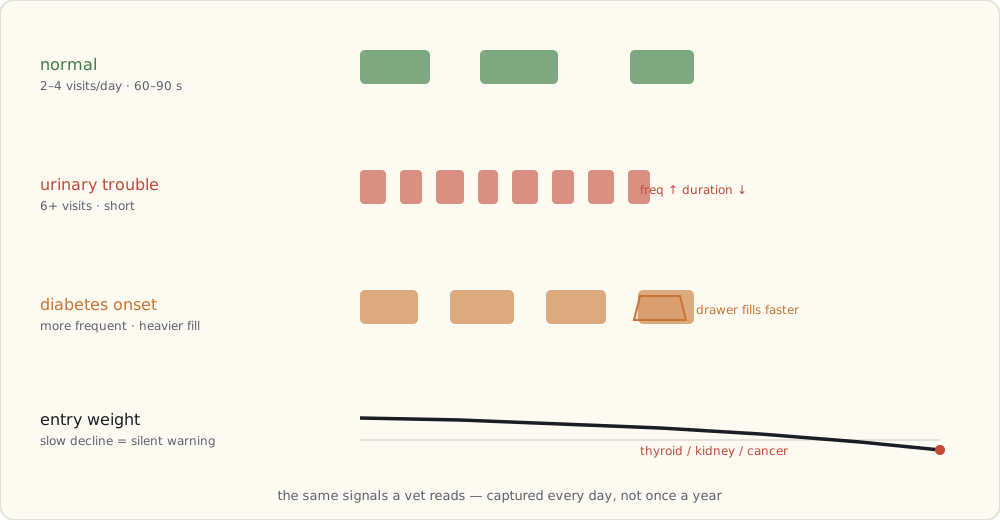
Here's the part that separates this from bark detection and activity scores. Visit frequency, visit duration, and body weight are not gimmick metrics — they're the exact signals a vet reads, and a litter box captures them continuously:
- Urinary trouble (UTIs, blockages, FLUTD). A cat with urinary problems often visits far more often than normal — six, eight times a day instead of two to four — and stays only briefly each time. That frequency-up, duration-down signature is a classic early flag, and a urinary blockage in a male cat is a genuine emergency measured in hours.
- Diabetes. Increased urination — more frequent, larger volume — is a textbook early diabetes presentation in cats. More visits and a heavier-cleaning drawer show up here before the lethargy does.
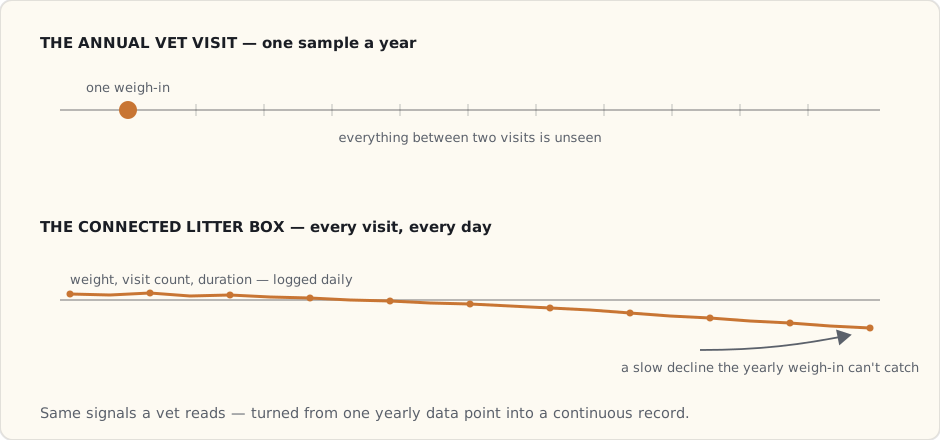
- Weight loss. A slow decline in entry weight is one of the earliest warnings of hyperthyroidism, kidney disease, or cancer — and it's exactly the kind of gradual change that a once-a-year vet weigh-in, or a person who sees the cat daily, will miss until it's pronounced.
The framing that stuck with me: a person gets a routine physical once a year, and we accept that as thin sampling. For a cat, the annual vet visit is the entire dataset, and it's blind to any trend that develops and resolves between appointments. A box that logs every visit turns that single yearly data point into a continuous record. This is the first pet IoT where the medical-data potential is real — not inferred from an accelerometer, not a marketing "wellness score," but the literal measurements a clinician would order.
What's missing in 2018
- No vet integration. The data sits in Whisker's app — no export, no path into a vet-records system or a Banfield/VCA workflow.
- No anomaly detection. The app will tell me "22 visits this week" but not "that's 30% above last month — consider a vet visit." The raw numbers are there; the layer that makes them actionable isn't.
- No multi-cat identification. I have one cat, so it's moot for me — but the weight-plus-duration combination is exactly what would tell two cats apart, and it's the obvious gap for multi-cat homes. (I expect that to be where the next wave of smart-litter products competes.)
- No API, closed ecosystem. Same complaint as the Sure Petcare hub: the data is mine in theory and locked in their cloud in practice.
The data is collected and the actionable layer doesn't exist yet. Whisker is a hardware company; the analytics — anomaly detection, vet hand-off, multi-cat attribution — is the opening for someone else, or for Whisker to buy it.
Joule's adjustment
She was suspicious for about four days. We left the old box beside it and let her choose; by day six she'd switched over entirely, and two weeks in she has no complaints worth lodging. Whisker claims most cats adapt within a week. A sample size of one, but the claim held.
What I'd want next
- Per-cat identification by weight and entry-pattern profiling — the must-have for multi-cat households.
- Anomaly detection with alerts — "Joule's visits dropped 40% this week, schedule a vet visit?" — turning the data into a prompt instead of a spreadsheet.
- Home Assistant / local integration, so litter-box state lives on my own dashboard, not only theirs.
- A data export for vet records.
Whisker's been hinting at most of these. I'd guess a couple of years out.
What's next
The 2018 year-in-review lands in a month. The questions I'll be carrying into 2019: whether a credible independent tracker — one not owned by a pet-food company — finally reaches consumers, and whether the Petnet feeder survives another year or the dumb backup finally earns its keep.