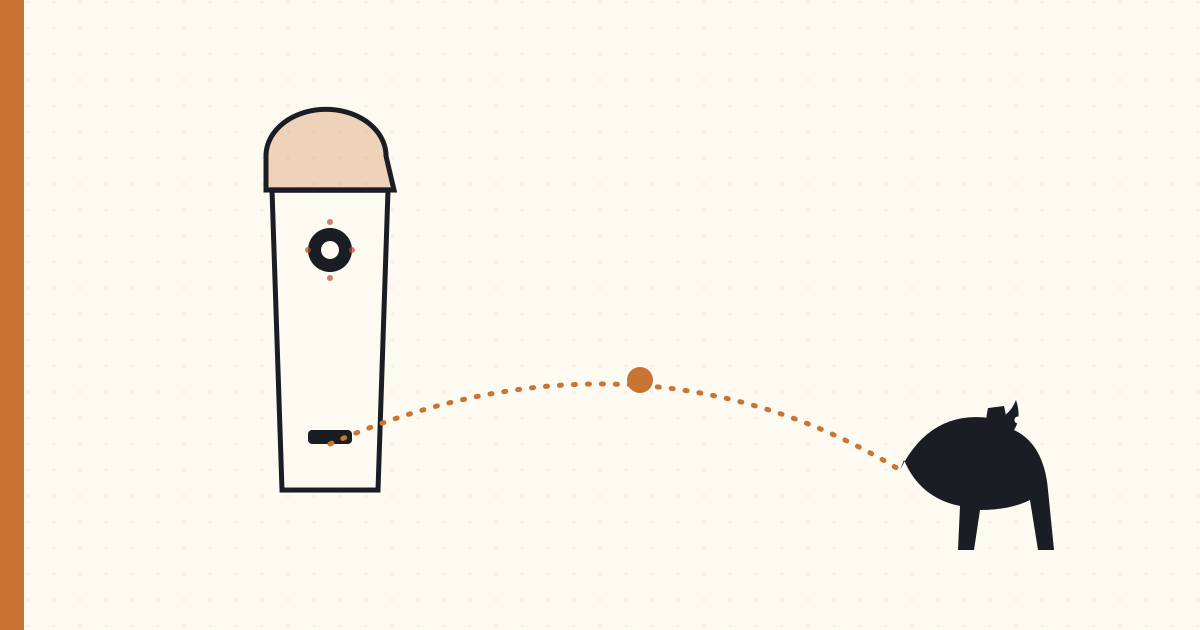
Furbo Dog Camera — first impressions, and the treat-toss is the real engineering
I finally picked up a Furbo this spring. It shipped out of its Indiegogo back in 2016 and has been on shelves a while; I held off, then caved when I wanted a way to do something for Atom from the office besides stare at him on a webcam. Six weeks in, here's the read — and the surprise is that the one feature worth the money is the most mechanical one.
The hardware
- 720p HD camera, 120° wide-angle, 4x digital zoom.
- Night vision — an IR illuminator, not "starlight" or thermal.
- Two-way audio — built-in speaker and microphone.
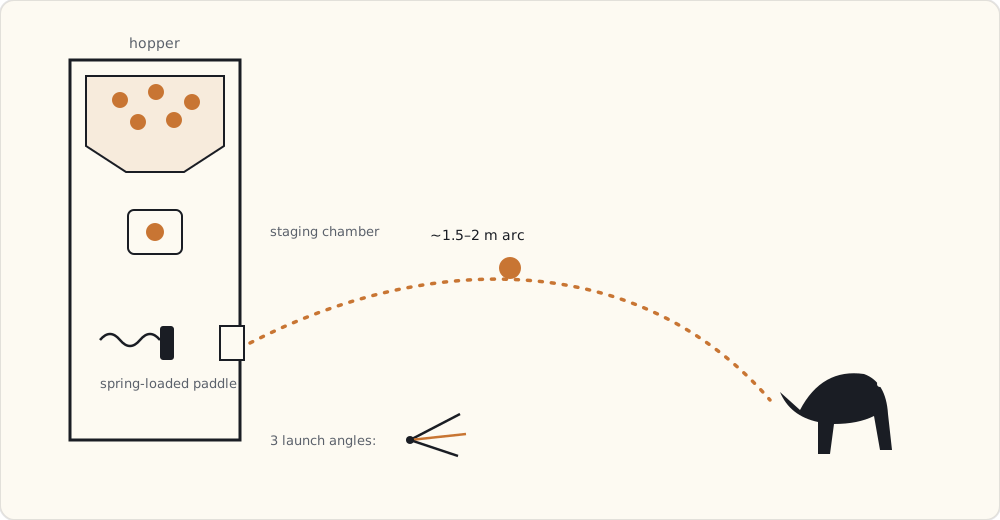
- The treat-toss: a spring-loaded launcher inside the body, three selectable launch angles, treats landing in a roughly 1.5–2 m arc in front of the device.
- An internal treat hopper holding maybe 30 standard training biscuits — the small dry kind Atom likes.
- 2.4 GHz Wi-Fi, mobile-app control.
- Wall-powered, no battery.
The unit is tall and narrow — around 30 cm — weighted at the base with a removable wooden lid on top, deliberately styled to read as a small modern vase rather than a gadget. It mostly succeeds; guests don't immediately clock it as a camera, which is either reassuring or faintly unsettling depending on your view of cameras shaped like décor.
The treat-toss is the engineering win
The treat-toss is the whole reason Furbo isn't just another Wi-Fi cam, and the nice part is that it's a mechanical achievement, not a software one. Watching it through the device's window:
- Biscuits drop from the hopper into a small staging chamber.
- A spring-loaded paddle compresses, then releases, firing into the treat and launching it forward.
- Three angle settings tilt the launch chamber for a low, medium, or high arc.
- Ordinary cylindrical training treats work fine — no proprietary cartridge, which I respect.
Two hundred-plus tosses in, no jams and a consistent landing zone. And the sound design is doing real work: there's a distinct mechanical click when the paddle fires, plus an optional chime through the speaker. Atom learned the click-means-biscuit pattern inside an hour, which is faster than he learned most things, food being the great accelerant.
The camera and two-way audio
Video quality is fine for the job. Daytime is clean with no IR color cast; the night-vision illuminator reaches maybe 4–5 m, enough to confirm Atom's asleep in his bed and not, say, on the couch he's banned from. The 720p resolution is unremarkable but adequate — you're checking on a dog, not shooting a film.
Two-way audio lets me talk to Atom from work. I've tried it. He tilts his head, hunts around for the disembodied voice, and looks mildly puzzled — not distressed, but not usefully reassured either. A voice with no body attached doesn't mean to a dog what the marketing imagines. Limited use.
The bark detection is marketing-grade AI
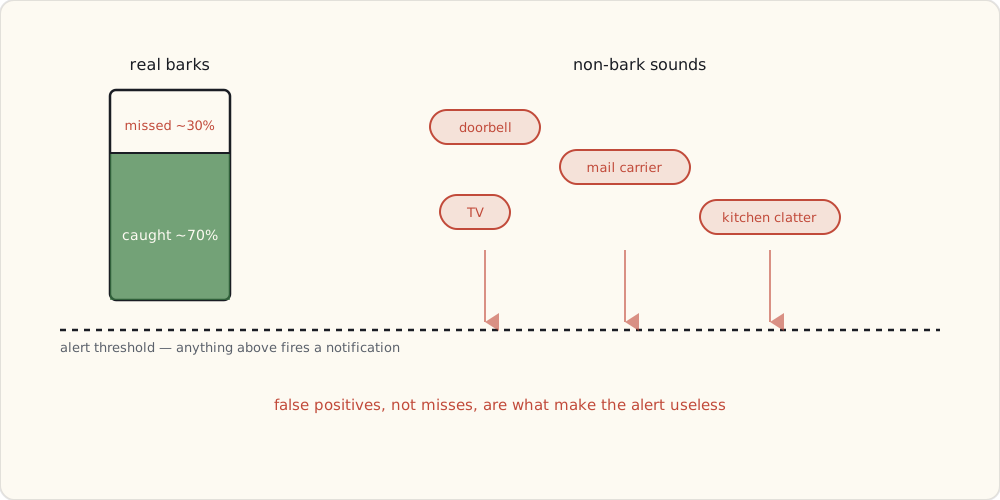
Furbo pushes a notification when it thinks Atom is barking. Six weeks of logging it:
- Catches maybe 70% of actual barks.
- Fires constantly on things that aren't barks — the doorbell, the mail carrier, kitchen clatter, the TV. The false-positive rate is the real story.
- Tells me nothing actionable even when it's right. "Atom is barking" without why, and the camera view rarely explains it, so the alert is a dead end.
This is the kind of "AI" that exists because a spec sheet wanted the letters A and I on it. The detector is a noise classifier with the bar set low, and I turned the notifications off in week two. The mechanical treat-toss does more for me than the algorithm does.
What it costs, and where the subscription is headed
It's a one-time purchase right now — around $199 at the moment, having launched higher — and no subscription. I don't expect that to last. The hints Furbo keeps dropping about "behavioral monitoring" and smarter alerts all point the same direction every connected pet company eventually walks: the hardware sells once, and the recurring revenue comes from an AI-flavored monitoring tier you pay for monthly. I'd bet a subscription product shows up within a couple of years. When it does, the question will be whether the behavioral analysis is real or just the bark detector with a price tag.
The cloud-dependency angle
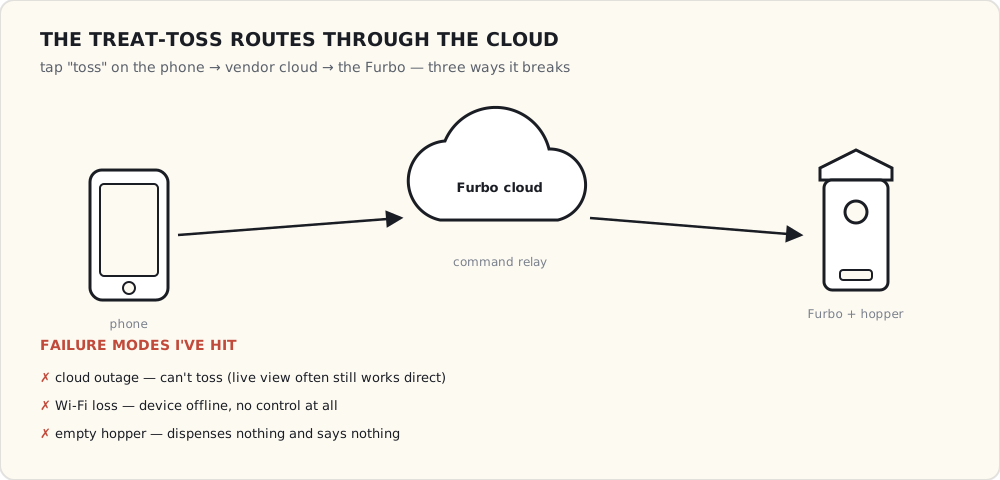
Like everything else in this notebook, Furbo's control plane runs through the vendor's cloud. The live video is peer-to-peer when the network allows and relayed through the cloud when it doesn't, which is sensible. But the treat-toss command routes through Furbo's servers. Failure modes I've actually hit:
- Cloud outage — can't toss remotely, though live view often still works over the direct path.
- Wi-Fi loss — device offline, no control at all.
- Empty hopper — it dispenses nothing and says nothing. I found out by tossing into a void and watching Atom wait for a biscuit that never came.
A "hopper empty" notification is table stakes and Furbo doesn't ship one. It's the same lesson as the Petnet feeder: the device knows its own state and declines to tell you the one thing you'd want to know.
What I actually use it for
- Tossing Atom a treat from the office when I catch him being calm on the live view. Daily.
- Checking in mid-day. Two or three times a week.
- Two-way audio. Tried twice, stopped.
- Bark alerts. Off.
The treat-toss is the only feature I'd pay for again. Everything else is generic Wi-Fi-camera fare I could get cheaper without the biscuit cannon.
What I want from this category next
- A hopper-level sensor and a low-treat alert. Trivial to add; conspicuously absent.
- A bark classifier that works, or an honest off-by-default. The current one is a net negative.
- Pet-versus-human awareness on the video — so an auto-toss only fires when it's actually the dog near the camera, not me walking past.
- A local-only control path for owners who'd rather not route their dog's treats through a startup's servers.
What's next
The SureFlap connected hub finally shipped this spring — the thing I've been waiting on since the 2016 announcement — and I'm wiring it up to network-connect the microchip cat door Joule's been using for years. That's the next one.