Halo Collar — I tried it, returned it within the trial window
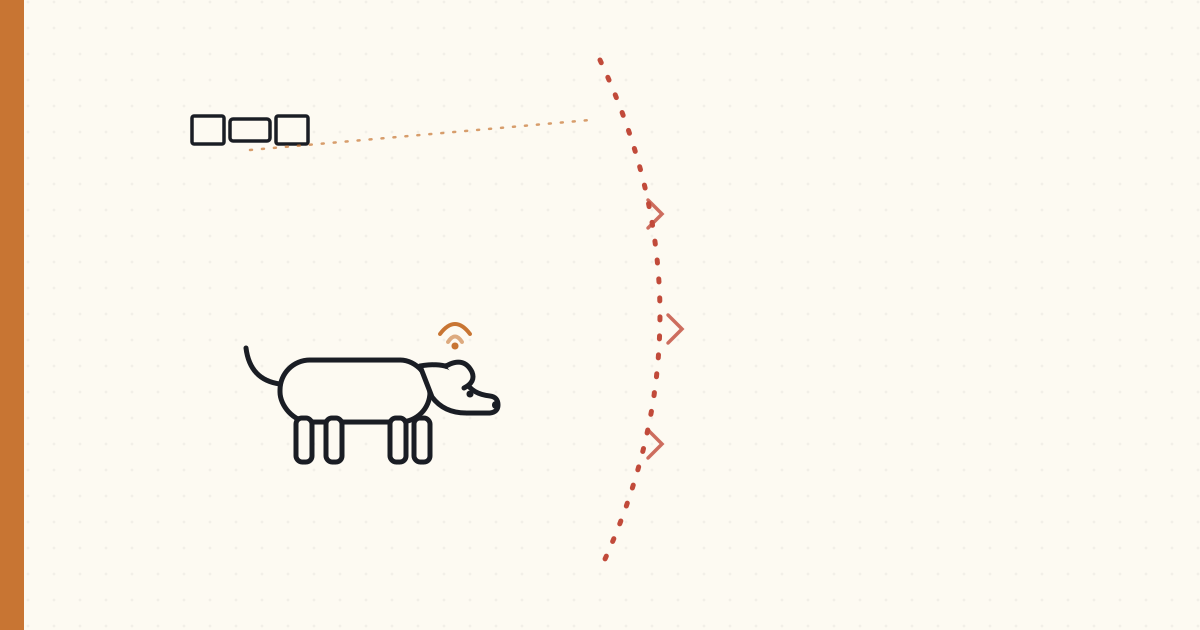
Bought a Halo Collar 2 for the new house. The backyard doesn't have a physical fence on the back property line, and a virtual fence is pitched as the modern alternative — which is exactly the option I said I'd test when Quark came home in the spring.
Two weeks with the Halo on Atom and Quark. Returned within the trial window. Won't buy another. This is the welfare post I've been promising the notebook since last year, and the verdict is harder than I expected to write, because the engineering is genuinely good.
What Halo is
Hardware:
- GPS-enabled smart collar, ~120 g (heavier than Fi due to bigger battery + active correction module).
- LTE-M cellular + WiFi + BLE.
- Correction stimuli (this is the controversial part):
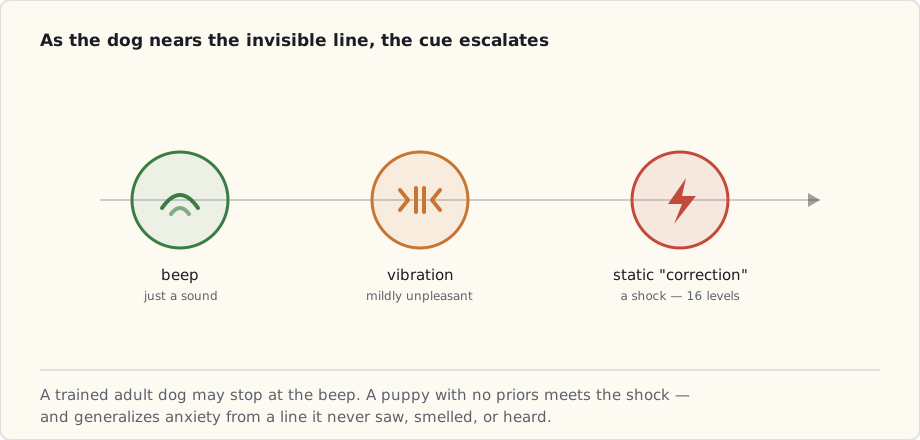
- Audio (a beep).
- Vibration.
- Static "correction" — adjustable intensity. A short, brief electrical stimulus.
- 12-hour battery life when actively GPS-monitoring (a different universe from Fi, which runs weeks on the home Wi-Fi and only burns down in lost-dog mode).
Software / Service:
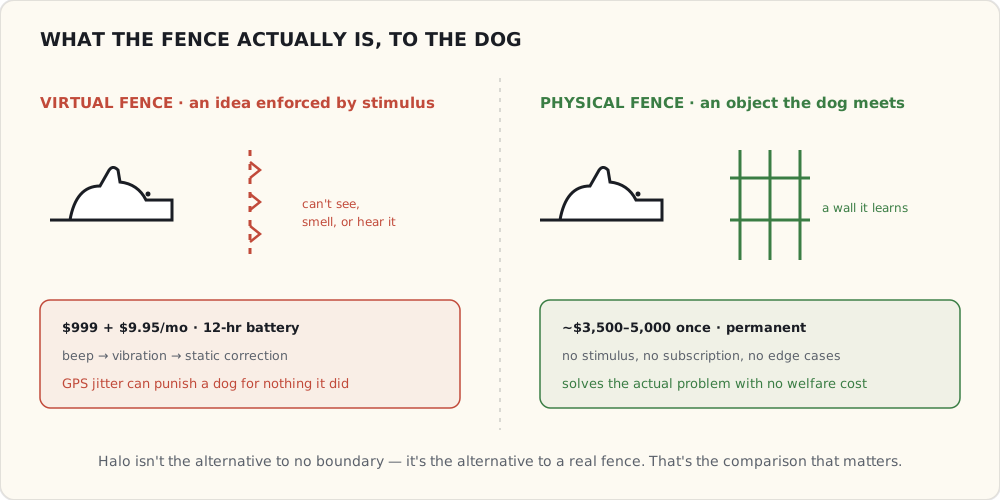
- $999 hardware + $9.95/month subscription.
- iOS app for setting GPS-based virtual fences.
- "Halo Trainer" app component to train the dog to recognize the boundary.
The pitch is: train your dog to associate the boundary with audio + vibration → eventually you don't need static correction. The dog learns the invisible line.
What worked, engineering-wise
I have to give Halo credit for engineering execution:
- GPS accuracy: sub-meter in open yard (better than Fi's ~5m). They've done careful work on multi-constellation GPS + WiFi positioning.
- Latency: from boundary crossing to first audio cue, ~200-500 ms. Fast.
- Boundary mapping: drawing a polygon on the app's satellite view is intuitive. Multi-boundary support (front-yard-OK, back-yard-not).
- Stim adjustability: 16 intensity levels for the static correction. Two minutes of "feel the stim on your hand to understand what the dog feels" calibration in the setup flow.
If you were going to build a GPS-fence consumer product, Halo's executed it as well as it can be done.
Why I returned it anyway
Three reasons, in order of importance.
1. The dog doesn't understand "boundary" as an abstraction.
A physical fence is a physical object the dog encounters and learns: this is the wall. A virtual fence is an idea — there's no physical encounter. The dog gets a beep (positive: just a sound) and then a vibration (mildly unpleasant) and then static (clearly unpleasant) for crossing a line they cannot see, smell, or hear in any natural sensory way.
Atom learned the front-yard boundary within ~3 days. He'd get the beep, look puzzled, retreat. Within a week he was reliable on the front-yard side.
Quark (9-month-old puppy by then) took much longer. He didn't connect the boundary to the stimulus. Got beeps + vibrations + (once, accidentally on a higher setting) a static correction. His response: visible distress, freezing, refusing to leave the porch for the next 4 hours.
A puppy with no priors about invisible boundaries doesn't generalize well from the punishment.
2. The static correction is uncomfortable enough that dogs do generalize anxiety from it.
I tested the static on my own hand at the level Halo's app recommended for an 70-lb dog. It's uncomfortable — described as "muscle contraction startle." Worse than a static-shock from carpet, less than a TENS unit medical electrical stim. The marketing language calls it "tap" or "stim." It's not nothing.
After Quark's one accidental static correction at the higher setting, his behavior changed measurably for a week. More cautious about the porch. More clingy in general. Cortisol-marker behavioral changes I associate with stress.
The animal-behavior research is clear on this: GPS-fence + correction-based training can produce learned anxiety that generalizes beyond the boundary scenario. Even dogs that "learn" the fence often show stress markers elsewhere.
3. The fail-safe failures.
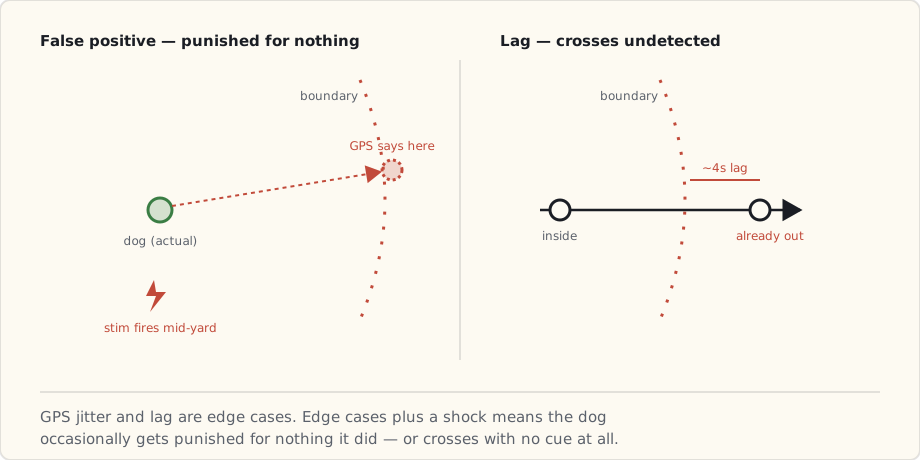
In two weeks, the GPS lost lock twice in our yard (under a partial tree canopy):
- Once: Atom got a stim correction while standing in the middle of the yard because the GPS estimate momentarily put him "outside the boundary." False positive.
- Once: Quark walked through the boundary undetected because the GPS lag was about 4 seconds.
Halo's marketing emphasizes the system reliability. Reality is GPS-based boundary detection has edge cases. Edge cases plus correction stimuli equals the dog occasionally getting punished for nothing they did.
What I think about the category
GPS-fence collars are a legitimate engineering category in the sense that the technology works. They're not a legitimate ethics category in the sense that they substitute a software system for a relationship.
The training approach that works is: teach the dog the boundary with positive reinforcement, treats, repetition, and physical boundary markers (flags). Halo's "audio + vibration + static" is the substitute for that training. It works on adult dogs that already have decent training; it fails on puppies and high-anxiety dogs.
For the specific question "should we use a Halo for our back property line," my answer is no. The alternative is a physical fence (more expensive, more permanent, but actually solves the problem with no welfare cost). We're going to install one.
The Halo apologists' counter
Halo's defenders will say:
- "But owners use it correctly with training."
- "The static is mild, dogs don't really mind."
- "It's better than a dog getting hit by a car."
Counter-counters:
- Most owners don't use it correctly. The training takes weeks of consistency. Many give up and rely on the correction.
- I tested the static intensity. It's not mild.
- "Better than hit by a car" assumes the fence is the alternative to no boundary at all. The actual alternative is a physical fence. Halo is the alternative to that.
What I'd buy instead
For the new house's back property line: physical wood-and-wire fence. Estimated $3,500-5,000. Permanent. No welfare cost. Solves the actual problem.
For tracking, in case a dog gets out (gate left open, fence damaged): the Fi collar I already have. LTE-M cellular tracking, with the home Wi-Fi handling the everyday case so the battery lasts. Not a fence — a recovery tool, and an honest one: it tells me where the dog is, it doesn't punish him for where he isn't supposed to be.
What's next
Purina's been signaling a smart-litter monitor — Petivity — for the multi-cat litter problem I keep complaining about. If it actually reaches retail this year, I'll put one on the floor and write up the multi-cat analytics: Petivity against the Litter-Robot, and whether either finally solves which cat without my spreadsheet.