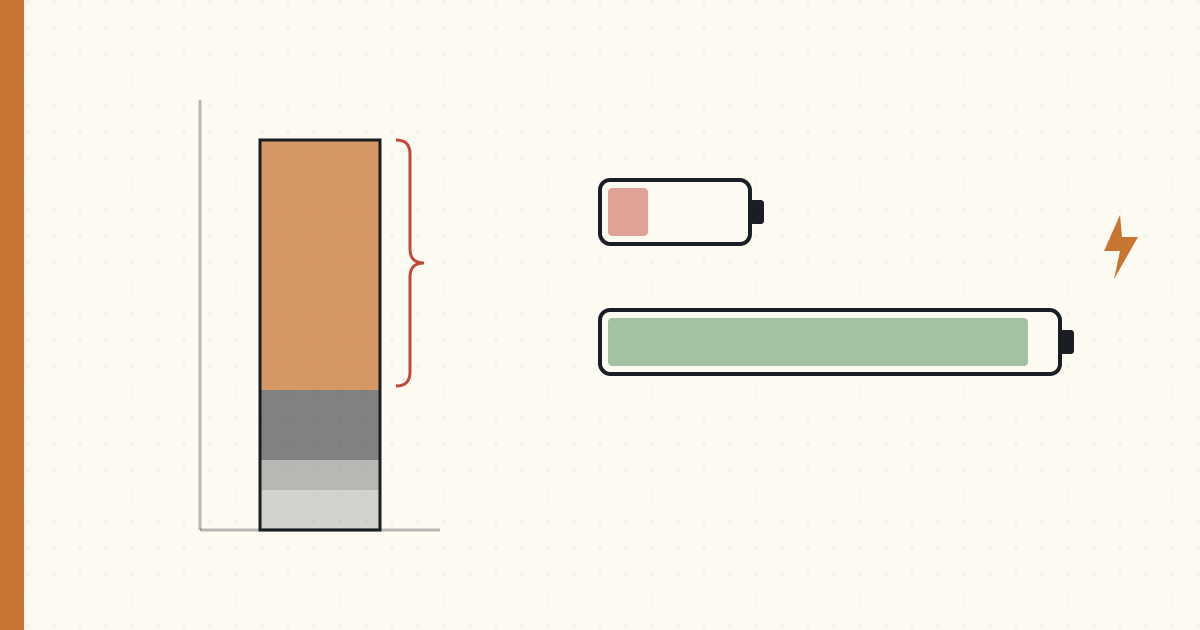
The pet-collar power budget — what a multi-week cellular tracker would actually take
The cellular pet tracker is the device I've wanted since 2013 and the device that keeps disappointing me on the one axis that matters: battery. The Whistle GPS Pet Tracker I lived with claimed seven days and delivered three to four — one, when it was actually tracking a loose dog. That isn't a Whistle failing so much as a physics failing, and I've been turning over the question of what it would take to fix it. So this post is an engineering exercise: I worked the power budget for a GPS dog collar from the components up, and there's exactly one lever in 2018 that could plausibly turn days into weeks.
Why pet GPS collars die fast
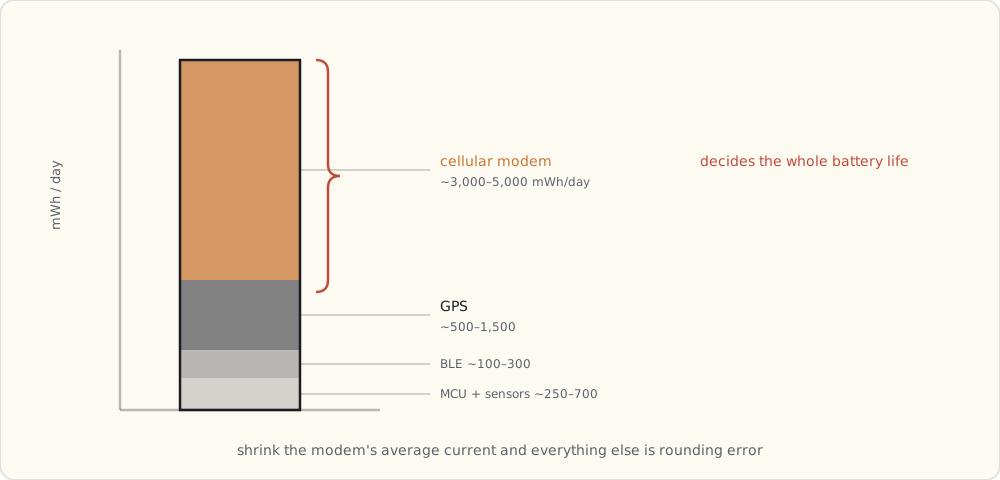
Where the energy actually goes on a cellular collar, per day:
| Component | Active draw | Duty cycle | Daily energy |
|---|---|---|---|
| Cellular modem (GSM/3G) | 0.5–2 W transmit, ~50 mW idle | High (always listening for the network) | ~3,000–5,000 mWh/day |
| GPS module | 60–120 mW when fixing | Periodic (every few minutes when active) | ~500–1,500 mWh/day |
| BLE radio | 5–15 mW | Continuous advertising | ~100–300 mWh/day |
| MCU + sensors + LEDs | 10–30 mW | Continuous | ~250–700 mWh/day |
| Total | ~3,800–7,500 mWh/day |
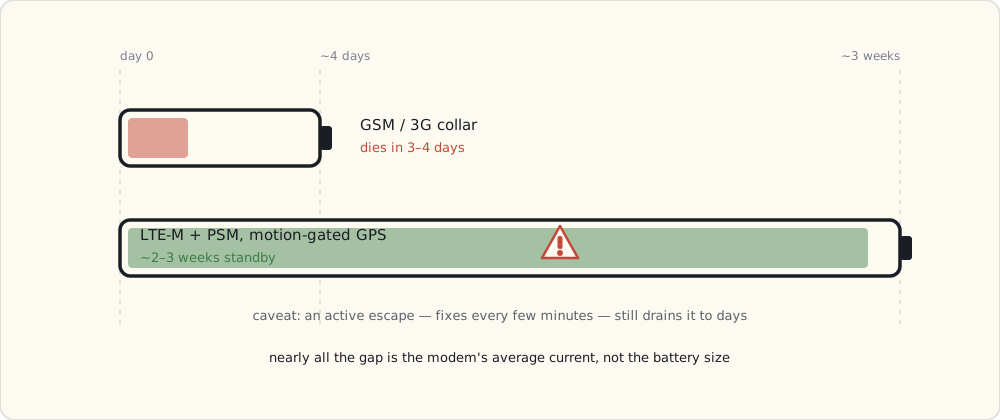
A puck like the Whistle carries roughly 3,700 mWh (about 1,000 mAh at 3.7 V). Set that against the table: at the ~7,500 mWh/day of active tracking, that's half a day. At the ~3,800 mWh/day of mostly-idle standby, it's about a day before the duty-cycling and deep sleep stretch it to the multi-day figures people actually see.
The one row that dominates everything is the cellular modem. A GSM/3G radio is a power hog — it transmits at up to a couple of watts and idles in the tens of milliwatts while it stays attached to the tower. The seven-day claim only works if the device spends nearly all its time in deep sleep with the modem doing nothing but listening for an occasional page. The instant it has to transmit — every position update while the dog is out — the budget collapses. Battery life on these things is, almost entirely, a question of how hard you can make the cellular radio sleep.
The one lever: LTE-M
The thing that could actually move this number is a cellular standard that only got real in the last year or two: LTE-M (Cat-M1), a low-power flavor of LTE built specifically for IoT devices that need cellular reach but not broadband speed.
- Throughput: about 1 Mbps peak, versus LTE Cat-4's 150 Mbps. A position fix is a few dozen bytes — you do not need broadband to send a lat/long.
- Power: an average of single-digit milliamps, with 100–200 mA peaks during transmit, against traditional cellular's tens of milliamps of average draw.
- The real trick — Power Saving Mode. PSM lets the modem tell the network "don't expect me for the next few hours," then drop into a deep sleep that draws microamps while staying registered. It wakes on its own schedule, sends its updates, and goes back down. That's the difference between a radio that's always half-awake and one that's asleep 95% of the time.
- Coverage: a better link budget than standard LTE, so it reaches into fringe and indoor spots where a normal modem drops.
The rollout timing is what makes this a 2018 conversation and not a 2016 one. AT&T lit up nationwide LTE-M in 2017; Verizon's followed through early this year. By now both carriers have LTE-M across most metro areas — which means a tracker built on it could actually work for a real customer rather than a lab. The Whistle GPS Pet Tracker can't take advantage of any of this: it shipped on GSM/3G in 2016, before LTE-M was deployable. A tracker designed two or three years later would be built on Cat-M1 from the start, and that single choice is worth more to battery life than any other decision in the device.
Working the multi-week number
Could an LTE-M collar actually hit the "weeks, not days" figure the category needs? Run the math:
- Put a slightly larger cell in it — say 1,800 mAh at 3.7 V, about 6,700 mWh, which fits a collar puck without making it a brick.
- Swap GSM/3G for LTE-M with PSM, taking the modem's average power from the ~2,000 mW-while-active regime down toward a couple hundred milliwatts averaged across a day of mostly sleeping. That's the ~10× reduction in the dominant term.
- Gate the GPS on motion — only fix when the accelerometer says the dog is moving — and lean on BLE when the dog is home near a paired base, so the expensive radios stay off until the dog is genuinely out and elsewhere.
- Wake the cellular only on a geofence break, not on a fixed timer.
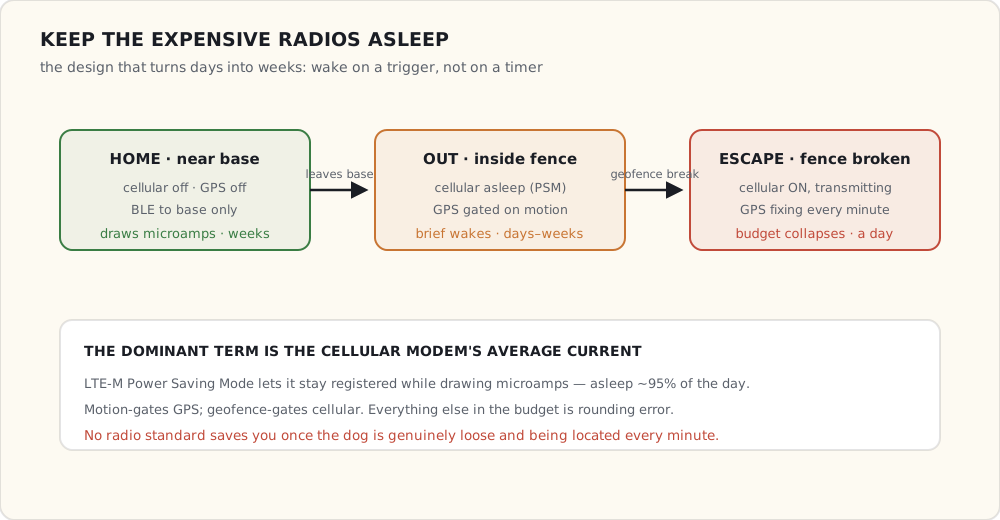
Do all of that and the arithmetic plausibly supports two to three weeks of standby — for a mostly-stationary dog inside a known geofence. The honest caveat is the same one that bit the Whistle: the instant the dog is actually loose and being located every few minutes, the modem is transmitting and the budget collapses toward days again. So "three weeks" would be a real and meaningful improvement, but it's a standby number. The number that matters in an emergency — dog out, fixes flying — is still measured in a day or two, and no radio standard changes that.
What I'd want from whoever builds it
There's an obvious opening here for a tracker that isn't owned by a pet-food conglomerate — the independent-data argument I've made since Mars bought Whistle — but the thing I'd actually judge it on is engineering honesty:
- Publish the battery number under load, not just standby. "Three weeks" on the box and three days when the dog escapes is the same bait-and-switch I logged on the Whistle. Tell me both.
- Be on LTE-M, and say which carrier. If it's still GSM/3G in 2018, the battery story is already lost. If it's Cat-M1, tell me whose network, because coverage is the product for a device that has to phone home from wherever the dog ended up.
- Motion-gated GPS and a real home/away model, so the device isn't burning the cellular budget while the dog naps on the couch.
The power budget is the whole ballgame, and for the first time there's a standard that could actually change it. Whether anyone ships a collar that uses it well — and is honest about the load number — is the thing I'll be watching.
What's next
The Litter-Robot's Wi-Fi connected version finally shipped, and I have one on order for Joule. The smart-litter category turns out to be where the genuinely medical pet data lives — visit frequency, duration, weight — so that's the next one.