A certificate that rides the gossip — and why I moved it
Everything up to here assumed one thing the mesh never actually enforced: that a node showing up in the gossip belongs there. Awareness and delivery across meshes were built and proven; every node even got its own local cache it owns. But the membership rule the whole time was embarrassing — anything that could speak the wire and join the topic became a member. Fine for a demo. Not a trust boundary.
This post adds one. The shape turned out small; the interesting part is a wrong turn I took first — a version that worked, was arguably more elegant, and still wasn't the right place to put the check.
Identity is not authorization
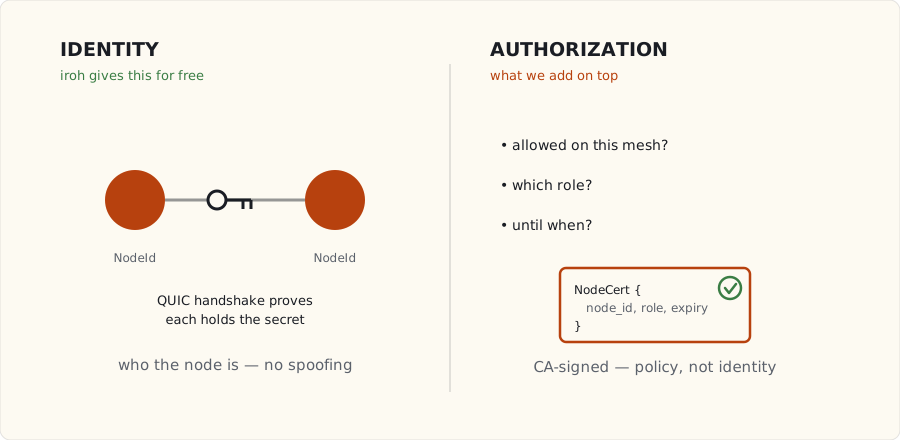
Start with what's already free. A node's NodeId is its ed25519 public key, and every QUIC connection iroh opens cryptographically proves the peer holds the matching secret. There's no spoofing a NodeId — the transport settled that before I wrote a line. I'm not re-proving identity here. Identity is done.
What iroh deliberately does not answer is policy. Is this authenticated node allowed on this mesh? What role does it have — gateway, broker, admin? Until when? Those are application questions, and iroh is a networking library that correctly refuses to have an opinion about my membership model. So the gap to fill is authorization, not authentication — and holding that distinction is the whole reason the answer lands where it does.
The shape: node-admin is the CA
The node-admin already creates every node — it spawns them with their topology — so it's the natural certificate authority. It holds one ed25519 keypair, reusing iroh's own crypto with no new stack, and that key is the root. When it spawns a node, it signs a tiny certificate over the node's identity:
pub struct NodeCert { pub node_id: String, pub node_type: String, pub expiry_ms: u64 }
// signed by the admin's CA key over postcard(cert) -> SignedCert { cert, sig }
The cert is nothing more than a signed assertion: the CA says NodeId X has role R until T. The only real question — the one this whole post is about — is where you verify it. There were two candidates, and I built the wrong one first.
The wrong turn: verify it in the gossip
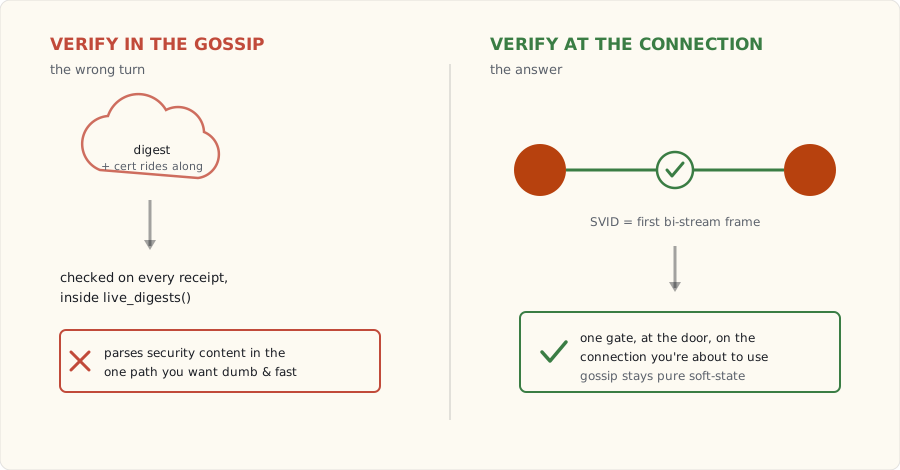
I built this one first because it had a property I wanted. The node carries the cert in its gossip digest — the heartbeat it already broadcasts — and every receiver verifies it before admitting the node to live_digests(). No valid cert, the digest gets dropped, the node never enters anyone's topology. Three checks on receipt:
- the CA signature is valid against the admin's public key,
- the cert's
node_idmatches the iroh-authenticated sender's NodeId — the anti–cert-stuffing bolt, so you can present your own cert but not wear someone else's, - it isn't expired.
And it works. I spawned six processes; only five entered the graph.
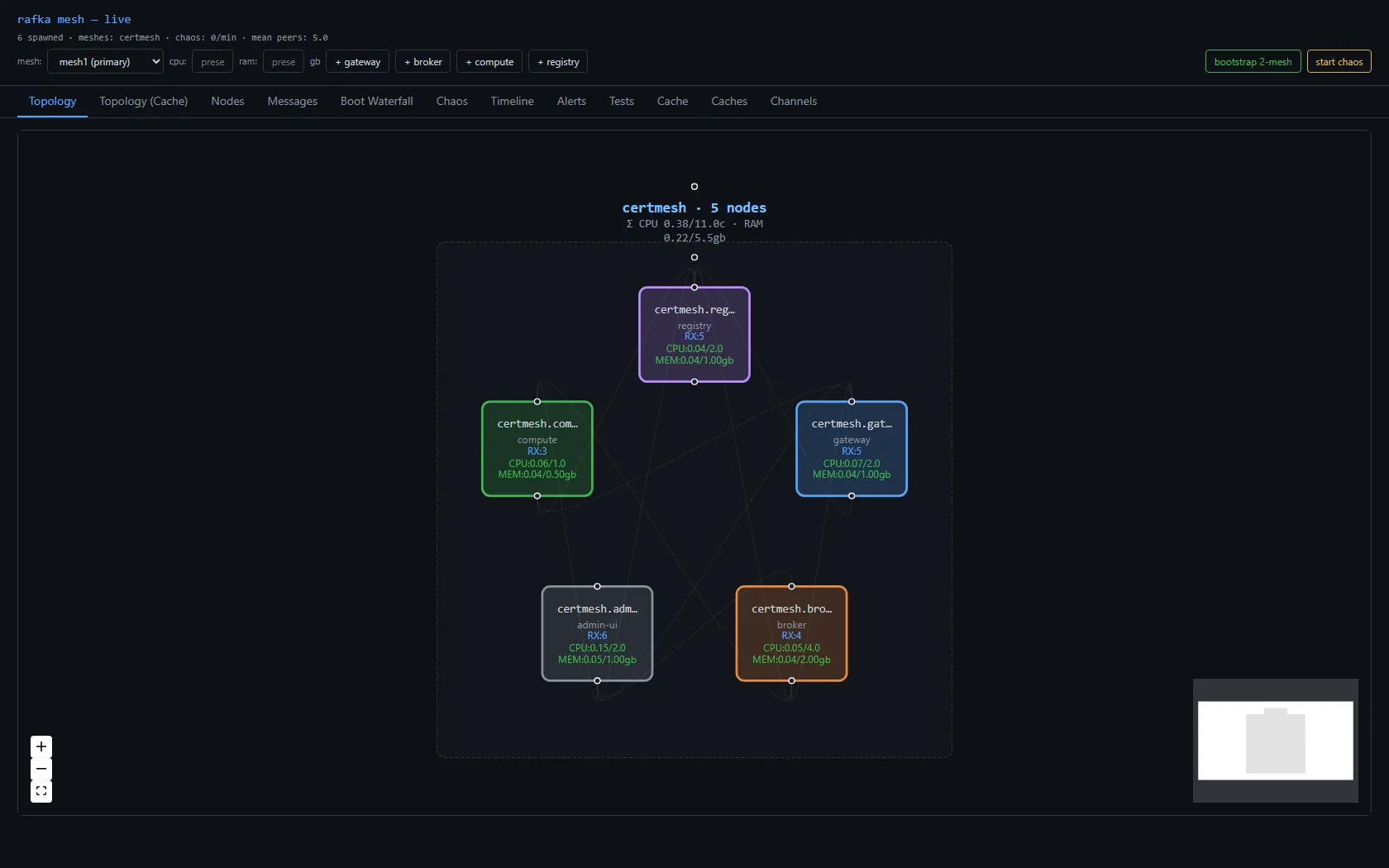
The console says it in one line: 6 spawned · 5 nodes. The sixth process launched with no cert, the boundary never let it into the graph, and the drop isn't a silent nothing — it emits a rafka.cert.reject span on every peer, queryable in Jaeger. It even bought something genuinely cool: it was the one thing that let a cross-mesh repeater carry trust. The repeater relays digests, so a signed cert riding the digest re-broadcasts into another mesh and validates end-to-end against a shared root. Trust that propagates by gossip and survives a relay hop — I liked it a lot.
So why is it a wrong turn?
...and the answer: verify it at the connection
Riding the gossip had exactly one load-bearing reason — that repeater. And the repeater is an experiment, not a destination. Cross-mesh in any real deployment isn't a digest-relaying middlebox; it's two nodes that open a direct connection to do work. Take the repeater away and the gossip-cert has no job left: the only thing it still buys is "an uncertified node is invisible in the topology" — marginal defense-in-depth, and I was paying for it by parsing security-critical content inside the gossip path, the one place in the whole system I most want to stay dumb and fast.
So the cert belongs at the connection, not in the gossip. A node presents its SVID — the short-lived signed credential — as the first bi-stream frame when it opens a connection to do work, and the far side runs those same three checks right there, before it trusts the connection for any data. Gossip goes back to being pure soft-state membership, carrying no trust at all. One gate, at the door, on the connection you're actually about to use.
That's the lesson this series keeps re-teaching me. I made the relay prove it carries instead of trusting that the path existed; I chased a bug that wasn't where the theory said it was. Same shape every time: the tidy, clever mechanism — trust that rides the gossip and survives a relay — lost to the boring one that checks the credential where it gets spent.
Why it isn't HMAC
A shared-secret HMAC was the earlier direction in the project, and retiring it for signing is half the reason this post exists. HMAC is symmetric: the key that verifies a MAC is the same key that mints one. Once you see that, you can't unsee it.
Symmetric means there's no issuer/verifier split. I wanted a CA that issues and a fleet that only verifies — but with HMAC every verifier is also a forger, because anyone who can check a cert can fabricate one for any identity. The blast radius is the whole mesh: recover the shared secret from one node and you can forge every node. And the shared root — the thing I was about to lean cross-mesh trust on — becomes a shared forging key. That's not a root of trust. That's a skeleton key handed to everyone.
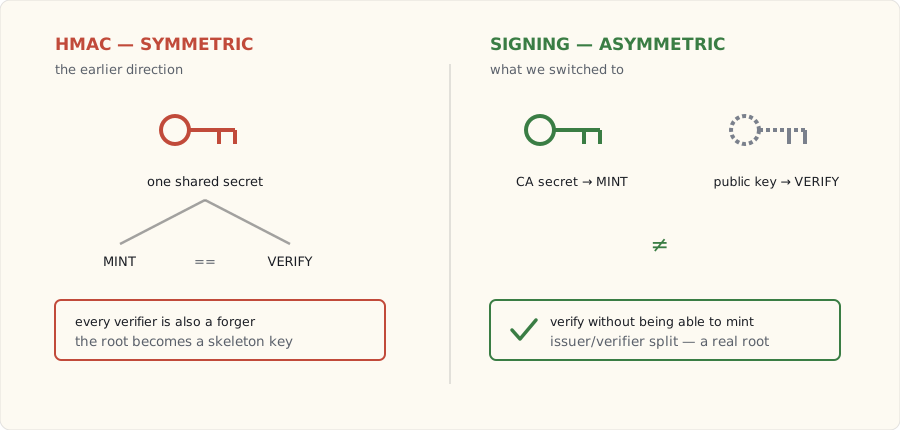
Asymmetric signing fixes all three for the cost of switching one primitive. The CA's secret issues, its public key verifies, and a verifier can prove a cert genuine without ever being able to produce one. The whole reason a root of trust works is that the thing you hand out can't be used to forge.
Why it isn't quite mTLS
The honest version: presenting the SVID at connect-time is the mTLS idea — a credential exchanged and verified when the connection opens. I just didn't reach for X.509 mTLS to do it, and the reason is the one I keep coming back to: identity is already free.
iroh's QUIC is already mutually authenticated, by the NodeId — an ed25519 key both ends prove. Bolting X.509 on top would re-prove the identity I have for nothing and drag in a whole PKI: cert chains, ASN.1 parsing, CRL or OCSP for revocation. The only thing I need to add is the authorization layer — {NodeId, role, expiry}, CA-signed — and a short-lived ed25519 SVID as the first bi-stream frame does exactly that, on iroh's existing crypto, with revocation as a short TTL plus re-issue instead of a revocation list. mTLS-shaped, built the cheap way: identity from iroh, authorization from one tiny signed frame on top.
The shared root still earns its keep
The repeater was the part to drop. The shared root that rode on it was the genuinely good idea, and it survives the move intact. The CA key is one keypair, and it's shareable: copy ca-secret.json into a second admin's data dir before it boots, and now two meshes issue certs from the same root.
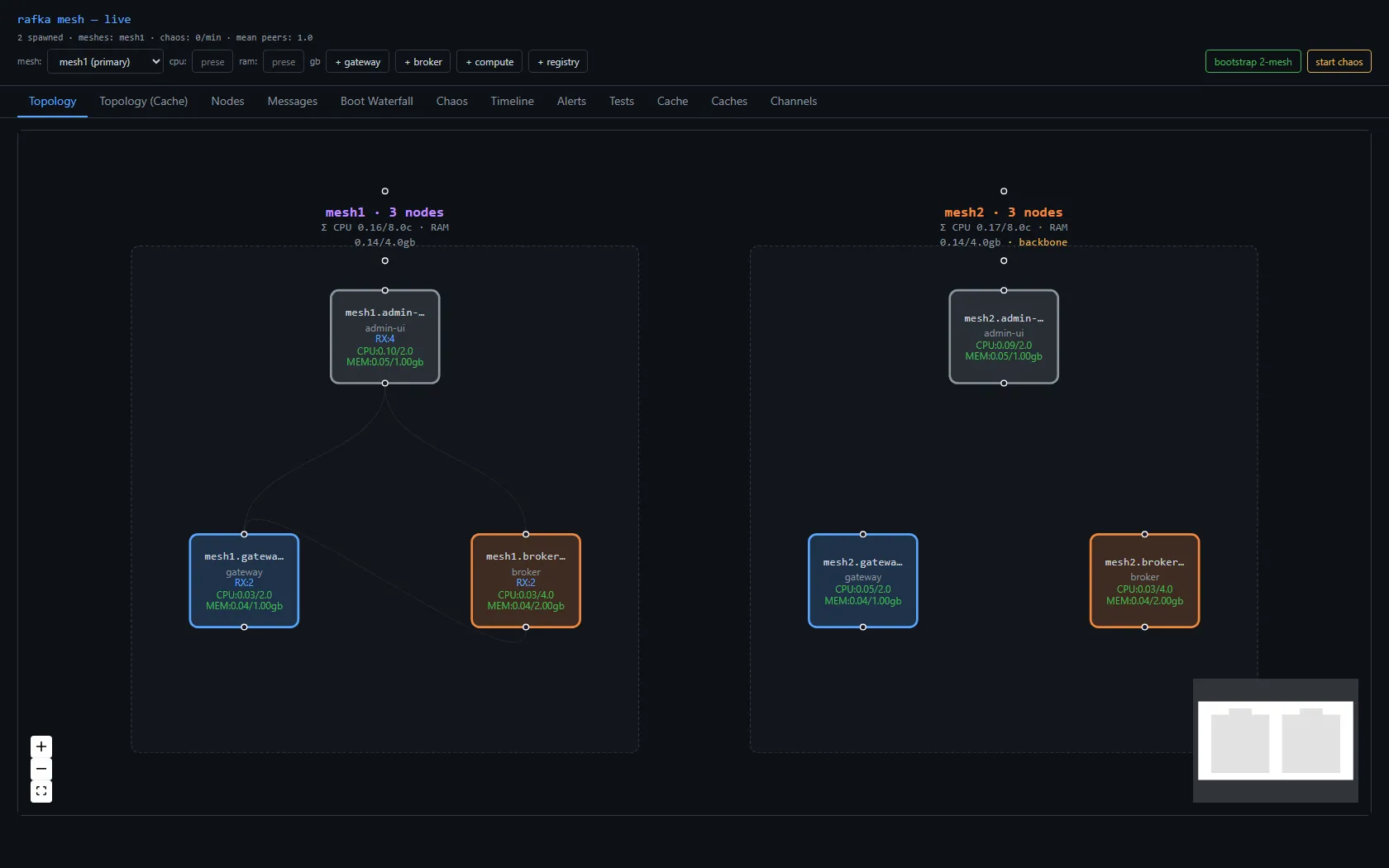
That's what makes cross-mesh trust work without the repeater. When a mesh1 node opens a direct connection to a mesh2 node, it presents its SVID and the far side verifies it against the shared root. The two certs trace back to one authority, so the connection is trusted — even though the meshes never share a single gossip message. The trust travels with the node, on the connection, not through the membership layer.
What it cost
One ~100-line cert.rs — issue_cert and verify_cert, hex-postcard on the wire — plus exactly one verification point, the bi-stream a node already opens to do work. No PKI. No new crypto dependency. No extra round-trips, because the credential rides a frame that was going to be sent anyway. The gossip experiment wasn't wasted: it was real, it was verified, it shipped its rafka.cert.reject spans, and it taught the lesson by being the more elegant answer that turned out to be the wrong one.
What I'd tell a team
- Separate the two questions before you build anything. Who is this and is it allowed here feel like one question and they are not. iroh answered the first for free; the second is yours, and the whole design clarifies the moment you stop trying to make one mechanism carry both.
- Check the credential where the trust is spent, not where it's convenient. The gossip-cert was convenient — the heartbeat was already flowing — and it went green every time. But "it works" is a claim about the mechanism, not about whether the mechanism belongs there. The trust gets spent on the connection that moves data, so that's where the check belongs. A clever check in the wrong place is still in the wrong place.
- Pick asymmetric the moment issuer and verifier should be different roles. If every party that checks a credential can also forge one, you don't have a root of trust, you have a shared secret wearing a costume.
Identity was iroh's job. Authorization turned out to be one signed cert — checked at the door, where the trust is actually spent.
What's next
The substrate has a trust boundary now, and a clean answer to who belongs here. That's a lot of pieces stacked up over a lot of sprints — awareness, delivery, lifecycle, caches, and now a credential at the door. At some point the honest move isn't to add another piece. It's to step back and ask whether the whole thing is actually ready to build on, or whether I've been admiring the scaffolding. That's next.