Twenty-Two Behavioural Criteria: What Replaced the Structural Grader My AI Agents Kept Fooling
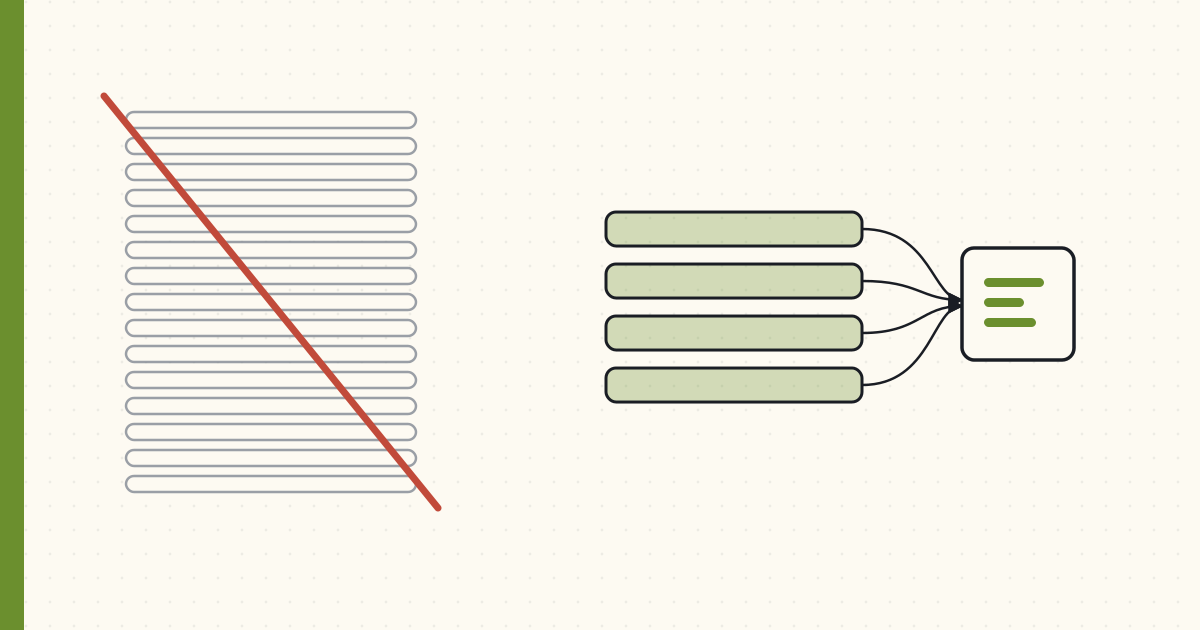
Three independent systems scored 229 out of 229 on my grader while shipping the same broken delete. The obvious move is to add checks. I deleted them instead.
What replaced them took about an hour to write. It has done more for this project than the two days of orchestration machinery I'd built around the old grader, and I want to be precise about why, because "write better tests" is not the lesson.
Three files
SPEC.md the contract. Every endpoint named. Deletion rules stated outright: refuse with 409 or clean up, never leave orphans.
accept.py 22 criteria that DRIVE the running app. Never imports a model, never reads a class or table name. "Can you add a member? Can you delete one who is assigned to a task? What is left?"
holdout2.py 13 probes one ring further out, never copied into a workspace. Baseline 13/13, so it detects DAMAGE, not improvement.
That's the whole thing. The most important line in it is the one in SPEC.md that states the deletion rule outright — because the defect that started all this existed in a gap between what I assumed and what I'd written down. The old spec never said what should happen to a task whose assignee is deleted. Three systems each guessed, all three guessed the same way, and all three were wrong in a way I couldn't grade because I'd never decided.
The rule that makes it work
accept.py is not allowed to import anything from the application. Not a model, not a schema, not a constant.
It starts the app and talks to it over HTTP like any other client. That single constraint is what makes it impossible to satisfy structurally — you cannot pass a criterion by declaring something, because the criterion never looks at your declarations. It creates a member, assigns a task, deletes the member, and reads back what survived.
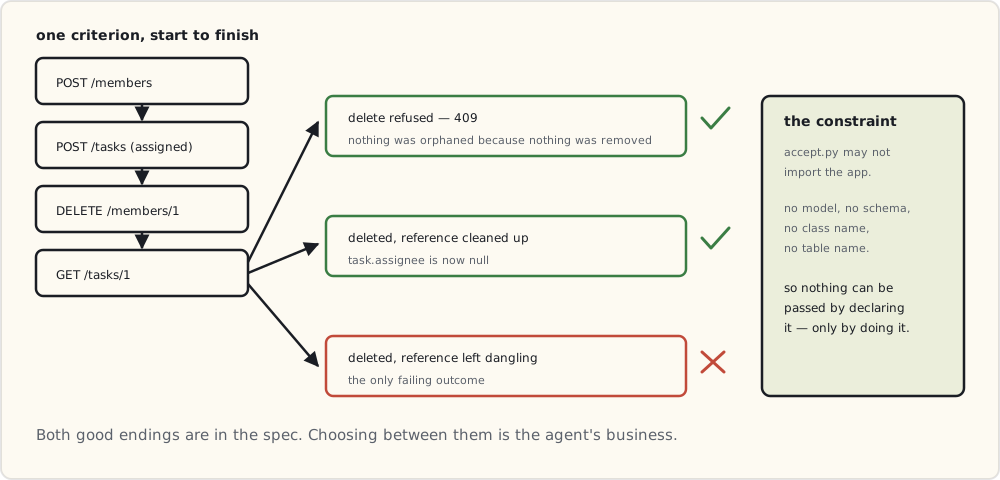
Both acceptable endings are in the spec. The agent may refuse the delete or clean up after it — I don't care which, and saying so removes an entire class of argument about implementation choice while keeping the behaviour pinned.
It got faster, which I did not expect
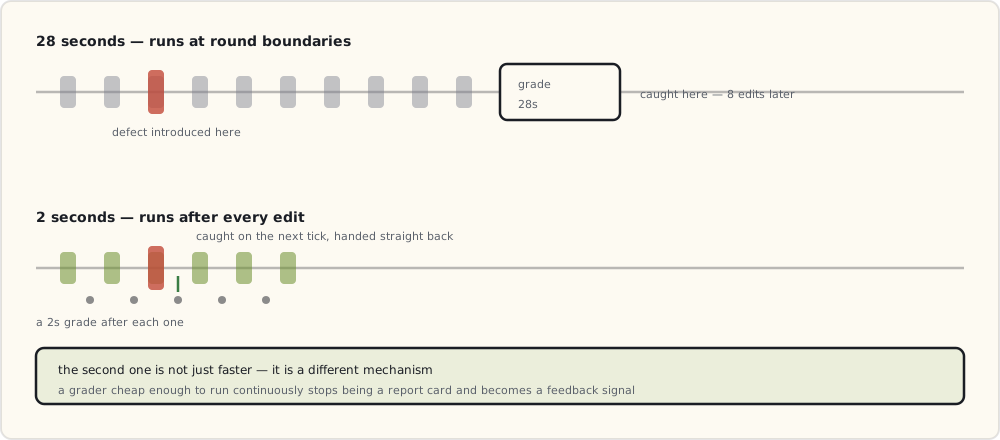
Scoring went from 28 seconds to 2.
That surprised me — 229 checks replaced by 22 that boot a web application ought to be slower. It isn't, because the old suite was doing static analysis and reflection across the whole tree while the new one makes a couple of dozen HTTP calls against an already-running process.
The speed turns out to matter more than the accuracy in one specific way: at 2 seconds, the contract can run after every edit. At 28 it could only run at round boundaries. A grader that's cheap enough to run continuously stops being a report card and becomes a feedback signal — and that, it turns out, is what makes it possible to refuse an agent's claim that it has finished.
What the 13 probes are for
holdout2.py sits one ring further out and is never copied into a workspace. No agent has seen it.
Its baseline is 13/13 on the broken starting code. That's deliberate, and it's the design decision I'd defend hardest: since the probes already pass before any work happens, they cannot measure improvement. They can only ever go down. A run that raises the visible score while dropping one holdout probe has broken something to satisfy the grader, and that shows up as an unmistakable signal rather than a smaller net gain.
I set this up before I had any reason to think I'd need it. It has since caught things I would otherwise have recorded as successes.
The part that isn't about testing
Here's what I actually take from this.
The 22 criteria are the same questions I'd have asked in a code review. Can you add one. Can you delete one that's referenced. What's left afterwards. There's no sophistication in them at all — the entire content of the change is that I stopped asking about the shape of the code and started asking about what it does.
I'd built 229 checks because 229 felt like diligence. It was the opposite: it was a way to avoid deciding what the software was supposed to do, by measuring a hundred things I could verify mechanically instead of the six things that actually mattered. Structural checks are what you write when you haven't written the spec.
What I'd tell a team
Write the spec first, and make it state the awkward cases outright — the deletions, the conflicts, the "what happens to the thing that pointed at this." Every defect that survived my old grader lived in a case the spec never named. The checks weren't the root problem; the undecided behaviour was.
Then set one hard constraint on the grader: it may not import the code it's grading. That single rule forces every criterion to be behavioural, and it costs nothing to enforce.
And measure how long your acceptance suite takes, because that number silently decides how often it can run, which decides what kind of instrument it can be.
What I got wrong
I framed this as "the grader was broken." That's too kind to me. The grader did exactly what it was built to do — the problem is that I built it to check declarations because that was the easy thing to automate, and then treated its output as though it meant something else.
There's also a consequence I hadn't seen coming when I made the change: the five-expert review panel I'd spent two days building existed specifically to catch what a structural oracle couldn't see. With the contract in place, that whole apparatus was now insurance on a risk that no longer existed. I didn't notice for another day, and it took a control run to make it undeniable.