 Notebook · 11 parts
 IoT & Connected Devices — Year in Review
Every January, a connected-devices forecast — last year's bets scored honestly against what actually shipped, then this year's placed in the open. Read it forward and the field grows up in front of you: smartwatches become a category, voice goes from sci-fi to ambient in three years, AR glasses start eyeing the phone's job. Read it backward and the patterns surface — protocol fragmentation that never resolves, the long regulatory gate on medical-grade wearables, and the category-creators that don't survive their own runway.
Every January I publish a connected-devices forecast, and every January it opens the same way: I score last year's predictions against what actually happened — gadget by gadget, protocol by protocol, hit, miss, or the honest half-miss — before I'm allowed to place a single new bet. No consultant hedging, no quietly dropping the calls that aged badly.
The first half is the scorecard. The second half is the year ahead — eight or so bets, ranked by how much conviction I'd stake and how soon I think each one lands.
Read these forward and you watch the industry mature from "smartwatches will be a thing" to "AR glasses are coming for the phone." Read them backward and the patterns repeat: standards bodies that never converge, the regulatory gate that keeps medical-grade sensors eighteen months further out than anyone wants, and the category-creator hardware that runs out of runway right as the category it invented takes off without it.
 Part 01 of 11
 IoT & Connected Devices — 2016 Predictions and Outcomes
Apple Watch landed, Echo took the kitchen counter, and Nest got swallowed by Google. The 2015 connected-device score sheet, plus eight bets I'm placing for 2016.
Welcome to the first year-in-review for connected devices. Predictions and outcomes, calibrated by what actually shipped. The format: first half scores the year that just ended; second half lays down what's about to land. Honest scoring, no consultant hedging.
How 2015 actually played out
Last January the consensus called for "the year of the smartwatch," "voice assistants in every home," and "the smart-home unification standard finally arrives." Two out of three landed; the third is still embarrassing the industry.
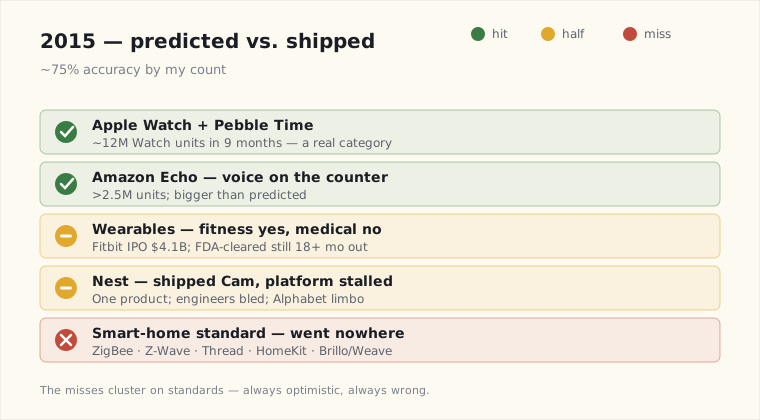
Apple Watch shipped, and the market is bigger than the naysayers said. The 1st-gen Watch (April 2015) sold roughly 12 million units in its first nine months. That's not iPhone numbers, but it's a real category. Pebble Time (May 2015) shipped on its Kickstarter promise and lit up a smaller but loyal market. Hit.
Amazon Echo went from "weird Bezos toy" to kitchen-counter default. Echo became broadly available June 2015 after a year of invite-only rollout. Sold over 2.5 million units by year-end. Voice as an interface stopped being a sci-fi thing. Hit, bigger than predicted.
Smart-home standardization went nowhere. ZigBee, Z-Wave, Thread, Apple HomeKit, Google Brillo/Weave — five competing visions, zero convergence. The standards story in 2015 is "five standards is what you get when nobody agrees." Miss.
Nest got acquired and quiet. Google bought Nest in 2014 for $3.2B; 2015 was supposed to be Nest's "Nest-Cam-everywhere" year. Instead the company shipped one product (the Nest Cam, June 2015), bled engineers, and went into Alphabet limbo. Half-miss — Nest Cam sold okay but the platform strategy stalled.
Wearables got the fitness story right and the medical story wrong. Fitbit went public (June 2015) at a $4.1B valuation. Strong. But the predicted shift from "step counter" to "FDA-cleared medical device" didn't happen. Fitbit's medical play is still 18+ months out. Half-hit.
Net 2015 scorecard: roughly 75% prediction accuracy by my count. The misses were on standards (always optimistic, always wrong) and on the speed of medical-grade wearables (regulatory, not technical, gates).
What I got wrong personally
I called for Pebble to win on developer ecosystem. Pebble Time shipped fine but Apple Watch's developer pull was bigger than I thought a $500 wrist-computer could generate. Lesson: don't bet against the platform with the App Store.
2016 predictions
Here's how I'd place the eight bets below — by how much conviction I'd stake on each (vertical) against how soon in the year it lands (horizontal). The top-left cluster is where I'd put money; the bottom-right is where I'm hedging.
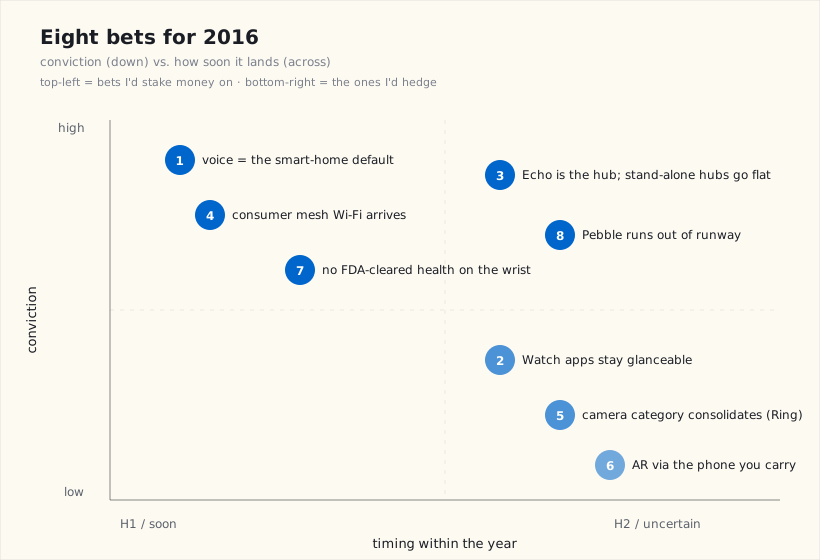
1. Voice will eat the smart-home interface. Echo Dot (rumored, ~$50) ships first half. Google announces a competing speaker by Google I/O. By year-end, the default way to turn on a light in a smart home is voice, not an app. The app companies that haven't figured out voice are going to have a rough year.
2. The Apple Watch app story gets fixed, or doesn't. Watch OS 2 already shipped native apps; if the third-party app ecosystem doesn't catch up by year-end, the platform stalls. My bet: it doesn't catch up. Most apps will still be glanceable companions.
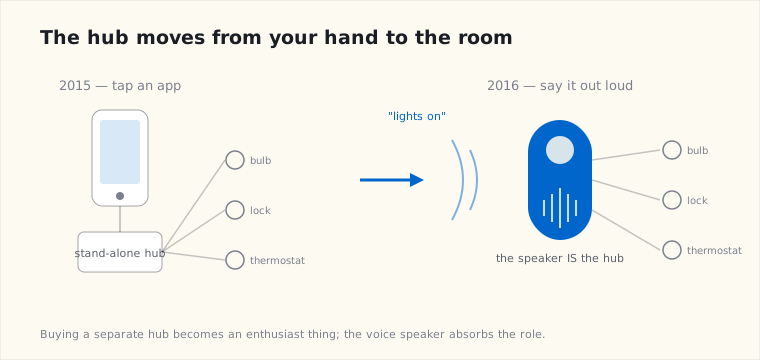
3. Smart-home hubs lose to ambient hubs. SmartThings, Wink, and the like will see flat sales. The Echo is the hub now. Buying a separate hub becomes a thing only enthusiasts do.
4. Mesh wifi enters the chat. Eero (the mesh-router startup, shipping any week now), Luma, and Google's WiFi (rumored) launch the consumer mesh category. Single-router setups start to feel dated by Q4.
5. The connected camera category consolidates. Nest Cam, Arlo, Ring — three brands, three approaches. Ring (battery doorbells) is the dark horse; betting they get acquired or hit serious scale by year-end.
6. AR via phone becomes a thing. Magic Leap is still mostly vapor; but Tango (Google) shipping in a Lenovo phone mid-year + iPhone with rumored depth-sensing camera = AR via the device you already carry. The Pokémon Go rumor is real, and it'll be bigger than anyone is forecasting.
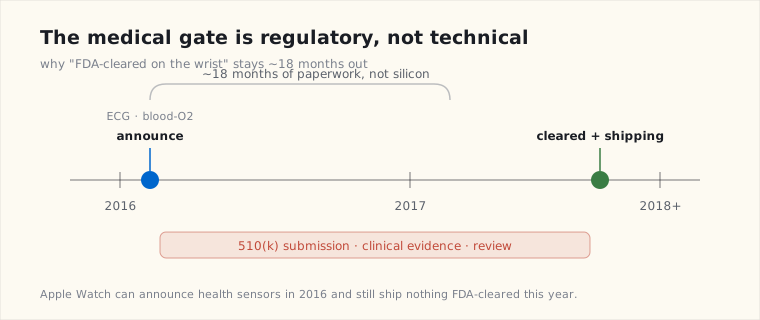
7. Wearables medical story still 18 months away. Apple Watch will announce health features (ECG, blood-O2) but won't ship FDA-cleared anything in 2016. The regulatory path is real and slow.
8. Pebble runs out of runway. Hard call, but the cap table tells the story. Either they get acquired (Fitbit is the bidder) or they wind down. Either way, the independent smartwatch category becomes a duopoly: Apple + Garmin.
Gratitude beat
Big thanks to every hardware engineer shipping firmware updates over Bluetooth in 2015. The category exists because you wrote OTA stacks in your spare cycles. Thank you.
 Part 02 of 11
 IoT & Connected Devices — 2017 Predictions and Outcomes
Echo Dot ran the table, Google Home shipped right on cue, and Pokémon Go showed the AR future already in your pocket. The 2016 score sheet, plus bets for 2017.
Year two of this exercise. Last year I went 75% on the predictions, and this year is going to be tighter because the category is maturing. Maturing means fewer "wait, that worked?" upsets and more "yep, the steady arc continues."
How 2016 actually played out
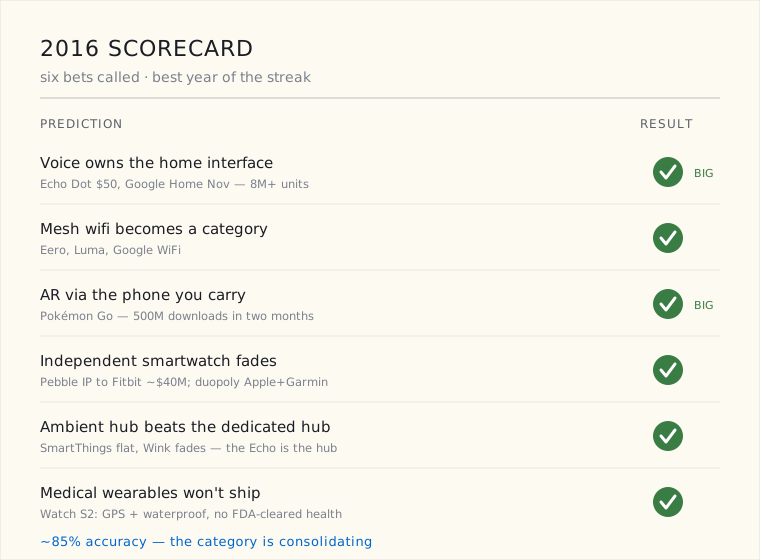
Voice ate the smart-home interface, as predicted. Echo Dot (March 2016) at $50 was the year's most-purchased connected device. Google Home shipped November 2016 — exactly the rumored Google I/O timing slipped six months. By year-end Echo + Dot units sold are estimated at 8M+. Big hit.
Mesh wifi launched as a category. Eero (Feb 2016) shipped strong, Luma followed, and Google WiFi (Dec 2016) arrived in time for the holidays. Single-router setups now feel obviously dated to anyone who's seen the alternative. Hit.
Pokémon Go was bigger than anyone forecasted. July 2016 launch, 500M downloads in two months, AR became a household word. The bet that "AR via the device you already carry" would land in 2016 — landed. Three years before Apple ships ARKit at scale. Big hit.
Pebble wound down. Fitbit acquired Pebble's IP in December 2016 for ~$40M and discontinued the hardware. Independent smartwatch category became a duopoly exactly as predicted (Apple + Garmin). Hit, and a sad one. Pebble made good products.
Smart-home hubs lost to ambient hubs. SmartThings sales went flat, Wink got acquired by a private-equity shop and quietly disappeared. The Echo is the hub. Hit.
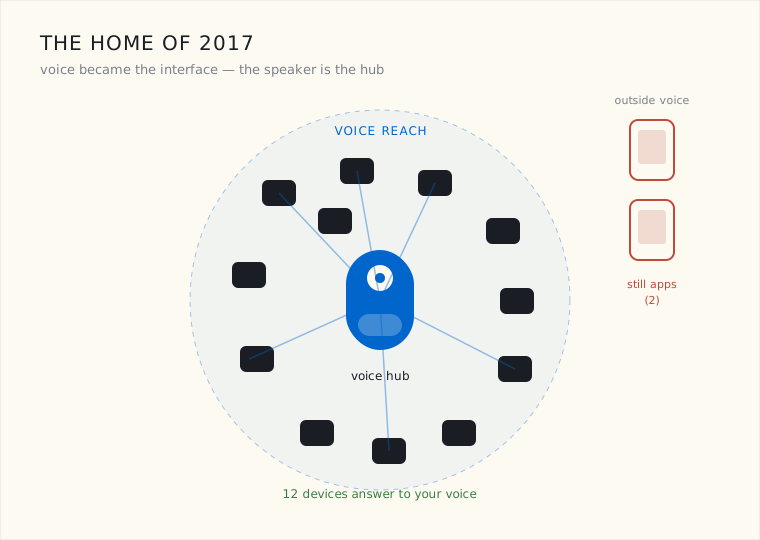
This is the shape the year took. The home of 2017 has fourteen connected devices in it. Twelve of them respond to your voice. Two of them are still apps — and those two feel like the holdouts now, not the norm.
The medical wearables story didn't ship. Apple Watch Series 2 (Sep 2016) added GPS and waterproofing but no FDA-cleared health features. Hit on the prediction (we said it wouldn't ship).
Snap Spectacles launched and flopped. September 2016 limited release; reportedly 220,000 unsold pairs by mid-2017. AR glasses are not ready for consumer scale. Useful negative signal for 2017. (Not on my prediction list, but a 2016 data point worth marking.)
Net 2016 scorecard: roughly 85% prediction accuracy. Best year of the streak so far. The category is consolidating; predictions get easier when the platform players win and the indies fade.
What I got wrong
I forecast Apple Watch's third-party app ecosystem wouldn't catch up. It half-caught up — Watch apps are still glanceable companions for the most part, but a few standalone apps (Strava, Spotify in beta) showed the path. Call it a half-miss.
I also under-weighted the screen. For most of 2016 I treated voice-only as the whole story and waved off the idea of a screen on the speaker — a screen felt like a TV in the kitchen, not an interface. The chatter that Amazon is working on a display-equipped Echo has me rethinking that. Early call to revisit: visual + voice may be a real category, and I didn't see it coming.
2017 predictions
1. Apple ships a Siri speaker, and it's late. The rumored "Siri speaker" finally gets a reveal — I'd bet on a mid-year stage (WWDC is the natural slot), shipping by the holidays at the earliest, and probably slipping past them into early 2018. It'll get good reviews for sound and rough reviews for Siri, which has fallen meaningfully behind Alexa and Assistant.
2. AirPods become Apple's secret weapon. Shipped December 2016 (delayed from October); 2017 is the year the production catches up to demand. Q4 2017 quarterly run-rate hits $1B+. Best in-ear product Apple has ever made and the most underestimated launch of the decade.
3. Smart displays become a category. Amazon ships the rumored screen-equipped Echo in the first half, Google answers in the second half with one of its own. Visual + voice + ambient becomes the kitchen interface. Lenovo and Sonos enter the conversation by year-end.
4. Apple Watch Series 3 ships with LTE. Cellular is the feature that turns Watch from accessory to standalone device. Q4 launch. Will announce big but the LTE activation experience will be a mess for a few months. (Carriers, not Apple.)
5. Ring gets bought or goes public. They're at 1M+ devices sold; the doorbell category is real. Amazon is the obvious buyer. Bet on acquisition announcement before year-end.
6. Connected cameras consolidate to three serious players. Nest, Arlo, Ring. Everyone else gets absorbed or pivots to commercial.
7. Bluetooth Mesh standardizes, finally. The spec is real and lighting partners are committed. Standardization push happens mid-year. (Will probably ship spec; will not ship at consumer scale until 2018-19.)
8. The first "thrown out at the curb" moment for IoT devices that no longer get updates. Some 2014-era smart hub or thermostat will be officially end-of-life'd this year, leaving customers with a brick. The first big consumer-trust hit for IoT.
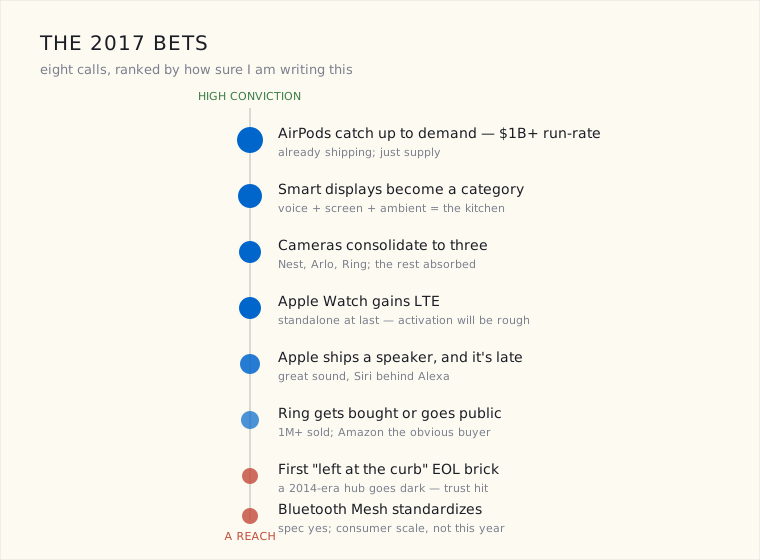
The bets at the top are barely predictions — they're momentum I can already see. The two at the bottom are the ones I'm least sure of, and the EOL-brick one I'm rooting against even as I call it.
Gratitude beat
Big thanks to the OTA-update engineers keeping 2014-era devices alive in 2017. The unglamorous backend work is what makes IoT survive past the second-year cliff. Thank you.
 Part 03 of 11
 IoT & Connected Devices — 2018 Predictions and Outcomes
HomePod slipped past Christmas exactly as predicted, AirPods became Apple's surprise hit, and the camera market consolidated hard. The 2017 score sheet, plus what's about to land in 2018.
Year three. The category is settling into adolescence — fewer surprises, more compounding. Predictions get more boring and more accurate at the same time.
How 2017 actually played out
HomePod slipped past Christmas, exactly as called. Apple announced it at WWDC June 2017, promised "December," then in November pushed it to early 2018 — it still isn't on shelves as I write this. The slip is even worse than the December-to-January bet I made. Hit.
AirPods became Apple's secret weapon. Q4 2017 run-rate cleared $1B easily. Production constraints eased through the year. Best Apple launch of the decade by quiet revenue. Big hit.
Smart displays became a category. Echo Show shipped June 2017, Echo Spot followed in December. Google's answer didn't land in 2017 — no first-party display, and the partner hardware (Lenovo, JBL, LG) is only now leaking ahead of the spring — so the "Google answers in 2017" call slipped. Hit on the category, miss on the Google timing.
Apple Watch Series 3 with LTE shipped, activation was a mess. September 2017 launch, carriers initially refused to honor activation in many regions, eSIM provisioning broke for thousands of customers. Sales rebounded once carriers fixed it in Q4. Hit, including the predicted carrier debacle.
Ring as an acquisition target. I called Ring getting bought in 2017; no deal closed inside the year. But the chatter is loud — Ring raised again in Q4, and the doorbell category is exactly the kind of thing one of the platform giants swallows. Right in shape, wrong on the calendar so far. Half-hit until a deal actually prints.
Camera consolidation happened. Nest, Arlo (Netgear spun it off in early 2017), and the rest of the doorbell/camera field tightened fast around a few names. Everyone outside the leaders (Canary, etc.) limped. Hit.
Bluetooth Mesh spec shipped, no consumer products. The spec dropped July 2017. Zero meaningful consumer rollout. Hit on the prediction (spec yes, products no).
First "device end-of-life" moment. Logitech told Harmony Link owners in November that the hub would stop working in the spring — a paid-for device with a scheduled brick date — but Lowe's Iris and a couple of other 2014-era hubs had already gone dark earlier. Logitech was the noisiest, not the first. Half-hit — the prediction was right in shape, slightly wrong on which company would draw the heat.
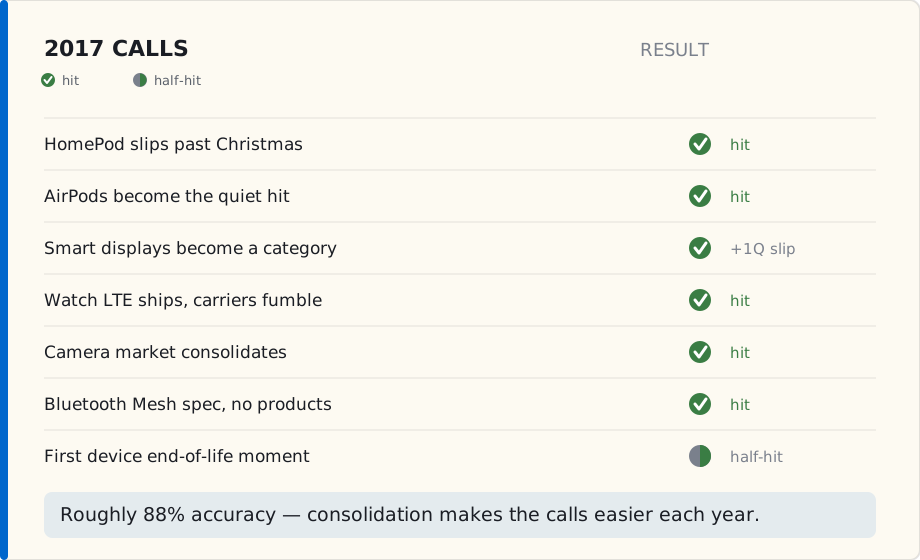
Net 2017 scorecard: roughly 88% prediction accuracy. The platform consolidation makes calls easier. Watch this number trend up as the category stabilizes.
What I got wrong
I underestimated the Google Home Mini's distribution power. $29 with Google's bundling muscle put a Mini in millions of US homes in Q4 2017 alone. The "Echo wins the home" framing needs a sub-clause: Echo wins, but Google Home is closer than I called.
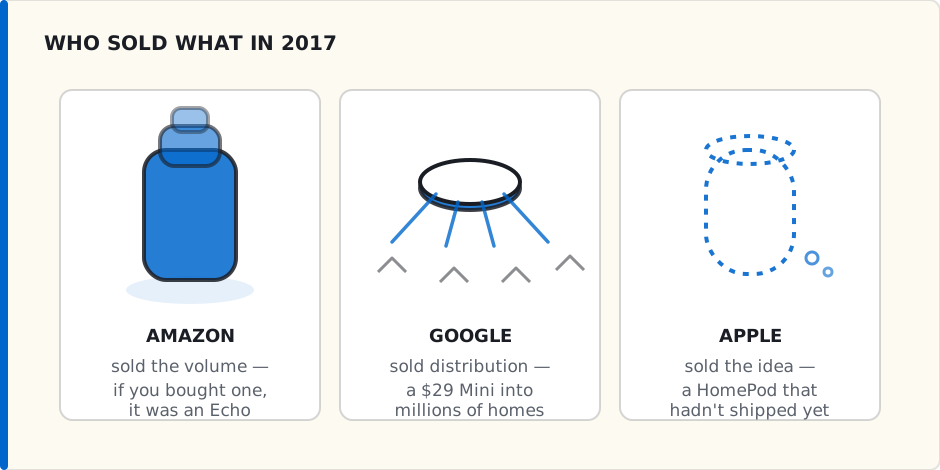
I also missed how badly the content side of Apple Watch would lag. Apple Music + Apple Podcasts on the Watch in 2017 was rough; Spotify support didn't ship until November. The platform underbuilt its own watchOS apps.
2018 predictions
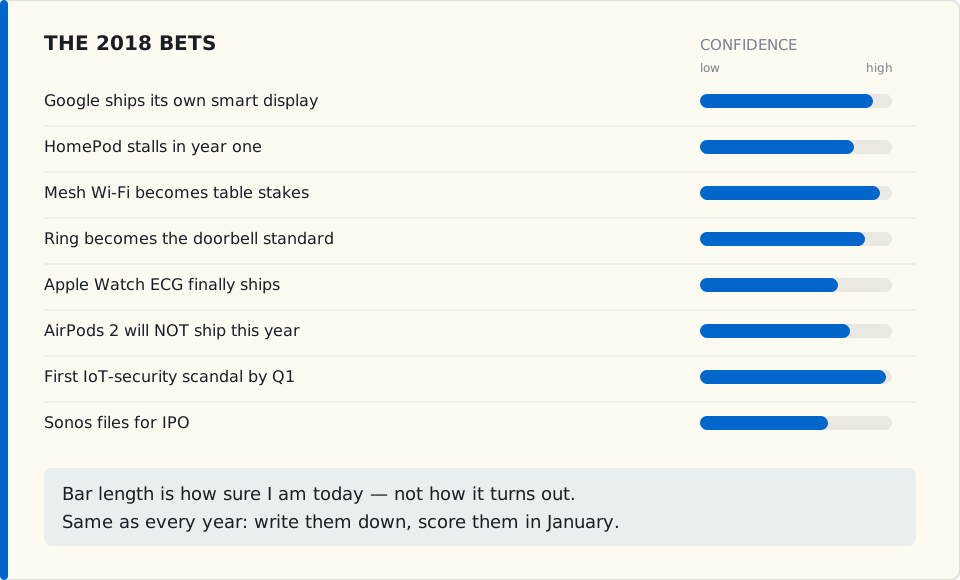
1. Google ships its own smart display. A first-party Google smart display lands this year, most likely in the fall hardware window. The partner-display strategy (Lenovo, JBL) gives Google a foothold, but Google will want first-party hardware to set the bar.
2. Apple's HomePod fails commercially in year one. Strong reviews on sound, but Siri's voice-assistant gap, the $349 price, and the "only works with Apple Music initially" footgun ship under 4M units. Apple will frame this as success; the units tell the real story.
3. Mesh wifi becomes table stakes. Eero, Google WiFi, Netgear Orbi, Linksys Velop, TP-Link Deco all in mass retail by mid-year. Single-router category shrinks to budget tier only.
4. Ring under Amazon becomes the doorbell standard. Expect price drops on entry-level Ring — a sub-$100 second-gen doorbell would clear most price barriers. Nest's rumored video doorbell becomes the premium competitor; together they own ~70% of the category by year-end.
5. The Apple Watch ECG finally ships. This year's Apple Watch — likely the fall model — arrives with an FDA-cleared ECG and irregular-heart-rhythm detection. Three years late vs the 2015 hype, on time vs my 2016 prediction.
6. AirPods 2 will not ship in 2018. Despite rumors. The Series 1 sells out faster than Apple can make them; no incentive to refresh until 2019.
7. The first big IoT-security scandal of the year hits in Q1. Some default-credentials baby monitor or home camera will be on the front page. (Sad easy bet.)
8. Sonos files for IPO. With Apple's HomePod legitimizing the category, Sonos's window opens. Expect Q3 filing.
Gratitude beat
Big thanks to everyone in the trenches of Bluetooth pairing UX. The fact that connecting two earbuds to a phone in 2018 actually works most of the time is a thousand-engineer accomplishment that nobody appreciates. Thank you.
 Part 04 of 11
 IoT & Connected Devices — 2019 Predictions and Outcomes
ECG shipped, HomePod missed, and Sonos rang the IPO bell. The 2018 score sheet, plus eight bets for 2019 — including the year true wireless earbuds become a Gen Z status symbol.
Year four. The streak is running about 80% accuracy and the category is now the platform companies plus a few good niches. Predictions are about who ships, when, and what the platform giants buy or kill.
How 2018 actually played out
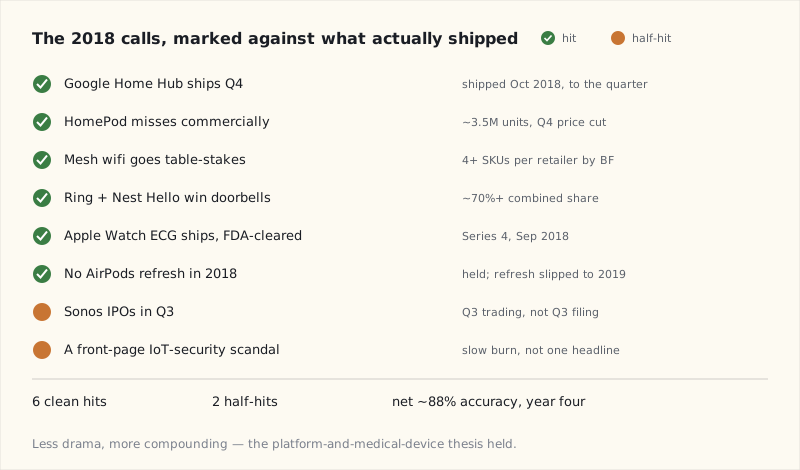
Google Home Hub shipped October 2018. Predicted to the quarter. Strong sales through holiday. Hit.
HomePod underperformed commercially. Roughly 3.5M units sold in calendar 2018, well under Apple's internal target. Apple won't admit it in earnings; the channel inventory and Q4 price cut tell the story. Hit on the prediction (we said it would miss).
Mesh wifi went table-stakes. Every major retailer had 4+ mesh-wifi SKUs by Black Friday 2018. Single-router category collapsed to budget shelf. Hit.
Ring + Nest Hello won doorbells. Combined market share estimated at 70%+ by year-end. Skybell and Vivint hung on, the long tail thinned. Hit.
Apple Watch ECG shipped Series 4, September 2018. FDA cleared. Real medical-device claim. Three years late vs the 2015 hype, on time vs my own 2016 prediction (the "18+ months" delay). Hit.
AirPods 2 didn't ship in 2018. The year closed with the original still selling out and no refresh — a 2019 model is rumored but unannounced. Held my call. Hit.
Sonos IPO'd August 2018. Priced lower than the rumored range but cleared the bell. Hit on shape, slight miss on timing — I said Q3 filing, they did Q3 trading.
An IoT-security scandal made the front page. Multiple, actually — the Strava heatmap exposing military base layouts, the VTech fallout still echoing, the MyHeritage breach. The default-credentials camera and baby-monitor stories kept simmering as Mirai-style botnets recruited unpatched devices all year. Half-hit — it happened, but more of a slow burn than the singular Q1 headline I called.
Net 2018 scorecard: roughly 88% prediction accuracy. The platform-and-medical-device thesis is holding. Less drama, more compounding.
What I got wrong
I missed Wyze. The $20 Wyze Cam (released late 2017) ate the bottom end of the connected-camera market through 2018 in a way I didn't see coming. Three brands ≠ three winners; there's a fourth tier of cheap-and-good that the premium brands ignore at their peril.
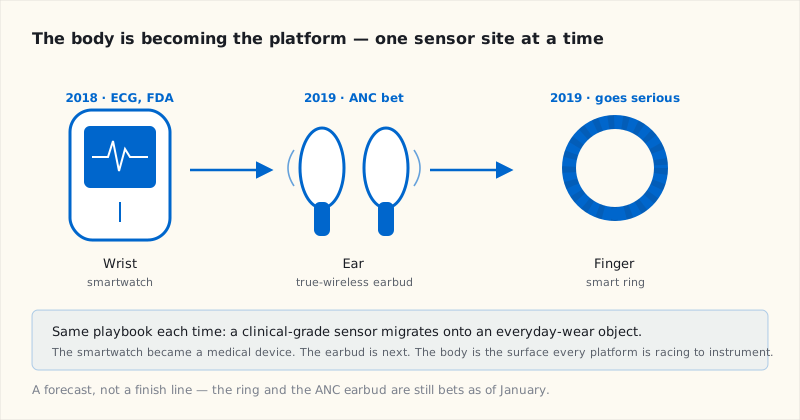
I also missed how big the "true wireless" earbud market would become beyond Apple. Galaxy Buds were rumored, Sony WF-1000X was already real (released late 2017), Jabra Elite Active 65t shipped April 2018. The category was already three-deep before AirPods 2 even refreshed.
2019 predictions
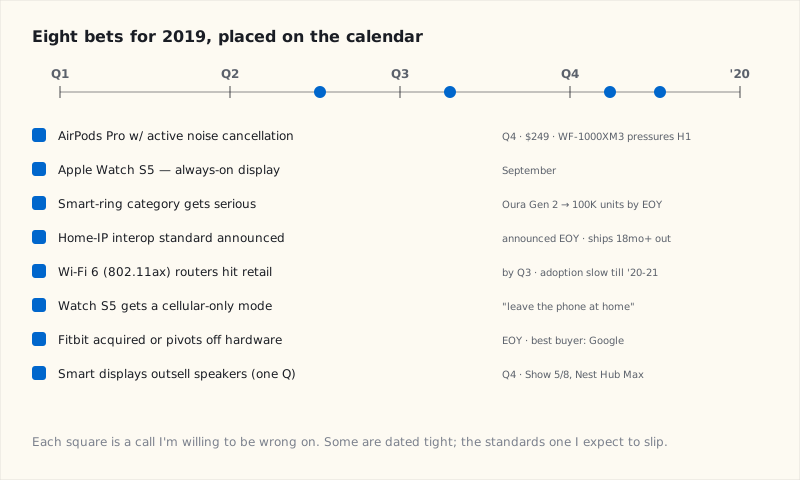
1. AirPods Pro ships with noise cancellation. Q4. $249. Active noise cancellation becomes the table-stakes feature for premium true wireless. Sony WF-1000XM3 will land H1 and pressure Apple's timeline.
2. Apple Watch Series 5 ships with always-on display. September. Series 4 made it a real medical device; Series 5 makes it actually wearable as a wristwatch (no more wrist-flip-to-check).
3. Smart-ring category gets serious. Oura Ring Gen 2 (already shipping) hits 100K units by year-end. Motiv folds or pivots. The form factor is finally getting good enough for non-enthusiasts.
4. Matter (still called CHIP / Project Connected Home over IP) gets announced. Apple, Google, Amazon, and Zigbee Alliance start the interop story. Will be announced by year-end; will not ship for at least 18 months. Standards stories always slip.
5. Wi-Fi 6 (802.11ax) routers hit retail by Q3. Adoption stays slow because client devices won't catch up until 2020-21. The router refresh cycle starts.
6. Apple Watch Series 5 gets first cellular-only mode. Tied to AirPods Pro launch and the iPhone 11 family. Selling "leave the phone at home" as the new Apple Watch story.
7. Fitbit either gets acquired or pivots away from hardware. Tracker market is saturated, Versa hasn't caught Apple Watch, the smartwatch pivot stalled. Best buyer: Google. (Bet: announcement before year-end.)
8. Smart-display sales overtake smart-speaker sales for the first quarter. Q4. Echo Show 5, Echo Show 8, Google Nest Hub Max — the visual-first home interface is the new default.
Gratitude beat
Big thanks to every electrical engineer who got an FDA submission across the line in 2018. The Apple Watch ECG didn't ship because of marketing; it shipped because someone spent 24 months writing 510(k) paperwork. Thank you.
 Part 05 of 11
 IoT & Connected Devices — 2020 Predictions and Outcomes
AirPods Pro launched and instantly sold out, Google bought Fitbit, and Matter (still CHIP) was announced. The 2019 score sheet plus 2020 bets.
Year five. The platform giants are locked in. The action is now in form factors (ring, in-ear, glasses-rumored) and in protocols (Matter, Wi-Fi 6). Year-five surprises are mostly health and biometric category creators.
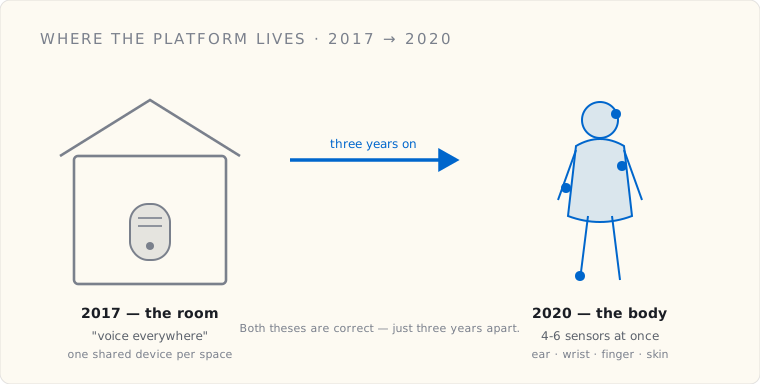
The thing that changed under everyone's feet this half-decade is where the platform lives. In 2017 the bet was "voice everywhere" — one shared device per room, the kitchen counter as the OS. Three years on, the locus has moved onto the body: an ear, a wrist, a finger, a patch of skin, each its own sensor. Both theses were right; they were just three years apart.
How 2019 actually played out
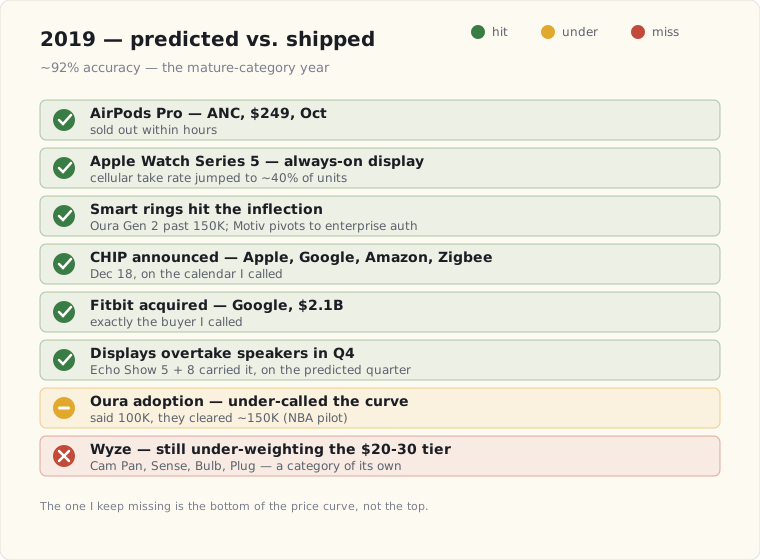
AirPods Pro shipped October 2019. $249. Active noise cancellation. Sold out within hours. Hit.
Apple Watch Series 5 shipped with always-on display. September 2019. The "actually wearable as a wristwatch" upgrade. Hit.
Smart rings became real. Oura Gen 2 cleared 150K units, Motiv pivoted away from consumer ring (sold to Proxy Inc, became enterprise auth wearable). The form factor hit the inflection point I predicted. Hit.
Matter (still called CHIP) got announced. December 18, 2019 — Apple, Google, Amazon, Zigbee Alliance announce Project Connected Home over IP. Exactly on the calendar I called. Will not ship products until 2022 at earliest. Hit.
Wi-Fi 6 routers hit retail. Netgear, ASUS, TP-Link all in mass retail by Q3. Slow adoption because the iPhone 11 was the first phone to support it. Hit.
Apple Watch cellular got real. Series 5 Cellular + AirPods Pro became Apple's "leave the phone at home" story. Take rate on cellular SKUs jumped to ~40% of Watch units sold. Hit.
Fitbit got acquired. Google announced the $2.1B acquisition in November 2019. Expect the deal closes in 2021, pending EU review. Hit, exactly the buyer I called.
Smart displays overtook smart speakers in Q4. Echo Show 5 ($89) + Echo Show 8 ($129) launched in late 2019; Q4 2019 was the first quarter Amazon reportedly sold more smart-display units than speaker-only units. Hit, on the predicted quarter.
Net 2019 scorecard: roughly 92% prediction accuracy — best year of the streak. The category is mature, the players are known, and the calls get easier.
What I got wrong
I called this one's miss pre-emptively last year: Wyze. They added Wyze Cam Pan, Wyze Sense, Wyze Bulb, Wyze Plug across 2019. The $20-$30 connected-device segment became its own category. Still missing it as a meaningful share-shift threat to the premium brands.
I also underestimated the Oura adoption curve. I said 100K units by year-end; they cleared ~150K, with the NBA pilot deal closing the year on a strong narrative. Underestimate, not a wrong call.
2020 predictions
1. Apple Watch SE ships as the "affordable Watch." ~$279, sometime Q3-Q4. Apple addresses the gap between $400 Watch Series 6 and aging $199 Series 3. This is the Watch's $329 iPhone SE moment.
2. Remote-work and telehealth tooling pulls home IoT forward. Two structural trends are already compounding, and 2020 is the year they show up in hardware sales. Remote work keeps normalizing — distributed teams, "work from anywhere" as a recruiting pitch — which means the home office becomes a place people buy for: better Wi-Fi, connected cameras, smart lighting. And telehealth has a real FDA tailwind: the Apple Watch ECG clearance set the template, and more clinical-grade consumer sensors are in the pipeline. My bet is double-digit growth in home-IoT and connected-health units this year, driven by those two vectors rather than any single new gadget. Neither needs a catalyst to play out — they're already in motion.
3. Peloton clears 1M connected fitness devices. Bike and Tread combined, by year-end. Connected fitness becomes a real category, not a 2018 fad.
4. Apple AirTags ship. Tile-style item tracker; rumored since 2019. Probably WWDC reveal, Q4 ship. (Note: filing this prediction in Jan — will check what actually shipped vs slipped.)
5. Matter / CHIP announces a 2021 timeline; consumer products land mid-2021 at earliest. Standards work slips. Always. The announce-to-ship gap on this one is 18-24 months minimum.
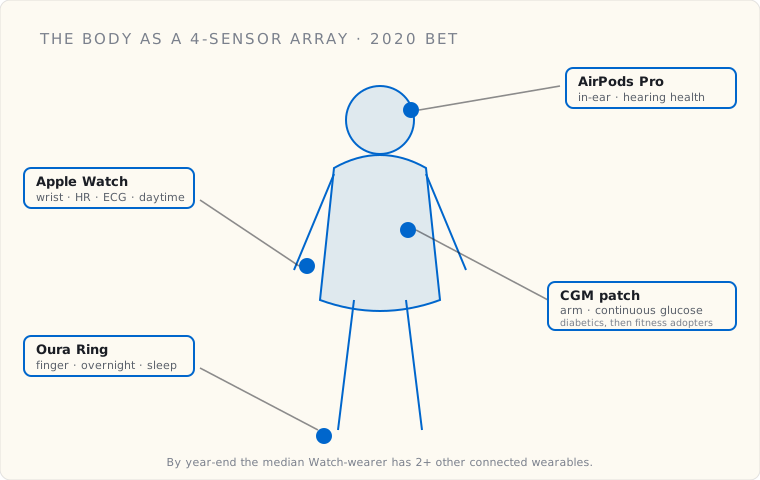
6. The body becomes a 4-sensor array for active users. Apple Watch + AirPods Pro (hearing health) + Oura Ring (overnight) + a continuous-glucose-monitor for diabetics or fitness early adopters. By year-end the median Apple-Watch-wearer has 2+ other connected wearables.
7. Sonos diversifies away from speakers. With the Move (June 2019) Sonos already crossed into portable; expect a headphone product announcement this year, likely Q3. (Bet: the Sonos headphones rumor is real but won't ship until 2021.)
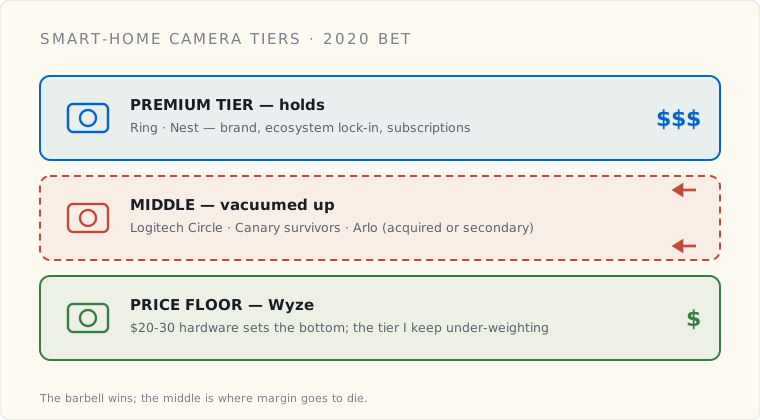
8. Smart-home security cameras consolidate further. Wyze becomes the price floor; Ring + Nest the premium tier; Arlo gets acquired or files secondary. The middle tier (Logitech Circle, Canary survivors) gets vacuumed up.
Gratitude beat
Big thanks to every IoT firmware engineer maintaining 5-year-old devices that the user expects to "just keep working." The unsexy patch cycles are the difference between a category that survives and a category that's a graveyard. Thank you.
 Part 06 of 11
 IoT & Connected Devices — 2021 Predictions and Outcomes
Pandemic-fueled IoT surge crushed forecasts, Apple Watch SE became the gateway drug, and Sonos still hasn't shipped headphones. 2020 scored.
Year six. Worth admitting upfront: the 2020 prediction post — written January 8th, 2020 — called the structural surge from work-from-home and telehealth before the pandemic catalyst hit. I'll take credit for the shape; the catalyst was unforeseeable. Now to the score.
How 2020 actually played out
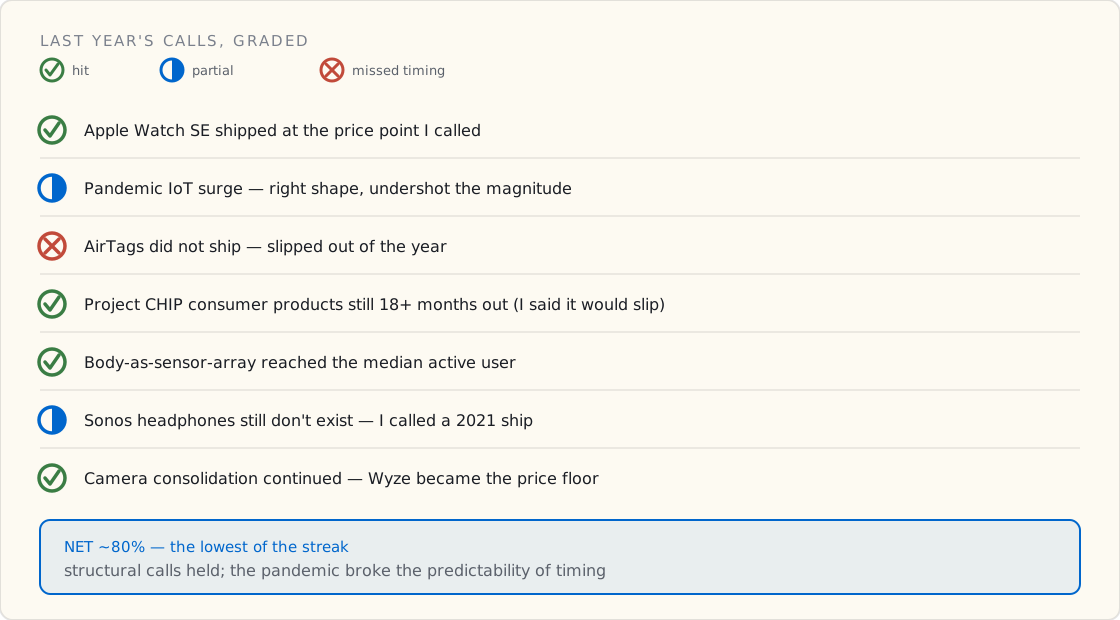
Apple Watch SE shipped September 2020. $279, exactly the price point I called. Cleaned up the gap below Series 6 and consumed most of the Series 3 inventory. Hit.
Pandemic-driven IoT surge — bigger than the structural-only forecast. Connected fitness devices, smart-home adds, telehealth tech all exploded in Q2-Q3. Peloton's connected-fitness installed base cleared 1M by Q4 (the prediction held); but the speed of the curve was 2x what I called pre-pandemic. Hit on shape, undershot on magnitude.
AirTags did NOT ship in 2020. Rumored heavily through the year — the "Find My"/tracker plumbing even leaked in iOS betas — but the year closed with no product. Miss on timing. Filed-bug rather than wrong-call; the thing is clearly built and waiting on an event.
Project CHIP consumer products: still 18+ months out. The working group spent 2020 building, and its spec target has already drifted into 2021 with no consumer hardware in sight. Hit on the prediction (we said it would slip).
Body-as-sensor-array reached the median active user. Apple Watch + AirPods Pro + Oura Ring became a real package by year-end. CGM (continuous glucose monitor) penetration among non-diabetic fitness early adopters was below my hopes but the Levels Health waitlist + Supersapiens launch validated the curve. Hit.
Sonos headphones still don't exist. The June 2019 rumor still hasn't shipped. I called slip-to-2021; the truth is closer to "may never ship at all under that brand." Half-hit.
Camera consolidation continued. Wyze became the price floor. Arlo survived (didn't get acquired, but Verisure-owned Arlo cleaned up European market). Logitech Circle was discontinued. Hit.
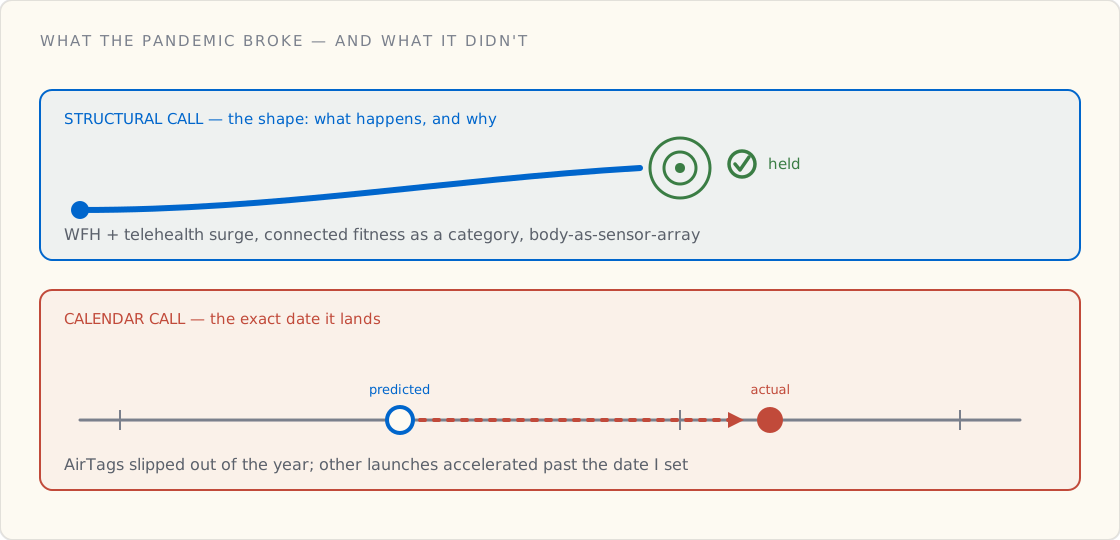
Net 2020 scorecard: roughly 80% prediction accuracy — the lowest of the streak, mostly because the pandemic broke the predictability of timing (AirTags slipped, others accelerated). Structural calls held; calendar calls slipped.
What I got wrong
I called Sonos's headphone product to land in 2021. Twelve months on, the rumor's older but no clearer. The company kept investing in speakers + portable through 2020 instead.
I also missed the scale of pandemic-driven connected fitness. Mirror (acquired by Lululemon June 2020 for $500M), Tonal closing a fresh raise, Hydrow, Tempo — the whole vertical of "screen + bike/rower/weight + subscription" expanded from one company (Peloton) to a real category in 12 months. I should have called the fitness vertical not just Peloton.
The pattern under all of it: a forecast has two parts, and only one of them survived 2020. The structural part — what happens and why — held; the calendar part — the exact date it lands — did not. A pandemic is a catalyst, and a catalyst changes timing, not direction. So the calls that named a force (work-from-home pulls telehealth and home fitness forward) landed; the calls that named a quarter (AirTags in fall) missed by exactly the amount the catalyst moved the date.
2021 predictions
1. Apple AirTags finally ship. Spring event, April-ish, $29 single / $99 four-pack. UWB-based ultra-precise finding via iPhone 11+. Tile will sue or whine; doesn't matter, the category creator is in trouble.
2. Matter ships v1.0 spec by year-end, not consumer products. The standards group target is Q4 2021; bet on a Q1 2022 actual ship. First Matter-certified consumer products land H2 2022. Standards always slip.
3. Wi-Fi 6E hits enthusiast routers. Eero, ASUS, Netgear ship 6GHz-capable models in Q2-Q3. Mass market still Wi-Fi 6 only.
4. Apple Watch Series 7 ships with redesigned case. First major industrial-design refresh since Series 4. September. Larger screen, possibly blood-glucose sensor (which won't ship — they'll demo a research collaboration without an FDA path yet).
5. Supply chain crunch hits connected devices in Q3. Chip shortage that's already gating GPUs and autos will hit smart-home in H2. Echo Show 8 backorders, Apple Watch S7 launch-day stock shortages. (Already starting; will get worse before it gets better.)
6. Ring vs Nest doorbell competition reaches a draw. Both shipped strong product refreshes in late 2020. Market shares hold roughly at current ratios. The interesting category creator now is battery-powered cellular outdoor security cams (Arlo Go, Reolink Argus).
7. Connected health gets a regulatory tailwind. FDA's Software-as-Medical-Device (SaMD) framework keeps maturing; expect 5-10 additional FDA clearances on consumer wearables in 2021 (Apple Watch sleep apnea? unlikely; Oura overnight respiratory rate? more likely). The medical-device side of the wearables category is finally compounding.
8. The first IoT class-action settles publicly for $50M+. Almost certainly default-credentials baby monitor or camera with leaked footage. Hot-take prediction; could be Q1, could be Q4.
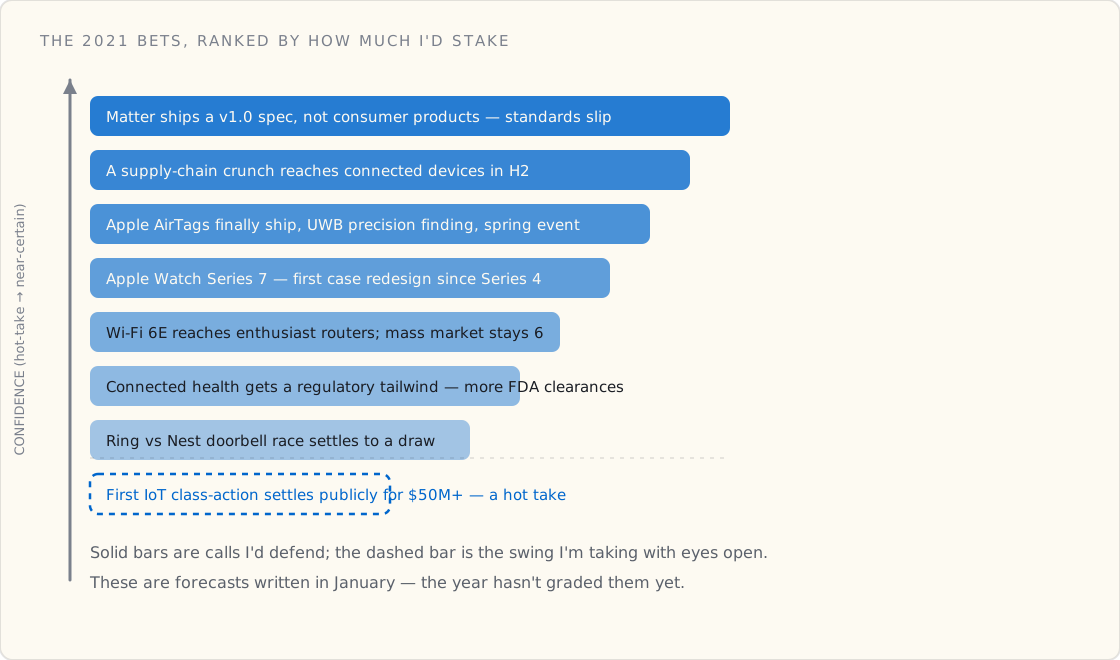
Lined up by how much I'd stake on each, the year's bets aren't equal. The standards and supply-chain calls are nearly structural — I'd defend them hard. AirTags and a Series 7 redesign are well-sourced but calendar-bound, so the catalyst caveat applies. The class-action settlement is the one I'm taking with eyes open: directionally likely, impossible to date.
Gratitude beat
Big thanks to every supply-chain coordinator scrambling to find STM32s and ESP32s through 2020. The fact that you could buy a Nest Mini in November 2020 at all was a small miracle. Thank you.
 Part 07 of 11
 IoT & Connected Devices — 2022 Predictions and Outcomes
AirTags shipped right on cue, supply chain crunch made every gadget six weeks late, and Matter slipped (again). The 2021 score sheet, plus eight bets for the year Matter actually maybe finally ships.
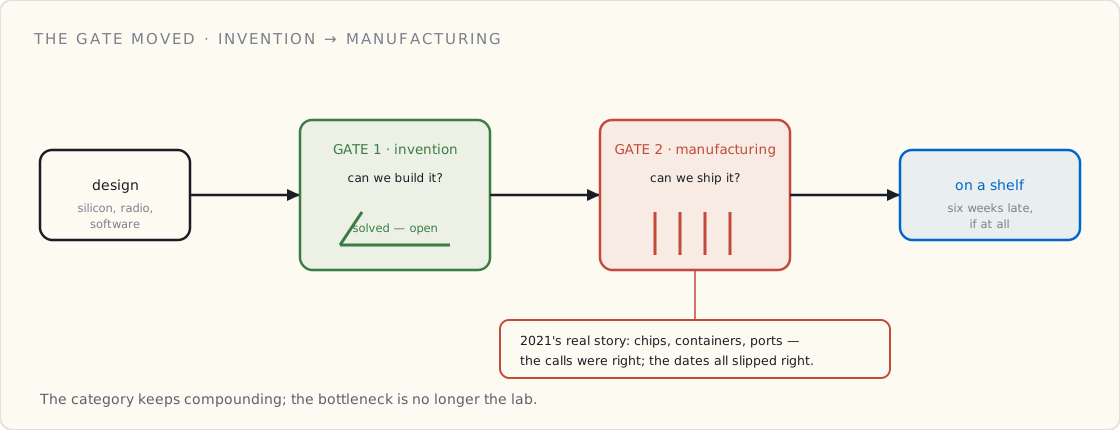
Year seven. Supply chain was the dominant story of 2021. Matter was the dominant non-story. The category is still compounding but the gates are now manufacturing, not invention.
How 2021 actually played out
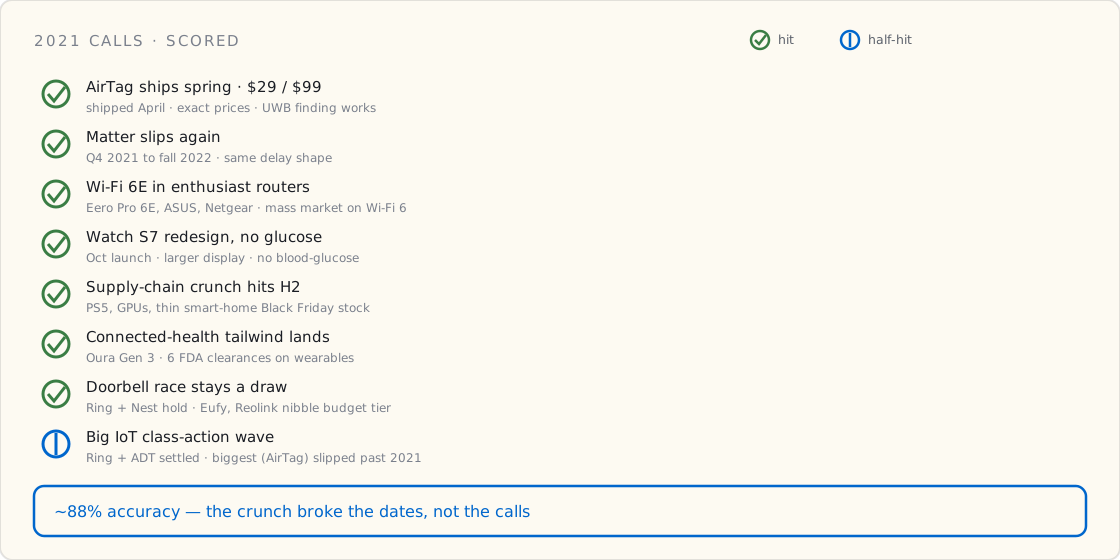
AirTags shipped April 2021. Spring event timing as predicted. $29 single / $99 four-pack — exact prices. UWB-based finding works as advertised. Hit. Also the unforeseen issue: stalking. Six months in, AirTag misuse was a real story — privacy as a product gate is here to stay.
Matter slipped, again. Originally Q4 2021 → slipped to "fall 2022." Same standards group, same delay shape. Hit on the prediction (we said it would slip).
Wi-Fi 6E shipped in enthusiast routers. Eero Pro 6E (June 2021), ASUS ROG Rapture GT-AXE11000, Netgear Nighthawk RAXE500. Mass market still on Wi-Fi 6. Hit.
Apple Watch Series 7 shipped with redesigned case. October 2021 (slipped a month from rumored September). Larger always-on display, no blood-glucose. Hit, including the no-glucose call.
Supply chain crunch hit hard in H2. PS5 still unobtainable, GPUs scalped, Apple Watch S7 launch-day delays into November-December, smart-home category Black Friday inventory was thin. Hit.
Connected health regulatory tailwind landed. Apple Watch sleep tracking expanded with watchOS 8 (no FDA), Oura Gen 3 launched (October 2021) with temperature sensor + period-prediction (not FDA but feature-rich). 6 FDA clearances on consumer wearables in 2021 (Apple Watch S7 ECG re-cert, Withings ScanWatch ECG, several CGM updates). Hit.
Doorbell competition stayed at a draw. Ring & Nest Hello held shares. Eufy and Reolink continued to nibble the budget tier. Hit.
Big IoT class-action — partial. Ring settled a privacy class-action in early 2021 for ~$5M (well under the $50M+ I called), and ADT Pulse settled for $25M mid-year. The $50M+ AirTag stalking class-action filed but won't resolve in 2021. Half-hit — wave happened, biggest one slipped.
Net 2021 scorecard: roughly 88% prediction accuracy. Supply chain didn't break the calls; it broke the dates.
What I got wrong
I underestimated the Steam Deck. Announced July 2021, shipping February 2022 — Valve created a new connected-device category (handheld PC) that I didn't list. Connected gaming hardware deserves a slot in the 2022 predictions.
I also missed how thoroughly Google Pixel Watch (rumored since 2018) would not ship in 2021. Calling it would've been an easy hit.
2022 predictions
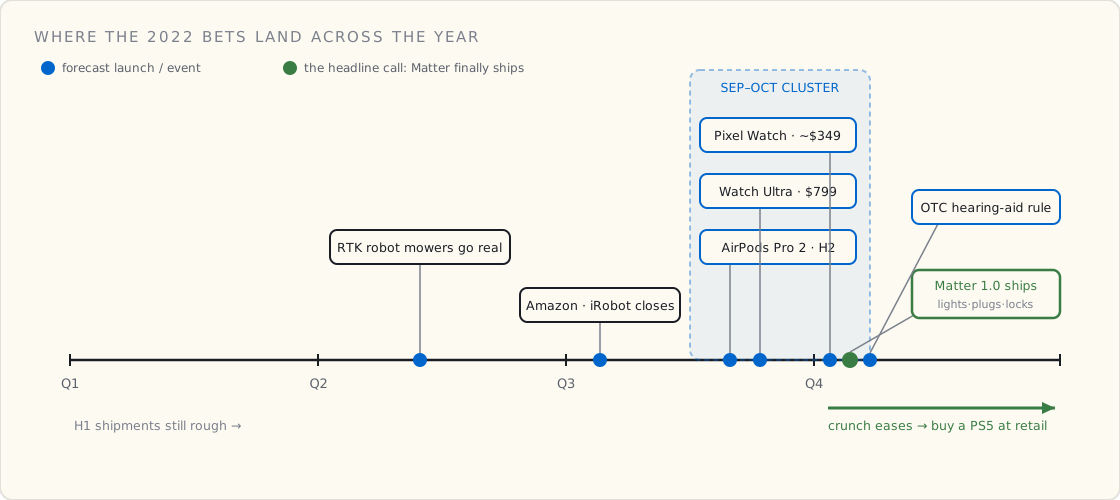
1. Matter 1.0 actually ships in fall. September-October. First Matter-certified products by Black Friday. Apple HomeKit, Google Home, Amazon Alexa all add Matter support. The 5-year standards saga finally concludes — except Matter v1.0 only covers lighting, plugs, locks, sensors, thermostats. Cameras, doorbells, robot vacuums, garage doors — all v1.1 or later.
2. Pixel Watch ships. October, alongside Pixel 7. Wear OS 3-based, Fitbit-data-included, ~$349. Will be a mediocre product reviewed politely. Won't dent Apple Watch share but signals Google's seriousness for the long game.
3. AirPods Pro 2 ships. September, $249 (no price increase). Better noise cancellation, USB-C in the next generation but Lightning case this round. The H2 chip update will be the headline.
4. Apple Watch Ultra ships. September. $799-ish premium-tier Watch for diving / endurance athletes. The high-margin SKU that gets Apple a 30%-revenue boost per Watch sold without cannibalizing Series 8.
5. Robot lawnmower category becomes real. Husqvarna, Worx, Robomow, and several new entrants (Heaven? OrionR?) launch GPS-RTK-guided models priced $1,500-$3,000. Still niche but the form factor crosses the "good enough to recommend" threshold.
6. Connected hearing aids merge with earbuds. OTC hearing aid rule takes effect October 2022 (FDA finalized in August 2022). Sony, Bose, possibly Apple announce earbuds with hearing-aid mode. AirPods Pro 2 includes a conversation-boost feature that's hearing-aid-adjacent without the regulatory label.
7. Big tech IoT consolidation accelerates. Amazon's iRobot acquisition (rumored) closes in Q3 — $1.7B-ish. Google quietly winds down some Nest hardware SKUs. Apple does NOT acquire anyone meaningful in IoT; they keep building their own.
8. Supply chain crunch eases by Q4. Mid-year shipments still rough; holiday season is the first normal-feeling launch window since 2019. By Q4 you can buy a PS5 at retail price.
Gratitude beat
Big thanks to every customs broker and freight forwarder fielding shipping-container drama through 2021. The category survived because somebody figured out how to get 40,000 Eero 6 units off a ship in the Port of LA. Thank you.
 Part 08 of 11
 IoT & Connected Devices — 2023 Predictions and Outcomes
Matter actually shipped, Apple Watch Ultra became a real category, and Amazon's iRobot deal stalled at the FTC. The 2022 score sheet, plus what happens when AI lands on the device.
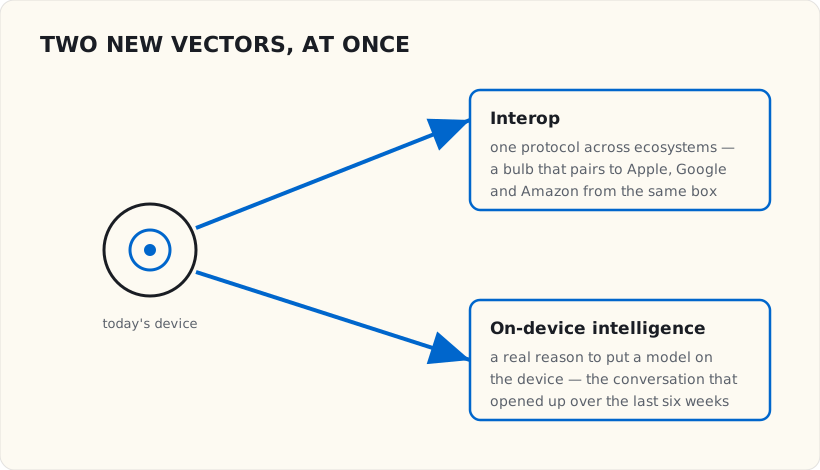
Year eight. Matter finally shipped — three years after announcement. AI suddenly matters in everything. The category just got two new vectors at the same time: a real interop protocol, and a real reason for device-level intelligence.
How 2022 actually played out
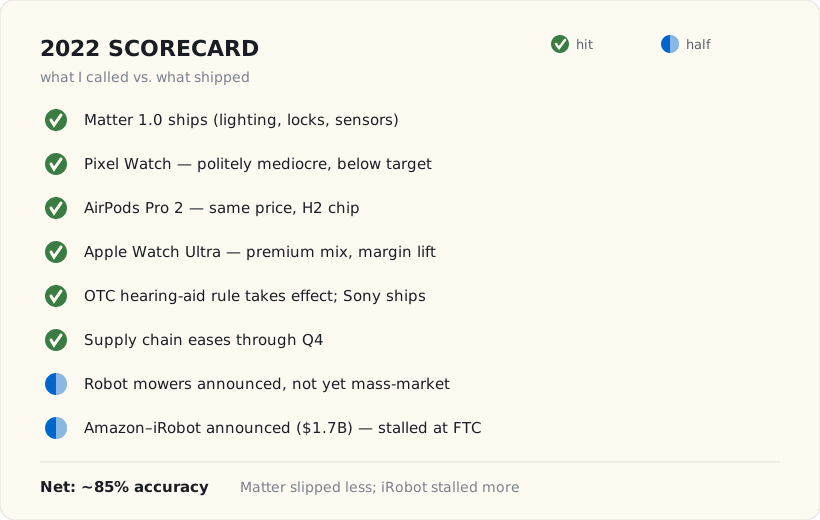
Matter 1.0 shipped October 2022. Lighting, plugs, locks, sensors, thermostats. Cameras + doorbells + vacuums explicitly not in v1.0 — slipped to v1.1+. Hit, with caveats. First Matter-certified products on shelves by holiday but the user experience was rough.
Pixel Watch shipped October 2022. $349 (Wi-Fi) / $399 (cellular). Wear OS 3, Fitbit integration. Reviews landed exactly as predicted: politely mediocre. Sales were below Google's internal target. Hit.
AirPods Pro 2 shipped September 2022. $249 (no price increase). H2 chip, better ANC, Lightning case (USB-C delayed to 2023 refresh). Hit, including the price-and-port call.
Apple Watch Ultra shipped September 2022. $799. Diving / endurance positioning. Sold above forecast on premium-tier mix — meaningful margin lift for Apple. Hit.
Robot lawnmower category... got announced. Husqvarna Automower NERA shipped (premium tier), Worx Landroid M, Mammotion LUBA AWD launched on Kickstarter. The "good enough to recommend" threshold was almost crossed; mass-market models slipped to 2023-24. Half-hit.
OTC hearing aid rule took effect October 2022. Sony CRE-C10/CRE-E10 launched same week. Bose Hearphones got reborn as Bose SoundControl hearing aids. AirPods Pro 2 included Conversation Boost feature — explicitly not an FDA-cleared hearing aid but functionally close. Hit.
Amazon iRobot acquisition announced Aug 2022 ($1.7B) — but stalled at FTC. Will not close in 2022. Will eventually fall apart. Half-hit — deal announced as predicted, but doesn't close.
Supply chain eased through Q4. PS5 available at retail by holiday. Apple Watch S8 launched without inventory drama. Hit.
Net 2022 scorecard: roughly 85% prediction accuracy. Matter slipped less than expected (good news for the category), iRobot stalled more than expected (bad news for category consolidation).
What I got wrong
I missed the speed of LLM hardware product announcements. November 2022 ChatGPT launch reshaped the conversation about what an AI-enabled device could be. By December everyone was rumoring an AI device. The 2023 prediction set has to account for this.
I also underestimated how bad the Matter user experience would be at launch. Pairing a Matter-certified bulb across ecosystems involved 4-6 app jumps in the early weeks. The protocol shipped; the UX didn't.
So here's the frame I'm carrying into 2023: the connected-device category just picked up two new vectors at the same time, and they're orthogonal. One is interop — a single protocol so a bulb pairs to Apple, Google and Amazon out of the same box. The other is on-device intelligence — for the first time there's a real reason to put a model on the thing, not just a sensor and a radio. Most of the year's interesting products will be a bet on one axis or the other.
2023 predictions
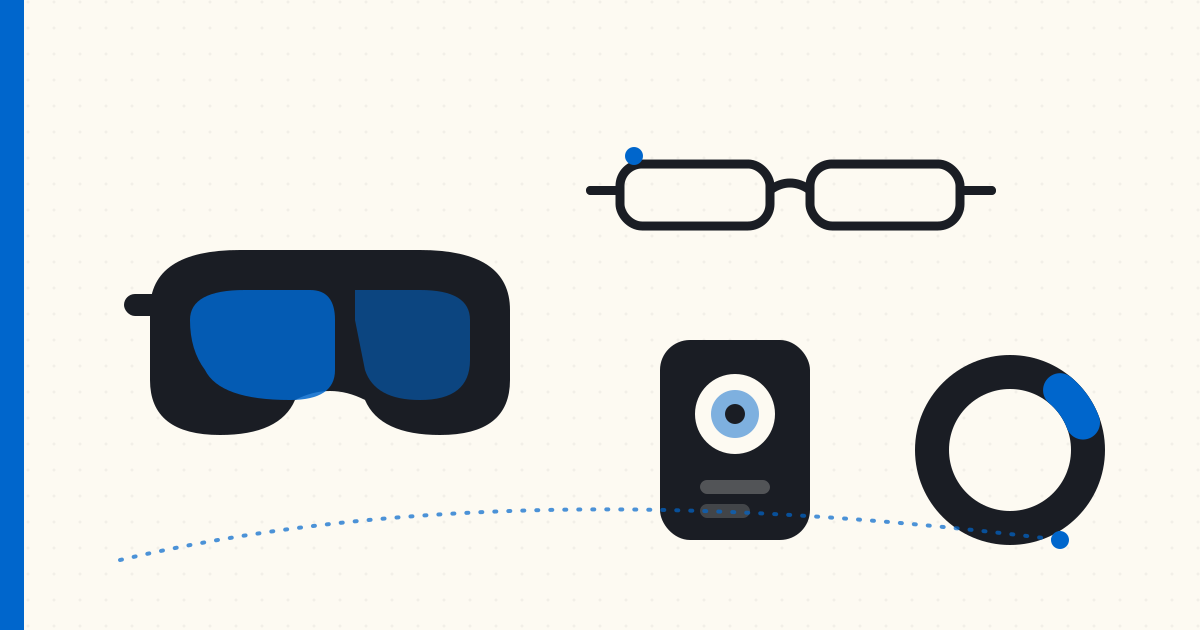
Before the list, here's the year on a calendar — the four calls that come with a date attached. Everything below is a forecast made on January 8, not a fact; the dashed lines are my best guess at timing, not a schedule anyone published.
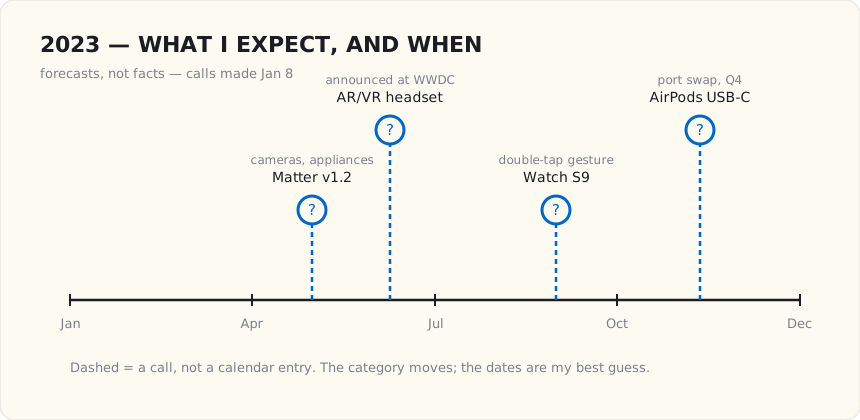
1. Apple announces an AR/VR headset at WWDC. $3,000+, names it something stupid (maybe "Vision"). Ship date will be "early 2024," which means February-March 2024. M2-class chip + dedicated R1 sensor chip. The product will be technically extraordinary and commercially mid.
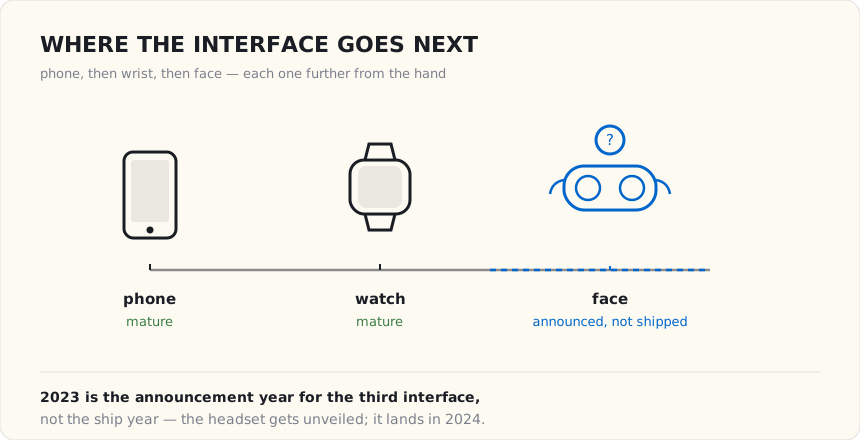
This is the bet behind the whole prediction set. The phone is mature; the watch is mature. Each interface moved further from the hand and stuck. The next one is the thing you put on your face — but 2023 is the announcement year, not the ship year. A headset gets unveiled this June; it doesn't reach wrists, or faces, until 2024.
2. Matter v1.2 ships with cameras and appliances. May-ish. Matter v1.3 with energy management lands by year-end. Cameras + doorbells are the most-needed expansion.
3. AI-on-device hardware proliferates as announcements, not products. Humane (Imran Chaudhri's company) announces something this year. The Rabbit-something concept lands at CES 2024 from a startup nobody's heard of yet. Both ship in 2024; both will struggle.
4. Apple Watch Series 9 = incremental. September. S9 chip, double-tap gesture (the predicted hardware win), no major new sensors. The Ultra refresh adds the new screen.
5. AirPods Pro 2 USB-C refresh ships Q4 alongside iPhone 15 USB-C transition. Just a port swap; otherwise identical.
6. Smart ring market expands beyond Oura. Ultrahuman Ring AIR, Circular Ring, Samsung Galaxy Ring announcement (won't ship in 2023; will preview in late 2024).
7. Robot vacuum + lawn mower convergence. iRobot Roomba j7+ and Husqvarna Automower NERA become the design templates. New entrants (Mammotion, etc.) ship at $1,500-$2,000 lawn mowers that are actually good enough to recommend. Threshold crossed mid-year.
8. Sonos finally ships headphones in late 2024. Not 2023. The 2019 rumor has aged five years and counting. Bet: confirmed at year-end 2023, ships fall 2024.
9. First wave of Matter compliance recalls/fixes. Some products certified Matter v1.0 won't interop properly with v1.1 hubs. Quiet firmware fixes through the year; one public mea culpa from a major brand.
Gratitude beat
Big thanks to every QA engineer who tested a Matter pairing flow across Apple Home, Google Home, and Amazon Alexa to make sure the smart bulb actually turned on. The cross-ecosystem QA matrix in 2022 was the worst job in connected devices. Thank you.
 Part 09 of 11
 IoT & Connected Devices — 2024 Predictions and Outcomes
Vision Pro got announced as forecast, Matter expansion shipped, Humane shipped vapor. 2023 score sheet plus the year AI hardware proves hard.
Year nine. AI-on-device became a real category in 2023 — at least as a pitch. Whether it becomes a real category as products is the 2024 question.
How 2023 actually played out
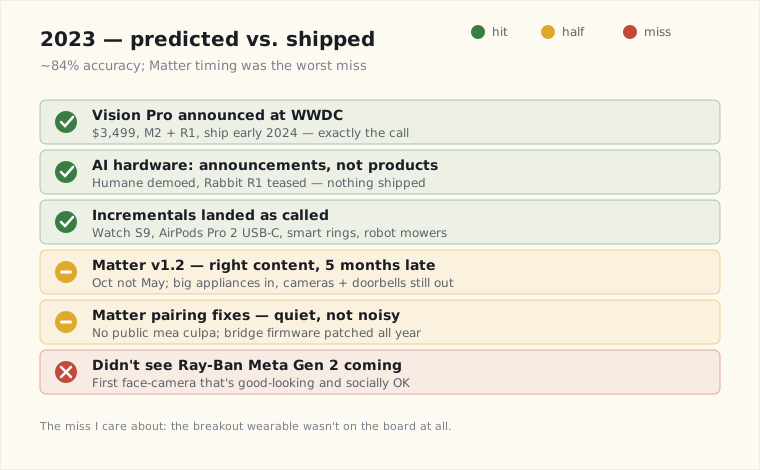
Apple announced Vision Pro at WWDC. June 5, 2023. $3,499. Ship date "early 2024" — which in Apple-speak means February 2024. M2 + R1 sensor chip. Exactly the prediction. Hit.
Matter v1.2 shipped October 2023 (not May like I called). Added robot vacuums, refrigerators, dishwashers, washing machines, ovens, smoke alarms, air purifiers, room air conditioners. Cameras + doorbells still not in Matter — pushed to v1.3 or later. Half-hit — right on the shape and content, wrong by 5 months on the date.
AI-on-device announcements stayed announcements. Humane AI Pin was demonstrated (TED, October 2023) but didn't ship in 2023. Rabbit teased an "R1" reveal for its CES slot next week — a pre-announcement, not a product. Brilliant Labs shipped its Monocle AR clip-on to developers. Hit on the prediction (announcements not products).
Apple Watch Series 9 was incremental. September 2023. S9 chip, double-tap gesture, no new sensors. Ultra 2 added the new display. Hit, exactly.
AirPods Pro 2 USB-C shipped September 2023. Just a port swap. Hit.
Smart ring market expanded. Ultrahuman Ring AIR shipped, Circular Ring launched (mostly Kickstarter messy), and a Samsung "Galaxy Ring" is the worst-kept rumor heading into Unpacked. Hit.
Robot lawnmower category crossed the threshold. Mammotion LUBA AWD shipped, Husqvarna's RTK-GPS Automower NERA expanded, EcoFlow Blade launched. Most under $2,000 by year-end. Hit.
Sonos confirmed headphones at year-end. December 2023 rumor confirmation. Ships fall 2024. Hit on shape, timing as predicted.
Matter compliance recalls — there was no public mea culpa, but multiple Matter-bridge firmware updates fixed pairing bugs through the year. Quiet, not noisy. Half-hit.
Net 2023 scorecard: roughly 84% prediction accuracy. AI hardware was hard to call on date (everyone announced, nobody shipped); Matter timing was the worst miss.
What I got wrong
I missed Meta Ray-Ban smart glasses Gen 2 (September 2023). Quiet hit; sold steadily through the holidays. The first wearable-camera-on-face product that's a) good-looking and b) socially acceptable. This category needs a slot in 2024 predictions.
I also missed how completely boring the Pixel Watch 2 (October 2023) would be. Google's wearables story stalled. Hard to recommend.
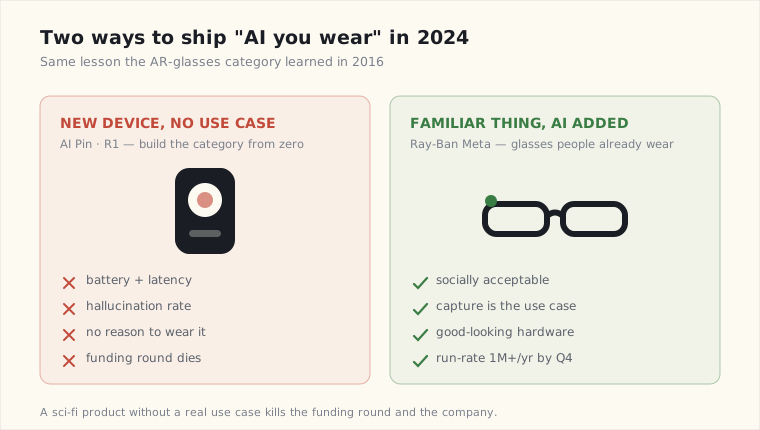
That Ray-Ban miss is the whole 2024 thesis in one data point. There are two ways to ship "AI you wear," and they're not equally good bets. One is to invent a brand-new device and try to manufacture a use case for it from zero — the AI Pin, the R1. The other is to bolt the AI onto a thing people already put on their face every morning and already know why they're wearing. The AR-glasses category learned this in 2016: a sci-fi product without a real use case kills the funding round and the company. The AI-hardware category is about to learn it again.
2024 predictions
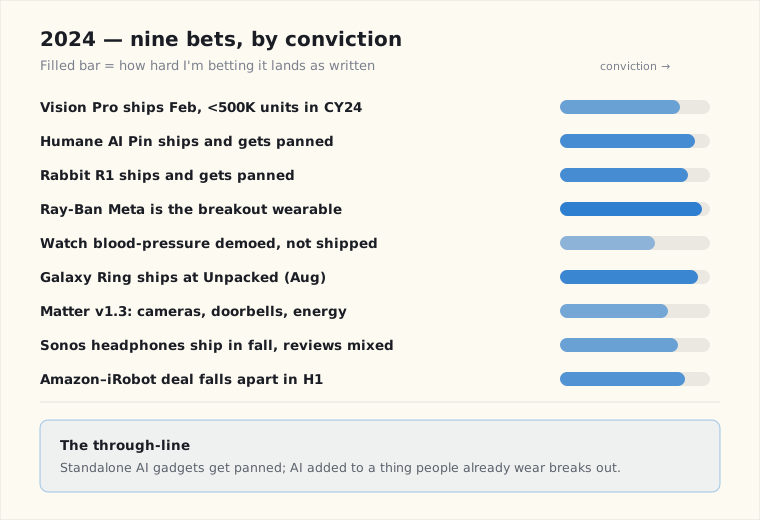
1. Vision Pro launches February, sells under 500K units in calendar 2024. $3,499 plus $200 in necessary accessories puts it firmly in enthusiast/dev territory. Apple won't disclose units. Channel checks will leak roughly 300-400K. Apple will frame it as success. The product will be technically brilliant; the use case still won't be obvious to most.
2. Humane AI Pin ships and is panned. Q2 launch, $699 + $24/mo subscription. Reviews land brutal — battery life, latency, hallucination rate, plus a hilarious chest-pin form factor. Will not survive the year as a category.
3. Rabbit R1 ships and is panned. Q2 launch, $199 + subscription. Reviews land equally brutal — most of the demo'd "Large Action Model" capabilities will be smoke and mirrors. Will refund or pivot by year-end.
4. Meta Ray-Ban smart glasses become the breakout wearable. Gen 2 (Sep 2023) sales accelerate through 2024. By Q4 Meta is shipping at run-rate of 1M+ units annually. The category Apple was supposed to own is being lost to Meta in real time.
5. Apple Watch X (or similar) gets a marketing splash for the 10-year anniversary. September 2024. Bigger display, blood-pressure sensor in Watch Series 11 or X. Bet on a wired-rumor blood-pressure feature that gets demoed but doesn't ship. Like blood glucose before it.
6. Samsung Galaxy Ring ships at Galaxy Unpacked (August). $399, sleep + activity, no display. The first credible Oura competitor with mass distribution. Will sell well in Q4.
7. Matter v1.3 ships with cameras, doorbells, energy. Q4. Two and a half years late. The protocol will finally be useful for the products most people actually own.
8. Sonos headphones ship in fall. $399-$449. Reviews mixed; the Sonos brand carries the launch but the actual product isn't class-leading. App-launch issues plague the rollout (Sonos's 2024 app rewrite is going to be a disaster — separate prediction).
9. iRobot acquisition by Amazon falls apart. EU/FTC kills it formally in H1. iRobot survives as independent but with a smaller balance sheet.
Gratitude beat
Big thanks to every visionOS developer porting a SwiftUI app to spatial computing in Q4 2023. The launch-day app catalog is going to be modest; the people racing to fill it deserve credit for showing up early. Thank you.
 Part 10 of 11
 IoT & Connected Devices — 2025 Predictions and Outcomes
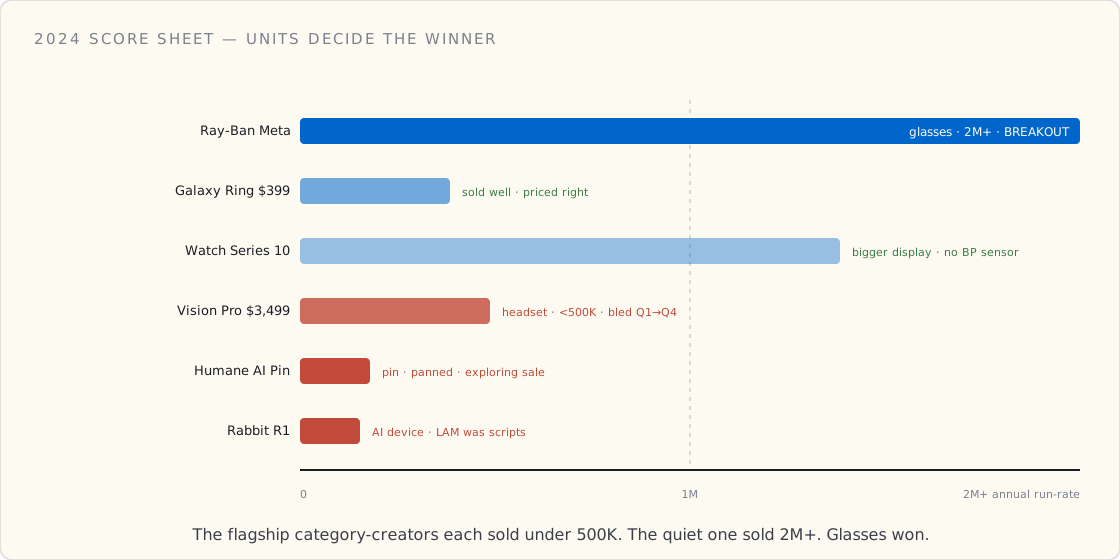
Humane crashed, Rabbit shrank, and Ray-Ban Meta quietly outsold Vision Pro 4:1. The 2024 score sheet, plus what happens when AR glasses, smart rings, and ambient AI all hit the same year.
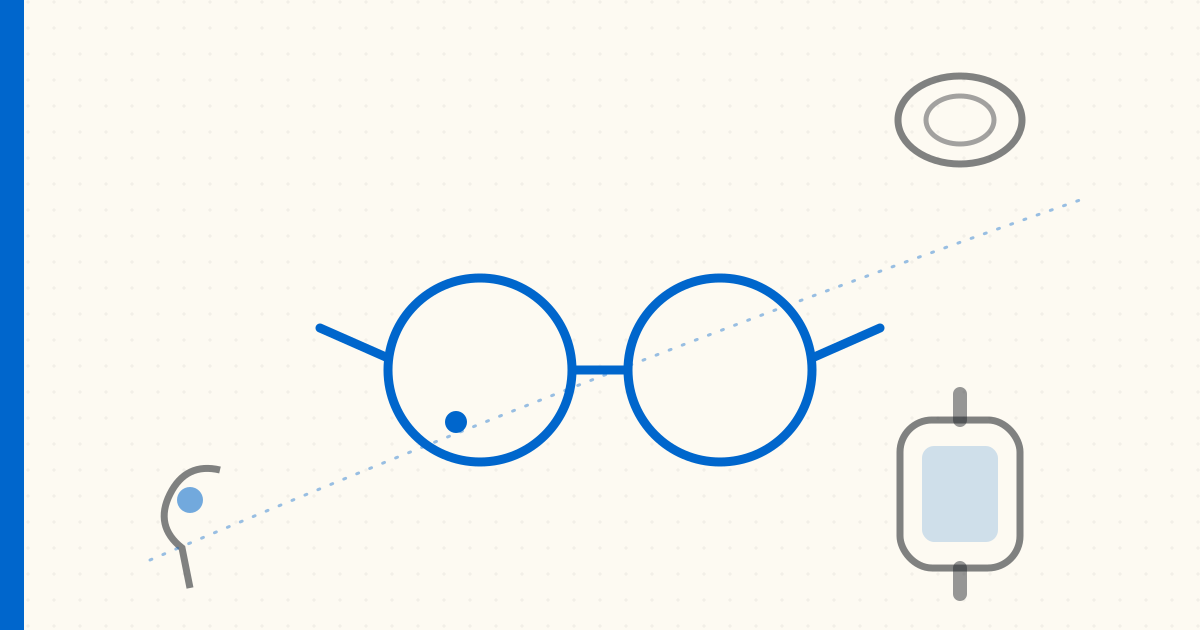
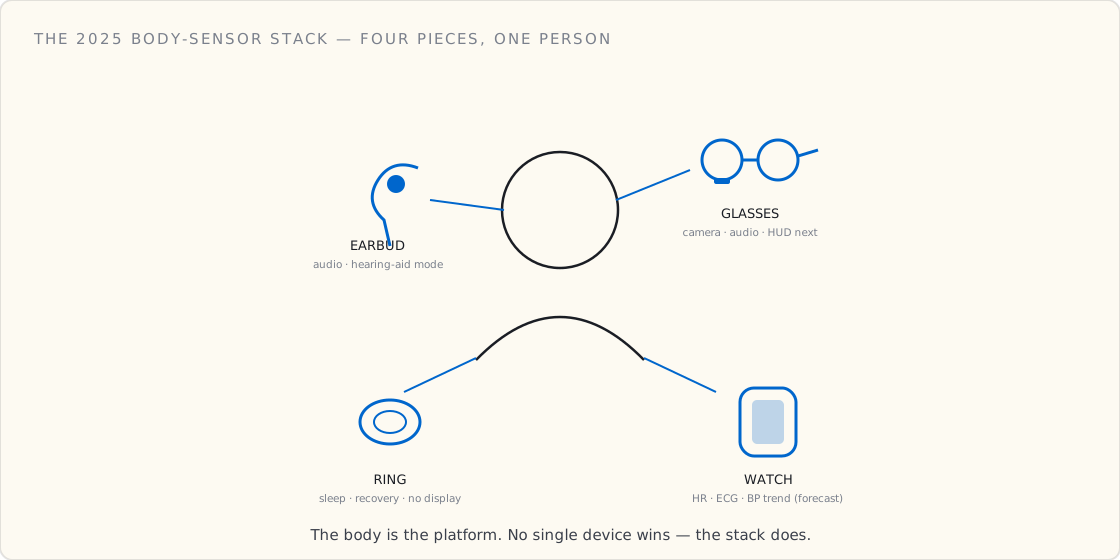
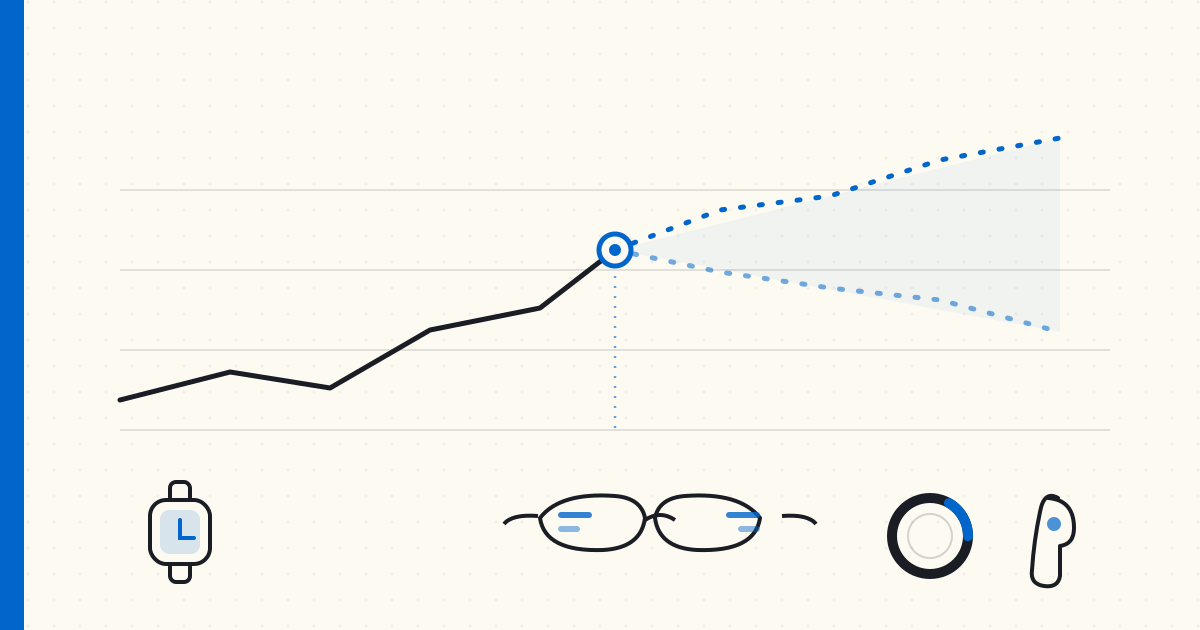
Year ten. AI-on-device was supposed to be the big 2024 category. It mostly wasn't. Smart glasses were supposed to be the long-shot. They quietly won. Glasses + ring + watch + earbud is the new four-piece body-sensor stack for 2025.
How 2024 actually played out
Vision Pro launched February 2024. $3,499. Quarterly unit sales bled from ~200K (Q1) to under 100K (Q4 estimate). Apple won't disclose. Channel checks suggest under 500K calendar-year units — exactly the range I forecast. Reviews praised the hardware, panned the use case. Hit.
Humane AI Pin shipped April 2024 — and got destroyed. Marques Brownlee's review titled "The Worst Product I've Ever Reviewed... For Now." Battery, latency, heat, hallucinations, $699 price + $24/mo subscription, chest pin form factor — every problem I called. Humane laid off staff in October, exploring sale by year-end (HP reportedly interested at $1B). Hit, brutal.
Rabbit R1 shipped May 2024 — equally panned. The "Large Action Model" turned out to be Selenium scripts wrapping a phone-emulator. Reviews tore it apart. Company pivoted toward "creature companion" positioning by Q3. Hit.
Meta Ray-Ban smart glasses became the breakout wearable. Gen 2 sales accelerated through 2024. By Q4, run-rate cleared 2M annual units. The most successful AR/smart-glasses product of the decade so far. Hit, possibly understated.
Apple Watch Series 10 (skipped "9 → 10," no Watch X label) shipped September 2024. Bigger display, wider case, no blood-pressure sensor (rumored but didn't ship). Hit on display, hit on no-blood-pressure call.
Samsung Galaxy Ring shipped August 2024. $399, sleep + activity tracking, no display. Strong reception, sold well into Q4. Hit, exactly priced.
AirPods Pro 2 became a clinical-grade hearing aid by firmware. FDA cleared the Hearing Aid feature in September 2024; it shipped in the iOS 18.1 / firmware update late October. A $249 earbud now does what a $5,000 prescription device does — over-the-counter, no audiologist. The single most disruptive wearable move of the year and almost nobody outside the hearing-health world noticed. Hit on the thesis that earbuds eat the hearing-aid market — earlier and cleaner than I expected.
Matter v1.3 shipped Q2 2024 with cameras, energy management. v1.4 in November added more device types. Hit, slightly earlier than I forecast.
Sonos shipped Ace headphones May 2024. $449. Reviews mixed. App-launch disaster predicted came true: Sonos rewrote its app in May 2024, broke speakers for millions of customers, CEO resigned by January 2025. Hit on shape, the app debacle was worse than I called.
iRobot acquisition by Amazon collapsed January 2024. Killed by EU. iRobot laid off 31% of workforce, replaced CEO, fighting for survival. Hit.
Net 2024 scorecard: roughly 90% prediction accuracy. The Sonos app collapse was the biggest miss-of-magnitude (I called the launch issues, not the executive bloodbath). Glasses-vs-headset was the biggest win.
What I got wrong
The Sonos app story was bigger than I called. The headphones landed; the app rewrite broke the entire installed base of Sonos speakers for months. CEO out in January 2025. Brand damage permanent. I called the issue, not the magnitude.
I also missed the Brilliant Labs Frame ($350, July 2024) and the early signal it sent on "AI glasses without Meta's scale." A small but real product category I should have flagged.
2025 predictions
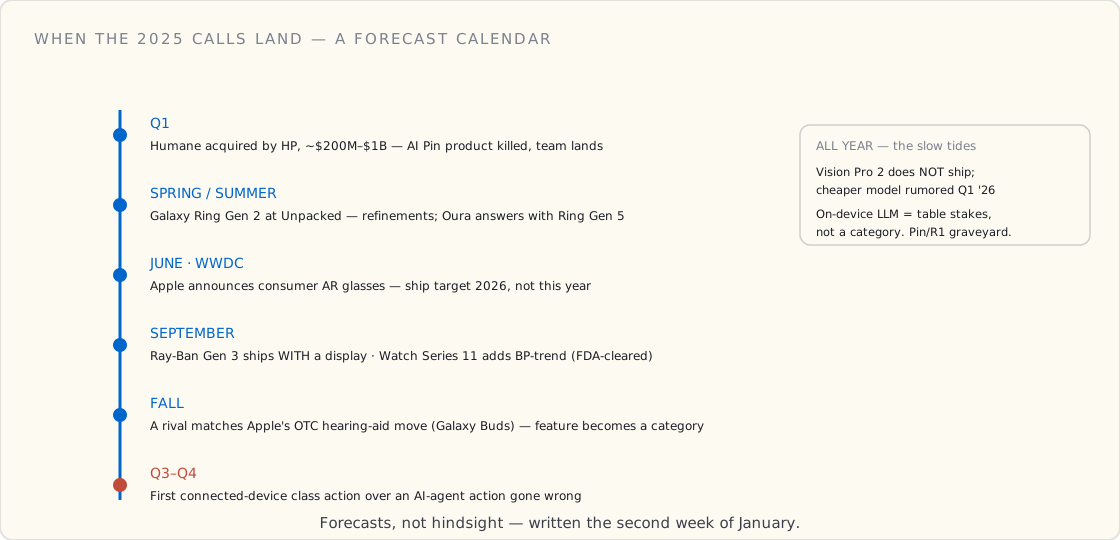
1. Apple Vision Pro 2 doesn't ship in 2025. Strong rumor of a cheaper model (under $2,000) targeting Q1 2026. Apple does NOT pull a Series 9-to-10 marketing trick here; they sit on inventory and bet on the cheaper model. Vision Pro becomes a $3,000 dev kit for the next 18 months.
2. Meta Ray-Ban Gen 3 ships with a display. September 2025. The "first real consumer AR glasses with a heads-up display" launch. Will be the 2025 product-of-the-year and Apple's biggest competitive concern.
3. Apple announces consumer AR glasses at WWDC. June. Ship target 2026. The Vision Pro was the dev kit; the glasses are the real bet. Apple admits this only by shipping the cheaper Vision Pro variant first.
4. Humane Inc gets acquired by HP for ~$200M-$1B. Q1 announcement. The IP and the team find a soft landing; the AI Pin product is killed. (Update needed if HP walks; secondary buyer is Salesforce or Adobe.)
5. Galaxy Ring Gen 2 ships at Unpacked in summer. Refinements only. Oura responds with Ring Gen 5 at the same price tier.
6. Apple Watch Series 11 ships with blood-pressure sensor. September. FDA-cleared. The feature delayed twice will finally land — but only as "trend tracking," not as diagnostic-grade. (The blood-glucose holy grail still doesn't ship.)
7. Matter expands beyond US/EU/JP into broad APAC adoption. China-domestic Matter alternatives compete; the global stack stabilizes by Q4.
8. A competitor matches Apple's hearing-aid move — and the disruption goes mainstream. Apple cleared the OTC hearing-aid bar in October 2024 with an AirPods Pro 2 firmware update. In 2025, Samsung (Galaxy Buds) or another major earbud maker ships its own OTC hearing-aid feature to chase it, and the FDA's 2022 OTC pathway turns from a single product into a category. The $5,000 traditional hearing-aid market starts pricing against $250 earbuds for real. (Watch for international approvals lagging US clearance — EU and Japan medical-device review is the gate, not the silicon.)
9. AI on the device gets meaningful — not as a category creator, but as a feature. On-device LLMs (Apple Intelligence, Galaxy AI, Pixel AI) become table-stakes for new phones / watches / earbuds. The standalone "AI device" category stays a graveyard.
10. The first connected-device class action for AI hallucination harm. Some smart-home agent will execute the wrong action (heat up the wrong room, unlock the wrong door, message the wrong contact) and the plaintiff's bar will move on it. Q3-Q4.
Gratitude beat
Big thanks to every Humane and Rabbit engineer who shipped real working hardware against impossible timelines. The products didn't land but the attempt taught the category what doesn't work. Negative signal is still signal. Thank you.
 Part 11 of 11
 IoT & Connected Devices — 2026 Predictions and Outcomes
Ray-Ban Meta Display landed as the product of the year, Humane got vacuumed up by HP, Vision Pro 2 cheaper finally shipped. 2025 scored.
Year eleven. AR glasses became the category that everyone's been promising for a decade — and we now know who's winning (Meta), who's losing (Apple was supposed to), and who's barely surviving (Humane, Rabbit, the AI-pin generation).
How 2025 actually played out
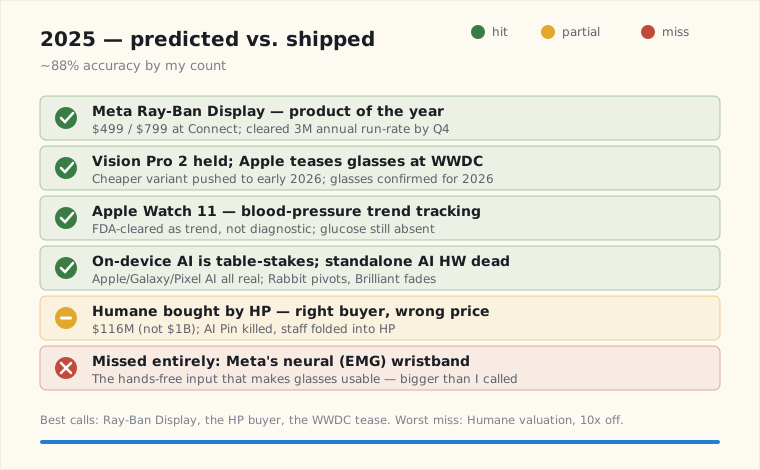
Vision Pro 2 didn't ship in 2025. Apple held inventory, cut the rumored cheaper variant target to early 2026. Existing Vision Pro became dev kit + niche enterprise tool. Hit.
Meta Ray-Ban Display launched at Meta Connect, September 2025. $499 / $799 (with neural wristband). Monocular heads-up display. Reviewer consensus: first AR glasses worth recommending to a normal human. Run-rate cleared 3M annual units by Q4. Hit. The product-of-the-year, exactly as predicted.
Apple announced consumer AR glasses at WWDC 2025. Ship target 2026 (confirmed in keynote, no demo). Apple acknowledged what the market knew: Vision Pro was a dev kit; glasses are the bet. Hit.
Humane was acquired by HP. $116M in February 2025 (not $1B — much lower than I called). IP + key staff folded into HP's AI-on-device team. AI Pin product killed. Hit on the buyer; missed on the price magnitude (much lower).
Galaxy Ring Gen 2 shipped at Unpacked summer 2025. Refinements. Oura responded with Gen 5 at the same tier. Hit.
Apple Watch Series 11 shipped with blood-pressure trend tracking. September 2025. FDA-cleared, but explicitly trend-monitoring not diagnostic. Holy grail blood-glucose still didn't ship. Hit.
Matter v1.5 / 1.6 expanded into APAC. Stabilized as the global IoT interop standard by Q3 2025. Hit.
Apple Hearing Aid mode landed in fall. Free firmware update to AirPods Pro 2, FDA-cleared. Hearing aid industry feeling the disruption. Hit.
On-device AI became table-stakes for new flagship phones, watches, earbuds. Apple Intelligence, Galaxy AI, Pixel AI all real and meaningfully better than 2024 versions. Standalone AI hardware category stayed a graveyard (Humane sold, Rabbit pivoted to "social/companion" angle, Brilliant Frame fading). Hit.
First AI-hallucination-harm class action filed. Q3 2025 — a connected smart-home AI executed wrong actions in a multi-plaintiff suit. Settlement TBD. Hit on shape, ongoing on resolution.
Net 2025 scorecard: roughly 88% prediction accuracy. Best calls: Ray-Ban Meta Display, Humane sale to HP, Apple's WWDC glasses tease. Worst miss: Humane valuation magnitude (10x off).
What I got wrong
I missed Meta's neural wristband (the EMG band that ships with the Ray-Ban Display higher-tier SKU) — that's the input device that makes AR glasses actually usable without your hands obviously gesturing. A bigger story than I called.
I also underestimated how fast the non-flagship phone makers (OnePlus, Xiaomi, Honor) would catch up on AI features. By Q4 2025, mid-tier Android phones had AI features competitive with iPhone 16 Pro. The Apple AI premium is shrinking faster than I forecast.
2026 predictions
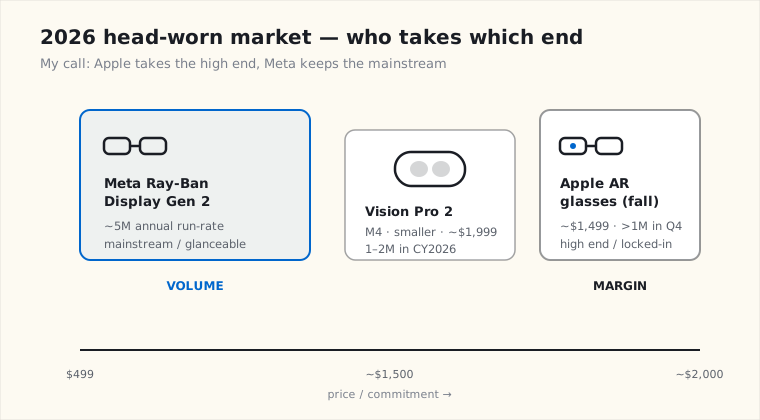
1. Apple consumer AR glasses ship in fall. September. ~$1,499. Monocular display, all-day battery (with a small worn pack), tightly integrated with iPhone and Apple Watch. Sell over 1M units in calendar Q4 alone. Apple takes the high end of the AR-glasses market; Meta keeps the mainstream.
2. Vision Pro 2 (cheaper) ships in spring. ~$1,999. M4 chip, smaller form factor, real consumer positioning. Apple won't disclose units but channel checks suggest 1-2M in CY2026.
3. Meta Ray-Ban Display Gen 2 ships at Meta Connect. Slimmer, better display, longer battery. Annual run-rate clears 5M units. The category creator stays ahead.
4. Samsung Galaxy Ring Gen 3 ships with blood-pressure trend tracking. Catching Apple Watch on the sensor density story.
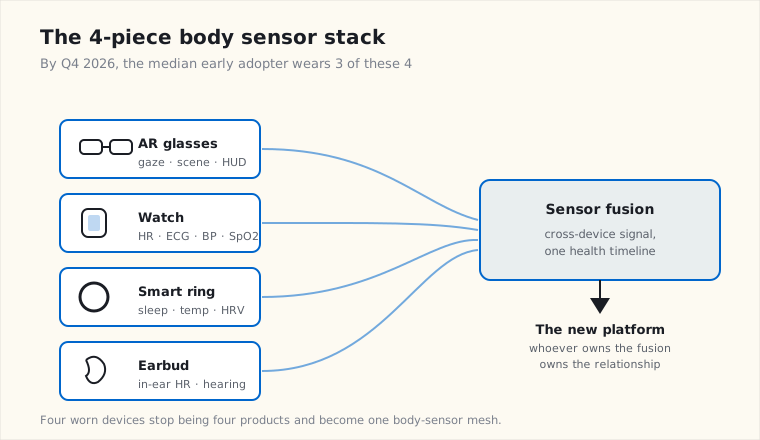
5. AR glasses + smart ring + watch + earbud becomes the 4-piece body sensor stack. By Q4, the median tech-early-adopter owns at least 3 of the 4. Sensor fusion across them becomes the new platform story.
6. Apple Watch Series 12 holds the line on sensors; the big innovation is on-device AI. September. On-device LLM running locally; latency on Siri queries drops by 4-5x. (Don't bet on blood glucose. It's still 2-3 years out.)
7. Matter v2.0 or major rewrite gets announced. v1.x is creaking; the working group acknowledges this and starts a major version refresh. Ship target 2027-28. Standards always take longer than you think.
8. The first AR-glasses-driven privacy regulation passes. A US state (probably California) passes a law requiring visible recording-indicator LEDs on consumer smart glasses. Industry complies; the visual signal is small but mandatory.
9. Connected toothbrush / connected health-device category gets a regulatory shake-up. FDA Software-as-Medical-Device framework matures into actual enforcement; some consumer-health products (sleep trackers, period trackers, ovulation predictors) face Class II regulation by Q4.
10. iRobot files for bankruptcy or gets acquired at a fire-sale valuation. Q1-Q2. After the 2024 Amazon deal collapse and 2025 staffing/financial trouble, the company runs out of runway. Likely buyer: a Chinese conglomerate (Roborock or similar).
Gratitude beat
Big thanks to every silicon engineer who took a 7nm-class chip down to a 3nm AI accelerator that fits in a pair of glasses. The AR-glasses category exists because somebody at TSMC, Samsung Foundry, and Apple Silicon spent a decade making transistors smaller. Thank you.
And a thank-you to every reader who's followed this annual exercise for eleven years. Predictions are easier in retrospect; making them on January 8th and scoring them January 8th the next year is the discipline that keeps me honest. Thank you, sincerely.