IoT & Connected Devices — 2016 Predictions and Outcomes
Welcome to the first year-in-review for connected devices. Predictions and outcomes, calibrated by what actually shipped. The format: first half scores the year that just ended; second half lays down what's about to land. Honest scoring, no consultant hedging.
How 2015 actually played out
Last January the consensus called for "the year of the smartwatch," "voice assistants in every home," and "the smart-home unification standard finally arrives." Two out of three landed; the third is still embarrassing the industry.
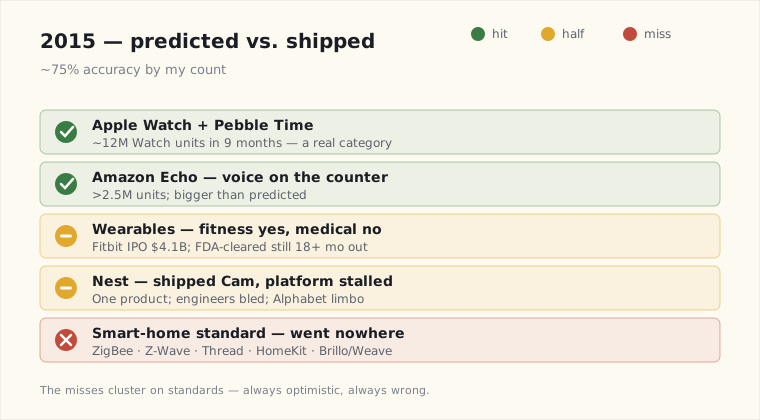
Apple Watch shipped, and the market is bigger than the naysayers said. The 1st-gen Watch (April 2015) sold roughly 12 million units in its first nine months. That's not iPhone numbers, but it's a real category. Pebble Time (May 2015) shipped on its Kickstarter promise and lit up a smaller but loyal market. Hit.
Amazon Echo went from "weird Bezos toy" to kitchen-counter default. Echo became broadly available June 2015 after a year of invite-only rollout. Sold over 2.5 million units by year-end. Voice as an interface stopped being a sci-fi thing. Hit, bigger than predicted.
Smart-home standardization went nowhere. ZigBee, Z-Wave, Thread, Apple HomeKit, Google Brillo/Weave — five competing visions, zero convergence. The standards story in 2015 is "five standards is what you get when nobody agrees." Miss.
Nest got acquired and quiet. Google bought Nest in 2014 for $3.2B; 2015 was supposed to be Nest's "Nest-Cam-everywhere" year. Instead the company shipped one product (the Nest Cam, June 2015), bled engineers, and went into Alphabet limbo. Half-miss — Nest Cam sold okay but the platform strategy stalled.
Wearables got the fitness story right and the medical story wrong. Fitbit went public (June 2015) at a $4.1B valuation. Strong. But the predicted shift from "step counter" to "FDA-cleared medical device" didn't happen. Fitbit's medical play is still 18+ months out. Half-hit.
Net 2015 scorecard: roughly 75% prediction accuracy by my count. The misses were on standards (always optimistic, always wrong) and on the speed of medical-grade wearables (regulatory, not technical, gates).
What I got wrong personally
I called for Pebble to win on developer ecosystem. Pebble Time shipped fine but Apple Watch's developer pull was bigger than I thought a $500 wrist-computer could generate. Lesson: don't bet against the platform with the App Store.
2016 predictions
Here's how I'd place the eight bets below — by how much conviction I'd stake on each (vertical) against how soon in the year it lands (horizontal). The top-left cluster is where I'd put money; the bottom-right is where I'm hedging.
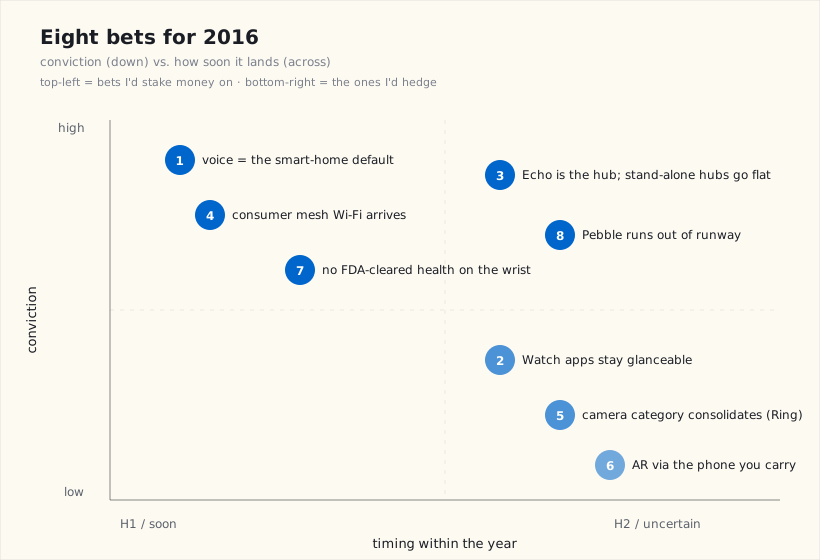
1. Voice will eat the smart-home interface. Echo Dot (rumored, ~$50) ships first half. Google announces a competing speaker by Google I/O. By year-end, the default way to turn on a light in a smart home is voice, not an app. The app companies that haven't figured out voice are going to have a rough year.
2. The Apple Watch app story gets fixed, or doesn't. Watch OS 2 already shipped native apps; if the third-party app ecosystem doesn't catch up by year-end, the platform stalls. My bet: it doesn't catch up. Most apps will still be glanceable companions.
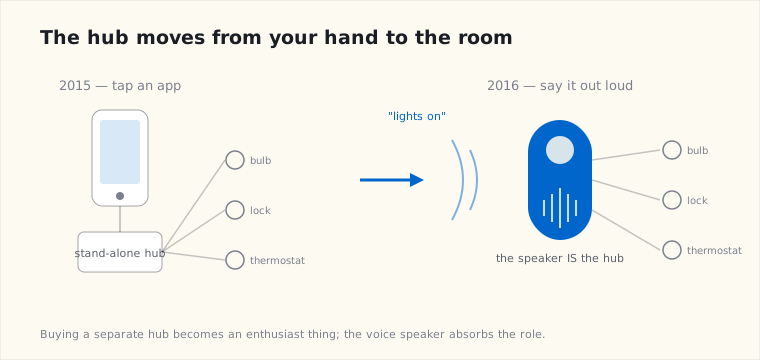
3. Smart-home hubs lose to ambient hubs. SmartThings, Wink, and the like will see flat sales. The Echo is the hub now. Buying a separate hub becomes a thing only enthusiasts do.
4. Mesh wifi enters the chat. Eero (the mesh-router startup, shipping any week now), Luma, and Google's WiFi (rumored) launch the consumer mesh category. Single-router setups start to feel dated by Q4.
5. The connected camera category consolidates. Nest Cam, Arlo, Ring — three brands, three approaches. Ring (battery doorbells) is the dark horse; betting they get acquired or hit serious scale by year-end.
6. AR via phone becomes a thing. Magic Leap is still mostly vapor; but Tango (Google) shipping in a Lenovo phone mid-year + iPhone with rumored depth-sensing camera = AR via the device you already carry. The Pokémon Go rumor is real, and it'll be bigger than anyone is forecasting.
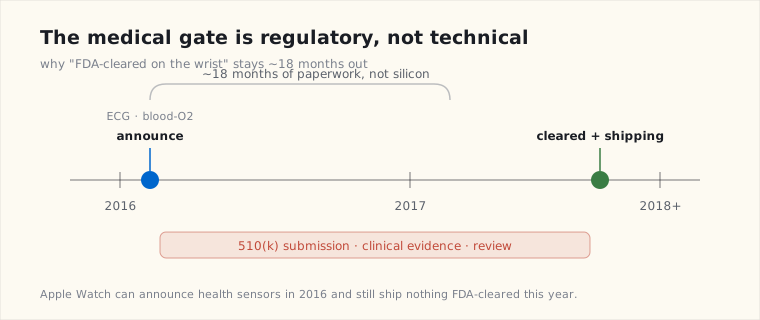
7. Wearables medical story still 18 months away. Apple Watch will announce health features (ECG, blood-O2) but won't ship FDA-cleared anything in 2016. The regulatory path is real and slow.
8. Pebble runs out of runway. Hard call, but the cap table tells the story. Either they get acquired (Fitbit is the bidder) or they wind down. Either way, the independent smartwatch category becomes a duopoly: Apple + Garmin.
Gratitude beat
Big thanks to every hardware engineer shipping firmware updates over Bluetooth in 2015. The category exists because you wrote OTA stacks in your spare cycles. Thank you.