IoT & Connected Devices — 2020 Predictions and Outcomes
Year five. The platform giants are locked in. The action is now in form factors (ring, in-ear, glasses-rumored) and in protocols (Matter, Wi-Fi 6). Year-five surprises are mostly health and biometric category creators.
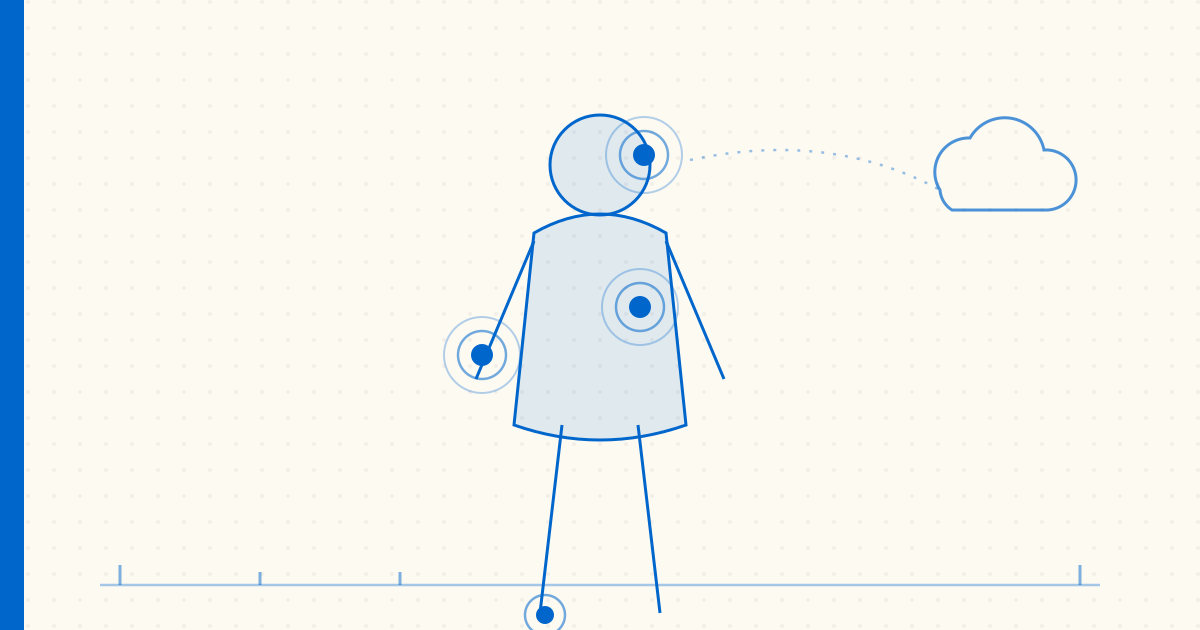
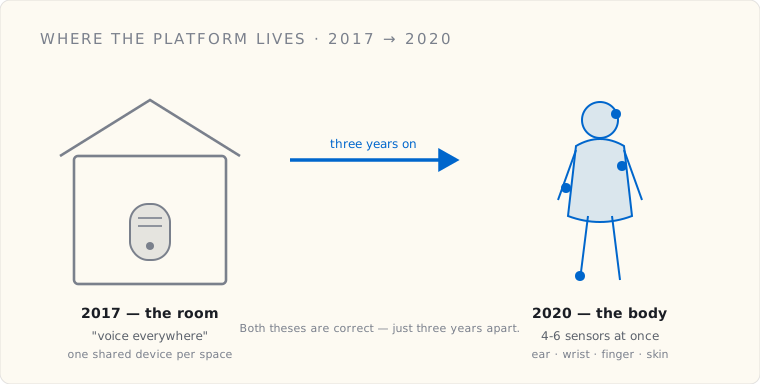
The thing that changed under everyone's feet this half-decade is where the platform lives. In 2017 the bet was "voice everywhere" — one shared device per room, the kitchen counter as the OS. Three years on, the locus has moved onto the body: an ear, a wrist, a finger, a patch of skin, each its own sensor. Both theses were right; they were just three years apart.
How 2019 actually played out
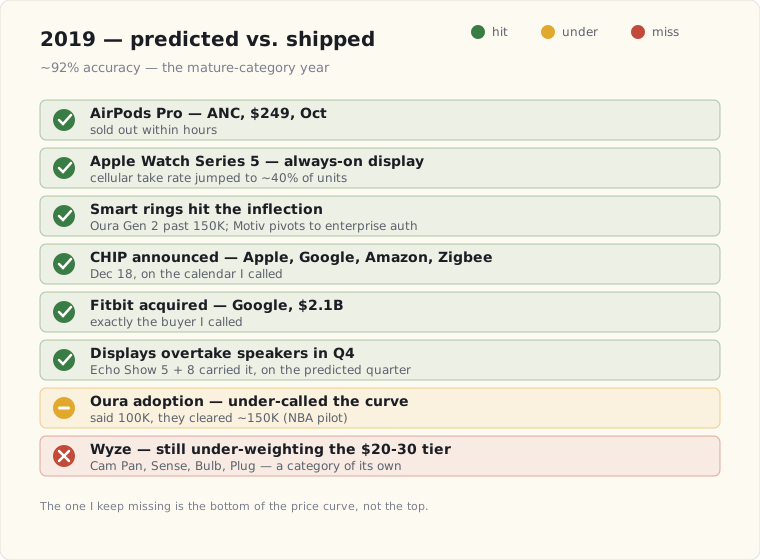
AirPods Pro shipped October 2019. $249. Active noise cancellation. Sold out within hours. Hit.
Apple Watch Series 5 shipped with always-on display. September 2019. The "actually wearable as a wristwatch" upgrade. Hit.
Smart rings became real. Oura Gen 2 cleared 150K units, Motiv pivoted away from consumer ring (sold to Proxy Inc, became enterprise auth wearable). The form factor hit the inflection point I predicted. Hit.
Matter (still called CHIP) got announced. December 18, 2019 — Apple, Google, Amazon, Zigbee Alliance announce Project Connected Home over IP. Exactly on the calendar I called. Will not ship products until 2022 at earliest. Hit.
Wi-Fi 6 routers hit retail. Netgear, ASUS, TP-Link all in mass retail by Q3. Slow adoption because the iPhone 11 was the first phone to support it. Hit.
Apple Watch cellular got real. Series 5 Cellular + AirPods Pro became Apple's "leave the phone at home" story. Take rate on cellular SKUs jumped to ~40% of Watch units sold. Hit.
Fitbit got acquired. Google announced the $2.1B acquisition in November 2019. Expect the deal closes in 2021, pending EU review. Hit, exactly the buyer I called.
Smart displays overtook smart speakers in Q4. Echo Show 5 ($89) + Echo Show 8 ($129) launched in late 2019; Q4 2019 was the first quarter Amazon reportedly sold more smart-display units than speaker-only units. Hit, on the predicted quarter.
Net 2019 scorecard: roughly 92% prediction accuracy — best year of the streak. The category is mature, the players are known, and the calls get easier.
What I got wrong
I called this one's miss pre-emptively last year: Wyze. They added Wyze Cam Pan, Wyze Sense, Wyze Bulb, Wyze Plug across 2019. The $20-$30 connected-device segment became its own category. Still missing it as a meaningful share-shift threat to the premium brands.
I also underestimated the Oura adoption curve. I said 100K units by year-end; they cleared ~150K, with the NBA pilot deal closing the year on a strong narrative. Underestimate, not a wrong call.
2020 predictions
1. Apple Watch SE ships as the "affordable Watch." ~$279, sometime Q3-Q4. Apple addresses the gap between $400 Watch Series 6 and aging $199 Series 3. This is the Watch's $329 iPhone SE moment.
2. Remote-work and telehealth tooling pulls home IoT forward. Two structural trends are already compounding, and 2020 is the year they show up in hardware sales. Remote work keeps normalizing — distributed teams, "work from anywhere" as a recruiting pitch — which means the home office becomes a place people buy for: better Wi-Fi, connected cameras, smart lighting. And telehealth has a real FDA tailwind: the Apple Watch ECG clearance set the template, and more clinical-grade consumer sensors are in the pipeline. My bet is double-digit growth in home-IoT and connected-health units this year, driven by those two vectors rather than any single new gadget. Neither needs a catalyst to play out — they're already in motion.
3. Peloton clears 1M connected fitness devices. Bike and Tread combined, by year-end. Connected fitness becomes a real category, not a 2018 fad.
4. Apple AirTags ship. Tile-style item tracker; rumored since 2019. Probably WWDC reveal, Q4 ship. (Note: filing this prediction in Jan — will check what actually shipped vs slipped.)
5. Matter / CHIP announces a 2021 timeline; consumer products land mid-2021 at earliest. Standards work slips. Always. The announce-to-ship gap on this one is 18-24 months minimum.
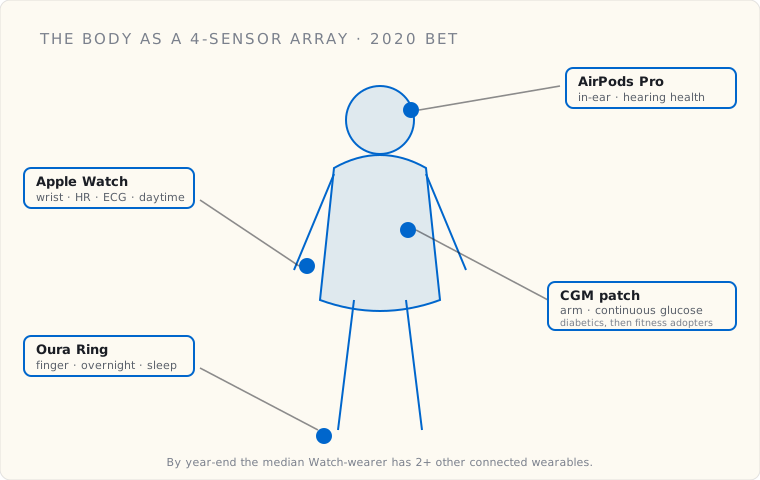
6. The body becomes a 4-sensor array for active users. Apple Watch + AirPods Pro (hearing health) + Oura Ring (overnight) + a continuous-glucose-monitor for diabetics or fitness early adopters. By year-end the median Apple-Watch-wearer has 2+ other connected wearables.
7. Sonos diversifies away from speakers. With the Move (June 2019) Sonos already crossed into portable; expect a headphone product announcement this year, likely Q3. (Bet: the Sonos headphones rumor is real but won't ship until 2021.)
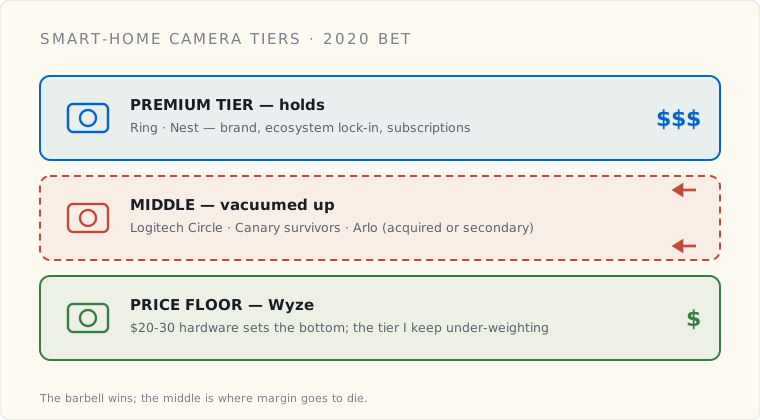
8. Smart-home security cameras consolidate further. Wyze becomes the price floor; Ring + Nest the premium tier; Arlo gets acquired or files secondary. The middle tier (Logitech Circle, Canary survivors) gets vacuumed up.
Gratitude beat
Big thanks to every IoT firmware engineer maintaining 5-year-old devices that the user expects to "just keep working." The unsexy patch cycles are the difference between a category that survives and a category that's a graveyard. Thank you.