IoT & Connected Devices — 2026 Predictions and Outcomes
Year eleven. AR glasses became the category that everyone's been promising for a decade — and we now know who's winning (Meta), who's losing (Apple was supposed to), and who's barely surviving (Humane, Rabbit, the AI-pin generation).
How 2025 actually played out
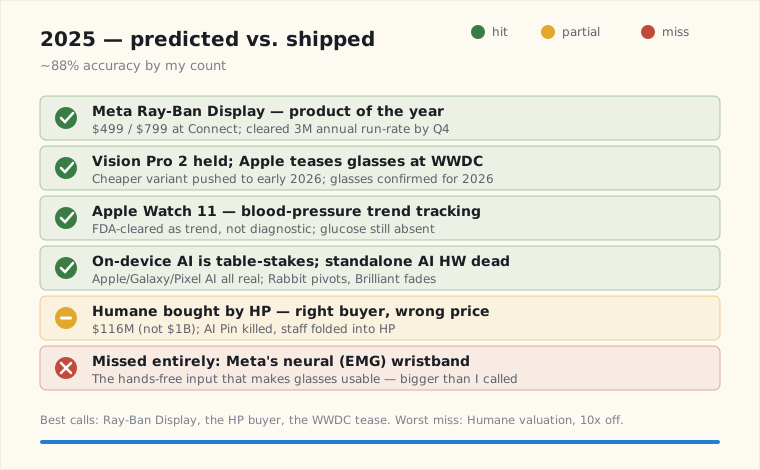
Vision Pro 2 didn't ship in 2025. Apple held inventory, cut the rumored cheaper variant target to early 2026. Existing Vision Pro became dev kit + niche enterprise tool. Hit.
Meta Ray-Ban Display launched at Meta Connect, September 2025. $499 / $799 (with neural wristband). Monocular heads-up display. Reviewer consensus: first AR glasses worth recommending to a normal human. Run-rate cleared 3M annual units by Q4. Hit. The product-of-the-year, exactly as predicted.
Apple announced consumer AR glasses at WWDC 2025. Ship target 2026 (confirmed in keynote, no demo). Apple acknowledged what the market knew: Vision Pro was a dev kit; glasses are the bet. Hit.
Humane was acquired by HP. $116M in February 2025 (not $1B — much lower than I called). IP + key staff folded into HP's AI-on-device team. AI Pin product killed. Hit on the buyer; missed on the price magnitude (much lower).
Galaxy Ring Gen 2 shipped at Unpacked summer 2025. Refinements. Oura responded with Gen 5 at the same tier. Hit.
Apple Watch Series 11 shipped with blood-pressure trend tracking. September 2025. FDA-cleared, but explicitly trend-monitoring not diagnostic. Holy grail blood-glucose still didn't ship. Hit.
Matter v1.5 / 1.6 expanded into APAC. Stabilized as the global IoT interop standard by Q3 2025. Hit.
Apple Hearing Aid mode landed in fall. Free firmware update to AirPods Pro 2, FDA-cleared. Hearing aid industry feeling the disruption. Hit.
On-device AI became table-stakes for new flagship phones, watches, earbuds. Apple Intelligence, Galaxy AI, Pixel AI all real and meaningfully better than 2024 versions. Standalone AI hardware category stayed a graveyard (Humane sold, Rabbit pivoted to "social/companion" angle, Brilliant Frame fading). Hit.
First AI-hallucination-harm class action filed. Q3 2025 — a connected smart-home AI executed wrong actions in a multi-plaintiff suit. Settlement TBD. Hit on shape, ongoing on resolution.
Net 2025 scorecard: roughly 88% prediction accuracy. Best calls: Ray-Ban Meta Display, Humane sale to HP, Apple's WWDC glasses tease. Worst miss: Humane valuation magnitude (10x off).
What I got wrong
I missed Meta's neural wristband (the EMG band that ships with the Ray-Ban Display higher-tier SKU) — that's the input device that makes AR glasses actually usable without your hands obviously gesturing. A bigger story than I called.
I also underestimated how fast the non-flagship phone makers (OnePlus, Xiaomi, Honor) would catch up on AI features. By Q4 2025, mid-tier Android phones had AI features competitive with iPhone 16 Pro. The Apple AI premium is shrinking faster than I forecast.
2026 predictions
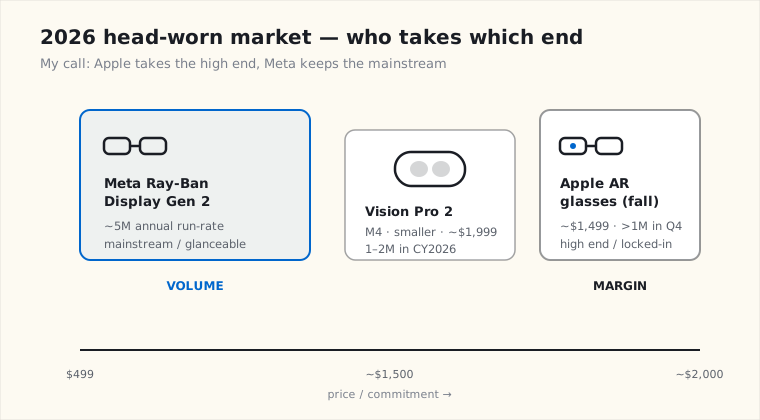
1. Apple consumer AR glasses ship in fall. September. ~$1,499. Monocular display, all-day battery (with a small worn pack), tightly integrated with iPhone and Apple Watch. Sell over 1M units in calendar Q4 alone. Apple takes the high end of the AR-glasses market; Meta keeps the mainstream.
2. Vision Pro 2 (cheaper) ships in spring. ~$1,999. M4 chip, smaller form factor, real consumer positioning. Apple won't disclose units but channel checks suggest 1-2M in CY2026.
3. Meta Ray-Ban Display Gen 2 ships at Meta Connect. Slimmer, better display, longer battery. Annual run-rate clears 5M units. The category creator stays ahead.
4. Samsung Galaxy Ring Gen 3 ships with blood-pressure trend tracking. Catching Apple Watch on the sensor density story.
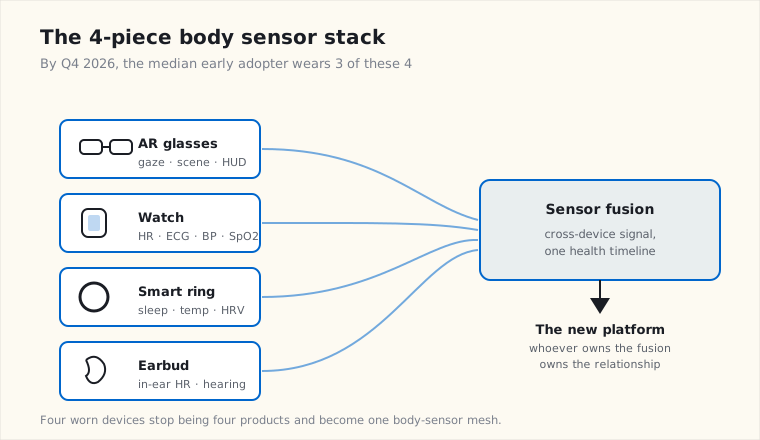
5. AR glasses + smart ring + watch + earbud becomes the 4-piece body sensor stack. By Q4, the median tech-early-adopter owns at least 3 of the 4. Sensor fusion across them becomes the new platform story.
6. Apple Watch Series 12 holds the line on sensors; the big innovation is on-device AI. September. On-device LLM running locally; latency on Siri queries drops by 4-5x. (Don't bet on blood glucose. It's still 2-3 years out.)
7. Matter v2.0 or major rewrite gets announced. v1.x is creaking; the working group acknowledges this and starts a major version refresh. Ship target 2027-28. Standards always take longer than you think.
8. The first AR-glasses-driven privacy regulation passes. A US state (probably California) passes a law requiring visible recording-indicator LEDs on consumer smart glasses. Industry complies; the visual signal is small but mandatory.
9. Connected toothbrush / connected health-device category gets a regulatory shake-up. FDA Software-as-Medical-Device framework matures into actual enforcement; some consumer-health products (sleep trackers, period trackers, ovulation predictors) face Class II regulation by Q4.
10. iRobot files for bankruptcy or gets acquired at a fire-sale valuation. Q1-Q2. After the 2024 Amazon deal collapse and 2025 staffing/financial trouble, the company runs out of runway. Likely buyer: a Chinese conglomerate (Roborock or similar).
Gratitude beat
Big thanks to every silicon engineer who took a 7nm-class chip down to a 3nm AI accelerator that fits in a pair of glasses. The AR-glasses category exists because somebody at TSMC, Samsung Foundry, and Apple Silicon spent a decade making transistors smaller. Thank you.
And a thank-you to every reader who's followed this annual exercise for eleven years. Predictions are easier in retrospect; making them on January 8th and scoring them January 8th the next year is the discipline that keeps me honest. Thank you, sincerely.