Phone-as-gateway — the auth model for BLE-only devices
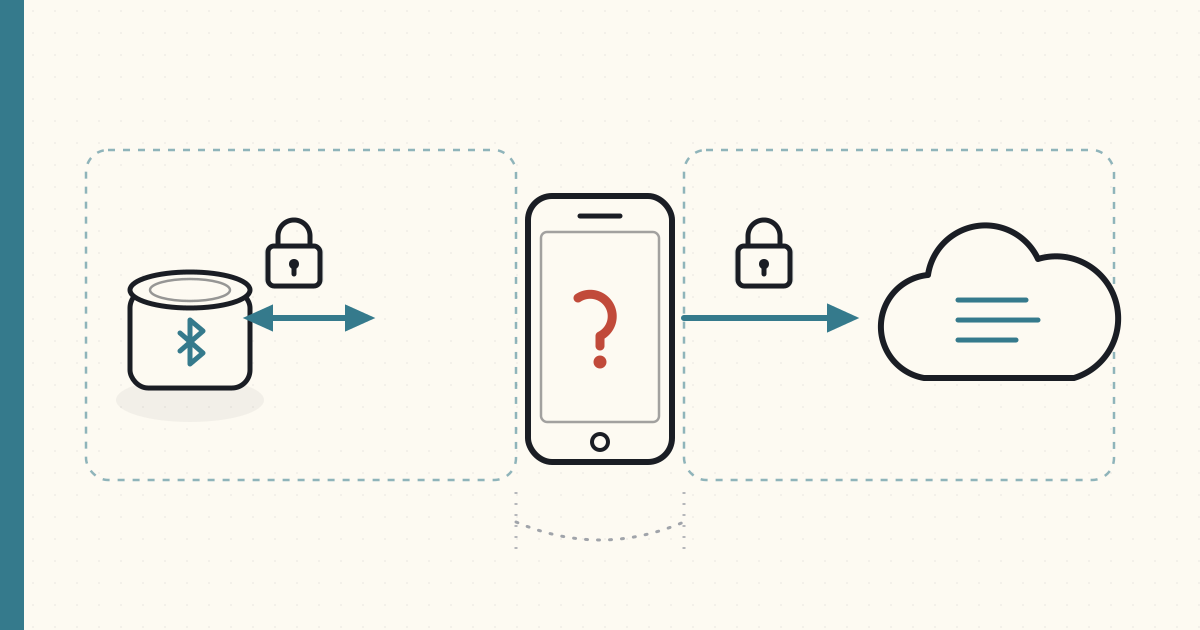
The brush has no radio but Bluetooth. I wrote about what that does to the platform a while back — late, duplicated, out-of-order telemetry, all of it arriving through the customer's phone because there's no other door. That post ended on a promise I deferred: the device can't reach the cloud to prove who it is, so trust has to bridge two separate domains, and stitching them together is its own problem. This is that post.
Here's the problem stated plainly. Every byte the cloud ever sees about a device — every brushing session, every battery reading, eventually every firmware acknowledgement — arrives inside an HTTPS request made by the phone, not the device. The device signs nothing the cloud can check unless we make it. So the cloud is being asked to believe a claim of the form "a real Device #4471, bonded to me, recorded this session" — and the entity making that claim is a phone app we shipped to an app store, running on hardware we don't control, that a determined attacker can decompile, instrument, or replace outright. The phone is a forgeable middleman, and the whole auth model is about making its forgeries useless.
Two trust relationships that don't touch
Start by being precise about what trust we actually have, because there are two completely separate relationships here and the temptation is to treat them as one.
Relationship A: device ↔ phone, established by BLE bonding. The user pairs in the app; under LE Secure Connections the device and phone run a P-256 ECDH exchange and each cache a long-term key (LTK). After that the link is encrypted under the LTK, and each side recognizes the other on reconnect. The trust here is between two specific physical objects — this brush, this phone. It says nothing about which human is holding the phone, and the LTK never leaves either device, so the cloud has never seen it and can't use it.
Relationship B: phone ↔ cloud, established by OAuth 2.0. The user logs into their account in the app and gets back an access token — a bearer JWT in our case. The token authorizes API calls on that user's behalf. The trust here is between an authenticated human session and our backend. Standard mobile auth, and it says nothing about any particular device.
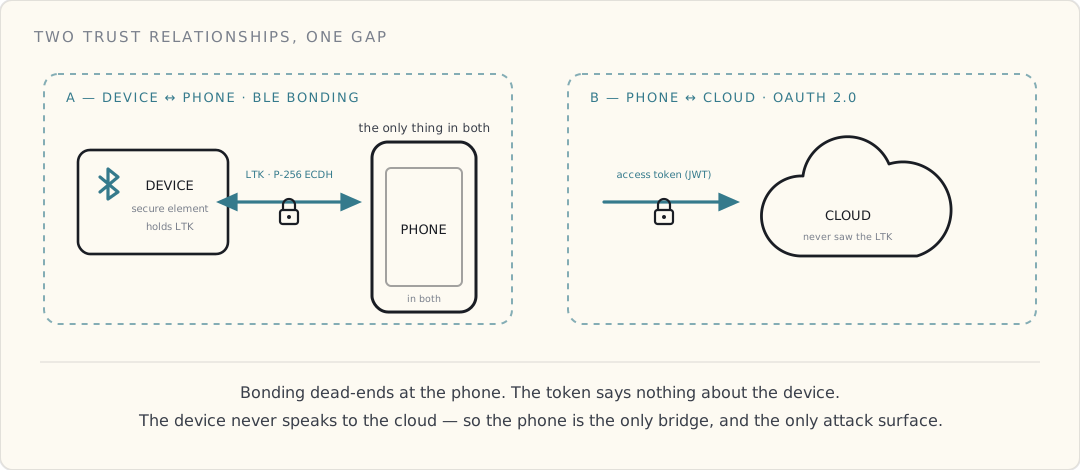
Look at where each relationship terminates and the gap jumps out. Bonding proves device-to-phone but dead-ends at the phone; the cloud isn't a party to it. The token proves human-to-cloud but says nothing about which device's data is riding along. And the device — the thing whose data we actually care about being authentic — is a party to exactly one of the two relationships and never once talks to the cloud. The phone is the only thing that sits in both domains. That's not a convenience. That's the attack surface.
The three questions the API has to answer
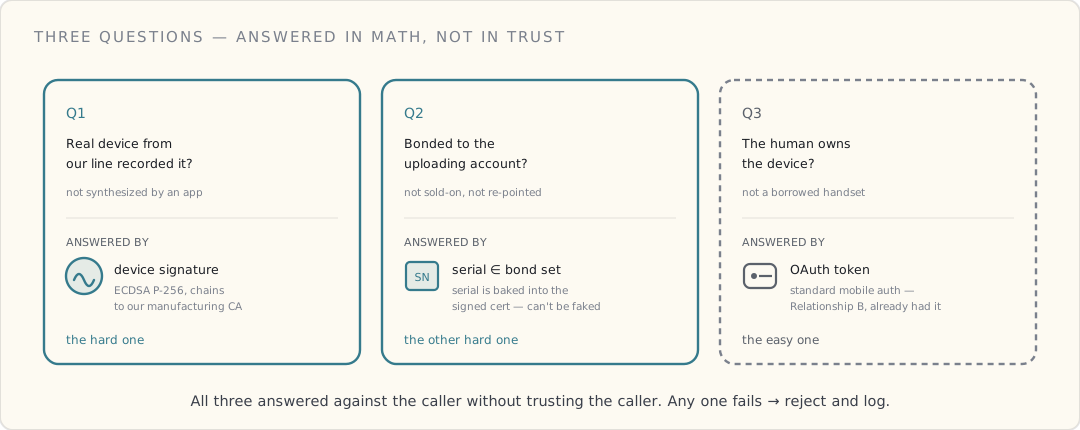
When an upload lands, the ingestion endpoint has to answer three questions, and — this is the whole point — it has to answer them with cryptography, not with policy or trust in the caller:
- Was this session actually recorded by a real device from our line? Not synthesized by an instrumented app, not crafted to inflate an engagement metric, not lifted from someone else's account and replayed.
- Was that device legitimately bonded to the account uploading it? Not a unit that was sold on, not one re-pointed at a stranger's account without going through a transfer.
- Is the human logged into this phone the one who owns the device? Not an ex-partner who knows the password, not a borrowed handset.
Each maps to one of the things we can actually establish. Q3 is the OAuth token — it's exactly what Relationship B proves. Q1 and Q2 are the hard ones, because the only entity in a position to assert them is the phone, and the phone is precisely what we can't trust. Answer those two without trusting the phone and the model holds.
Why bonding alone doesn't get you there
The seductive wrong answer — and the one I argued against in a design review, so I'll own having had to argue it — is "the phone is bonded to the device, the phone is authenticated to the cloud, therefore the cloud can trust what the phone says the device recorded." It chains the two relationships through the phone and calls it done.
It falls apart the moment you write down what an attacker controls. Bonding secures the Bluetooth link; it does not produce any artifact the cloud can verify. By the time session data is sitting in the phone's memory, it has already come out the far end of the encrypted BLE link in cleartext — the phone has to decrypt it to handle it. A modified app, or a script speaking our REST API directly with a valid token, can hand the cloud any session bytes it likes, stamped with any device serial it likes. The LTK doesn't help: it's a link key, not a signing key, the cloud doesn't have it, and even if it did, "this came over a bonded link" is a claim only the phone can make and the phone is the liar. Chaining the relationships through the phone just means the phone's word is load-bearing, which is the one thing we can't allow.
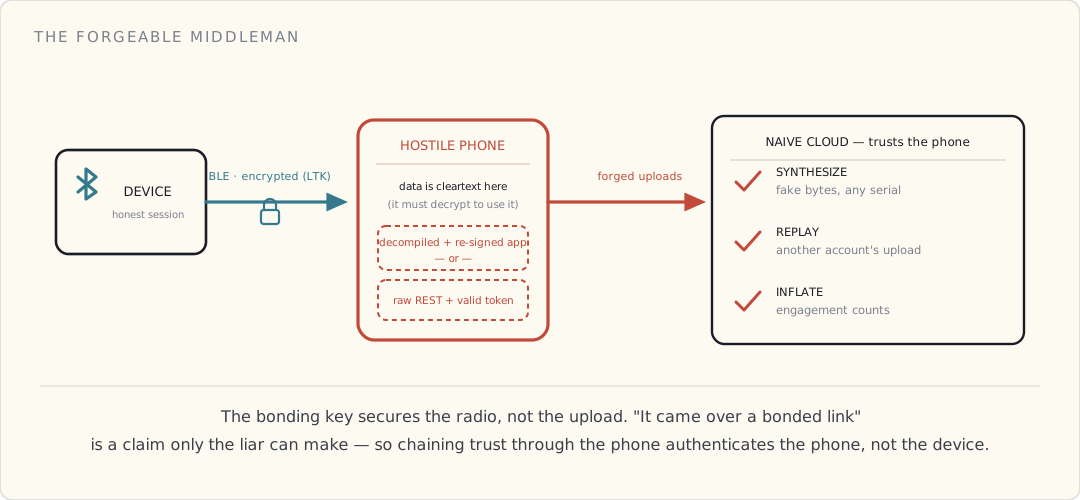
The lesson generalizes past Bluetooth: whatever sits between the device and the cloud is hostile by default — phone, hub, home gateway, doesn't matter. If the only thing vouching for the device's data is the box in the middle, you've authenticated the box, not the device.
What we built: sign on the device, verify in the cloud
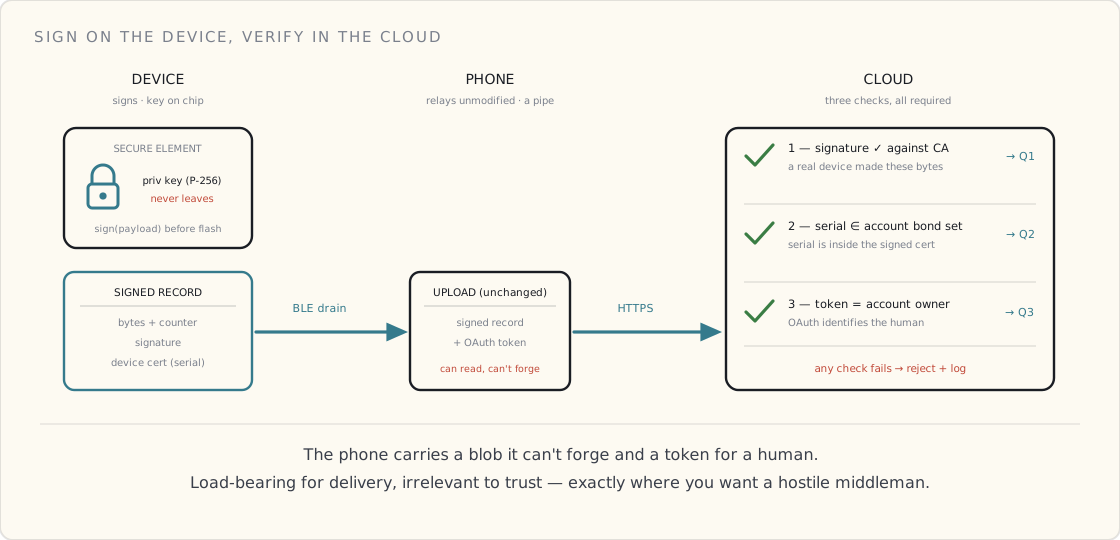
The fix is to give the device a voice the phone can carry but can't fake. Every session is signed on the device, and the cloud verifies that signature against a chain that has nothing to do with the phone.
Each unit ships from the factory with its own keypair generated inside a hardware secure element — the same crypto co-processor the platform already relies on for the BLE pairing — and a per-device X.509 certificate signed by our manufacturing CA, with the device serial as the subject. The private key is generated on-chip and never leaves it; not in manufacturing test, not over BLE, not ever. (This is the same factory-PKI posture the connected-products line uses; I'm not reinventing it here, just pointing it at telemetry.)
When the device records a session, before it writes the record to flash it signs the payload — the session bytes plus the device's own monotonic counter — with that private key, using ECDSA on P-256. The signature and the device's certificate travel with the record. The phone drains the record over BLE exactly as before, and uploads it unmodified, wrapped in its own user-auth token. The phone can read the bytes. It cannot alter them without invalidating a signature it has no key to recompute.
On the cloud side, ingestion runs three checks against that one upload:
- The signature, against our CA. Does the certificate chain to our manufacturing root, and does the signature verify over the payload with the public key in that cert? Pass means a real device from our line produced these exact bytes — that's Q1, answered in math.
- The serial, against the account's bond set. The serial is baked into the signed certificate, so the phone can't lie about it. Is that serial in the set of devices currently bonded to this user's account? Pass means this device belongs to this user — that's Q2.
- The token, against the session. The OAuth token identifies the human. Pass means the account owner is the one uploading — that's Q3.
All three must pass or the event is rejected and logged for review. Notice what the phone's role has shrunk to: it's a pipe. It carries a signed blob it can't forge and a token that authenticates a human, and it gets no say in whether the cloud believes the device. That's exactly where you want a hostile middleman — load-bearing for delivery, irrelevant to trust.
Replay, while we're here
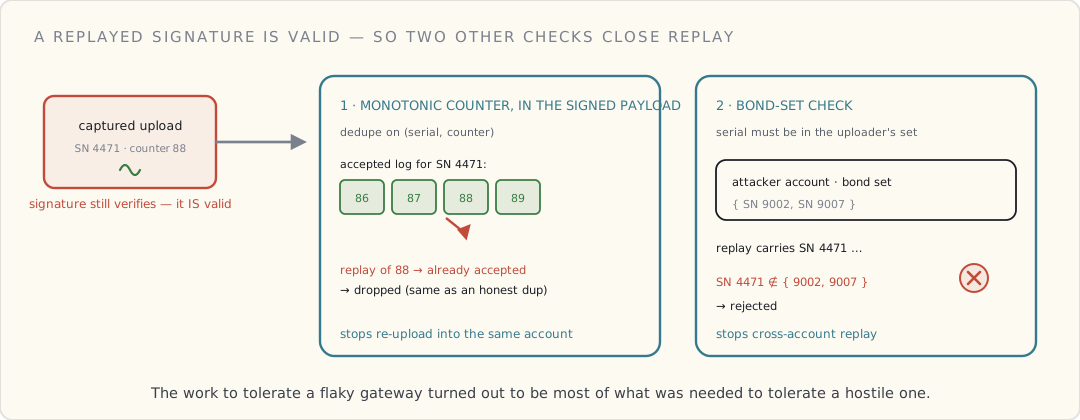
Signing the bytes stops forgery but not replay — a captured upload replays with a perfectly valid signature, because it is valid. Two things close that. The monotonic counter is inside the signed payload, so ingestion dedupes on (device-serial, counter) exactly as the replay-tolerant ingestion design already does for honest duplicates; a replayed session lands on a counter value the log has already accepted and is dropped. And the bond-set check means a session captured from one account can't be replayed into another — the serial won't be in the attacker's bond set. The work I'd already done to tolerate a flaky gateway turned out to be most of what I needed to tolerate a hostile one.
Why not just put the device on AWS IoT Core
We looked hard at AWS IoT Core — it's been GA since 2015 and it's the obvious place a question like "authenticate a device to a cloud" points you. The model it wants is clean: the device authenticates directly to the broker over mutual TLS with its device certificate and publishes MQTT to its own topic. For a device with its own internet radio, that's the right answer and I'd reach for it without hesitating.
Our device has no internet radio. It can't open a TLS socket to anything; the nearest IP-capable thing in its world is the phone. To use IoT Core we'd have the device speak MQTT to the phone, which relays to the broker — at which point the phone is doing all the work and the broker is an HTTPS endpoint with a flakier transport bolted in front. Worse, mTLS terminates at the phone, so the broker would authenticate the phone's TLS session, not the device's — which drops us right back into trusting the middleman, the exact thing we just spent a design eliminating.
So we kept ingestion as our own signed-event endpoint and borrowed the shape IoT Core would have given us: per-device certs and keys, an append-only log, idempotency keyed on a per-device counter, server-side dedup, every event attributable to a specific attested device. The wire protocol isn't MQTT and the front door isn't the broker, but the trust model is the one a broker would have enforced — pushed up to the application layer where, for a phone-gateway product, it actually belongs. If we ever ship a unit with Wi-Fi on board, the device can connect to a real broker and the cloud-side contract barely moves. (Azure IoT Hub and GCP's Cloud IoT Core have the same directly-connected-device assumption baked in; none of the managed brokers fit a BLE-only product until the hardware grows its own radio.)
The lost-phone problem
Bonding assumes the phone and device are a stable pair. They aren't — people replace a phone every couple of years, and the device long outlives any one handset. So there has to be a way to move a device's bond from an old phone to a new one without mailing the brush back to us. And that flow is a gift to an attacker if you build it wrong: if "re-point this device at my account" is a pure software operation, then anyone who phishes a user's credentials can remotely steal the device's data stream into their own account.
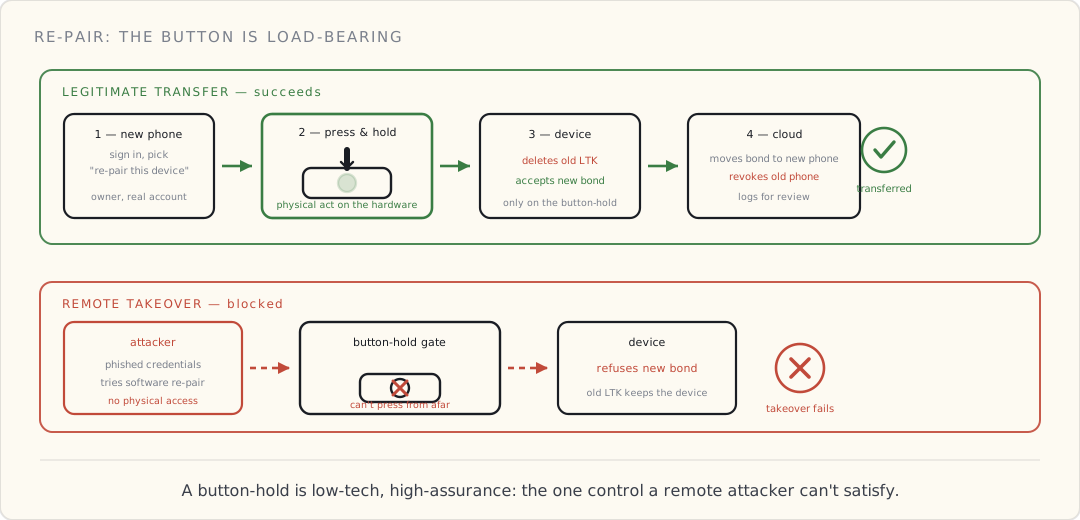
The flow we shipped puts a physical act in the middle of it:
- The user signs into the app on the new phone and sees their registered devices.
- They pick "re-pair this device" and the app prompts them to press and hold the button on the brush.
- The brush, only on that physical button-hold, deletes the old LTK and accepts a new bond.
- The phone tells the cloud the device is now bonded to this account.
- The cloud records the bond change, revokes the old phone's authorization to upload for that serial, and logs the transfer for security review.
Step 2 is the load-bearing one. Without it, an attacker with stolen credentials re-pairs from their own phone and starts uploading — and because their forged sessions would now carry a real device's signature relationship, the cloud might even believe them. With it, the attacker also needs to be physically holding the brush and pressing its button. A button-hold is a low-tech, high-assurance signal that no amount of software-side compromise can spoof, and it's the cheapest strong control on the whole platform.
What I'd tell a team
- Sign on the device, verify in the cloud, never trust the gateway. Whatever sits in the middle — phone, hub, edge box — is hostile by default. Give the device a cryptographic voice the gateway can carry but can't fake, and the gateway's trustworthiness stops mattering.
- Don't confuse a link key with an identity key. BLE bonding secures the radio between two objects; it proves nothing to a cloud that never saw the key. If the cloud needs to trust the device, the device needs a key the cloud can check.
- Bind authorization changes to a physical act. Re-pairing requires a button-hold on the hardware. The one control a remote attacker can't satisfy is the one that needs hands on the device.
- Build ingestion as if it were an IoT broker even when it can't be one. Per-device attestation, append-only, idempotent on the device's own counter. The shape is right regardless of whether the wire protocol ever becomes MQTT — and it ports cleanly the day the hardware gets a radio.
What's next
The same trust path I just described carries telemetry up. The harder direction is down: pushing a firmware image through that hostile phone and onto the device without ever letting the phone substitute its own. Everything here gets stress-tested when the payload stops being a session record and starts being executable code. That's the next post.