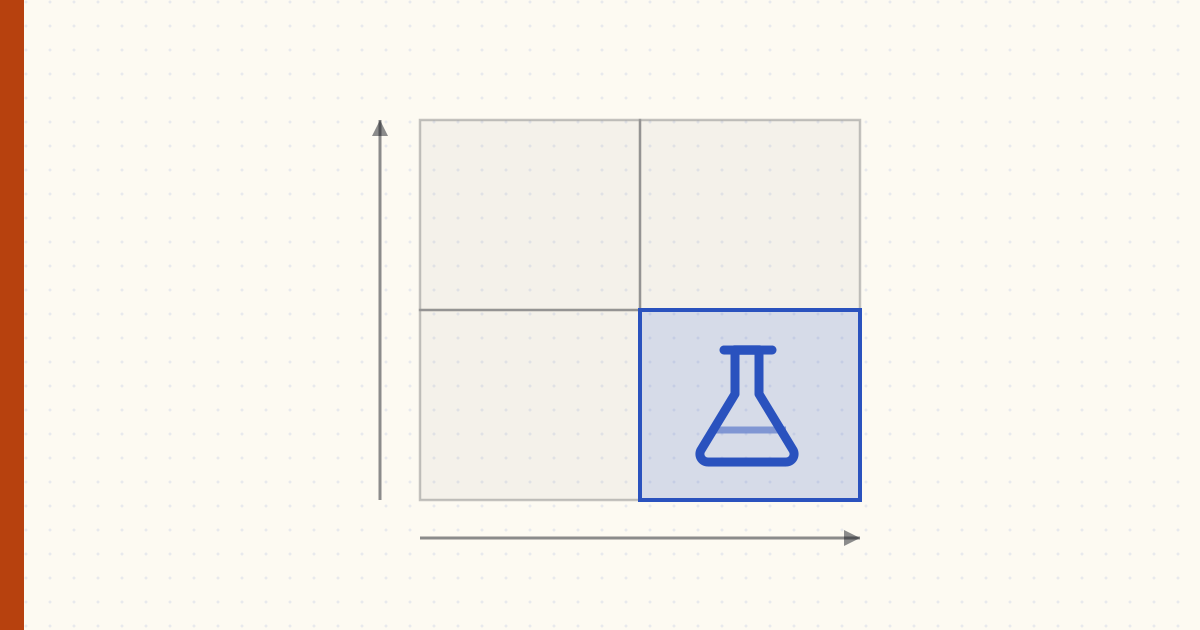
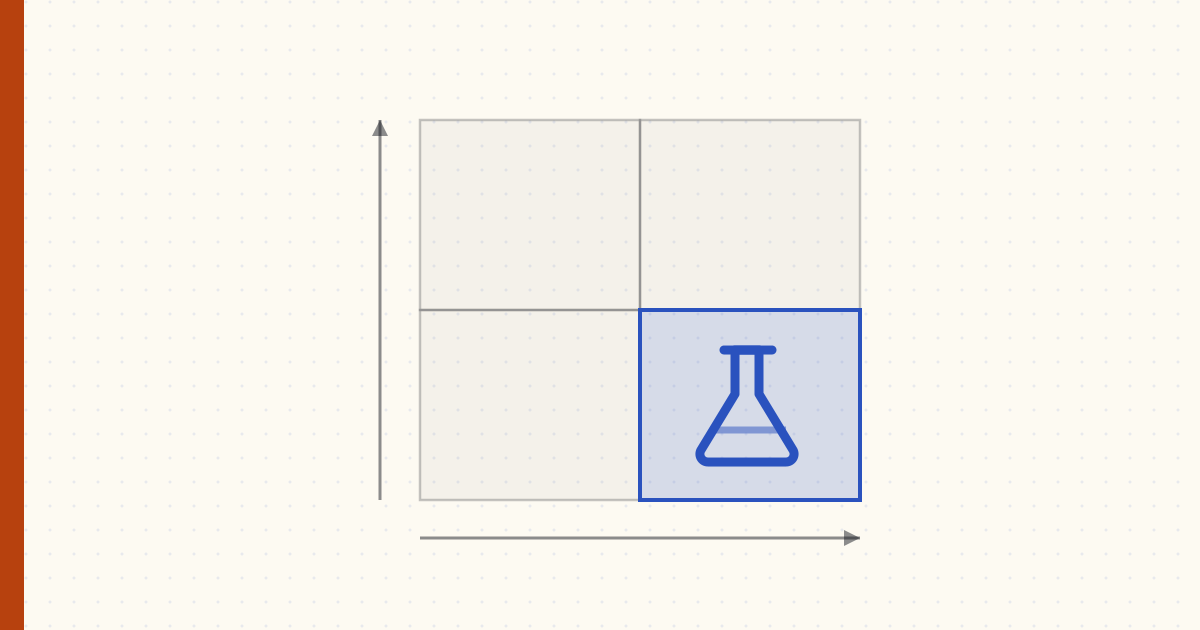
The Test column: a mockup is not evidence
This is part of The Four-Column Ask. The framework post sorts ideas by clarity and evidence. Test is the bottom-right: high clarity, low evidence. You know exactly what you'd build — it's designed, it's crisp, it demos beautifully — and you have no proof anyone actually wants it. The job of this column is to buy that proof for the price of a prototype, before it costs you a sprint.
The trap: polish feels like proof
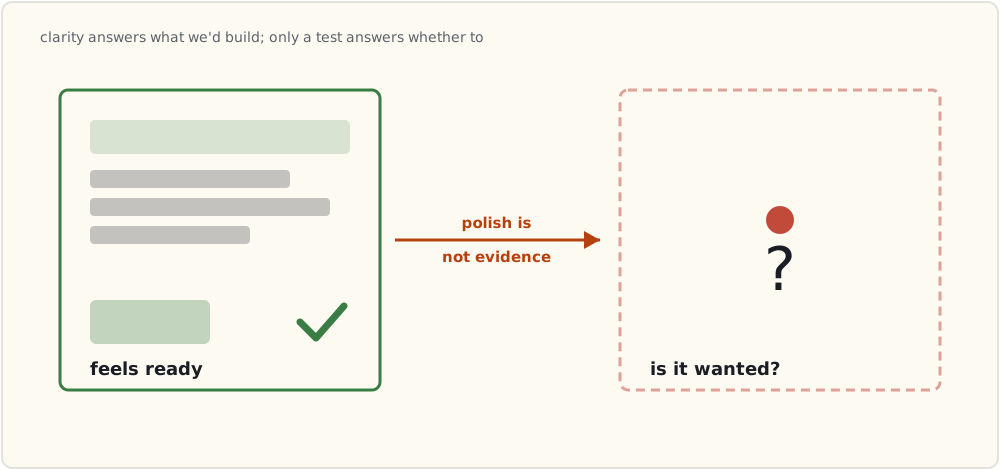
A finished mockup is the most dangerous artifact in product, because it activates every instinct that's supposed to mean "ready." It's concrete. It's specific. It demos well in the all-hands. A stakeholder sees it and says "yes, this." And every one of those signals is about the solution's clarity — none of it is evidence the problem is worth solving. You can have a pixel-perfect, universally-admired design for a feature literally no one will use.
That's the miscategorization that eats quarters: a Test item shipped as a Build item, because polish got mistaken for validation. The whole point of naming the column is to interrupt that — to say, out loud, "this is gorgeous and unproven, and gorgeous-and-unproven is Test."
The move: the cheapest thing that turns "we think" into "we know"
Test is not "build a smaller version." It's "run the cheapest experiment that produces a real signal." The ladder, roughly cheapest to dearest:
- Fake door — ship the button, not the feature; measure how many people click it and where they fall off. Costs an afternoon, kills more bad ideas than anything else.
- Prototype + five users — a clickable flow in front of five real people in the target segment. You will learn more in those five sessions than in five weeks of internal debate. (Five is not a focus group; it's a smoke detector. If three of five hit the same wall, you have your answer.)
- Concierge / Wizard-of-Oz — do the thing manually behind the scenes for a handful of customers before automating it. Proves demand and surfaces the real workflow.
- A/B on a thin slice — only when you already have traffic and the build is genuinely small. The heaviest test; reach for it last.
The discipline is to pick the cheapest rung that would actually change your mind, run it, and then move the item: passed → it slides up into Build; failed → it goes to Drop, and you just saved a sprint.
"We'll just build it to learn" is a Build wearing a Test costume
The most common way teams skip this column is to build the real thing and call shipping it "the experiment." Sometimes that's right — when the build truly is cheaper than the test. Usually it isn't, and "we'll learn from production" is how you spend a quarter to learn something a fake door would have told you in a day. If the honest cheapest-thing-that-would-change-your-mind is smaller than the feature, the feature isn't Build yet. It's Test, and the test is the smaller thing.
What I'd tell a team
- Name the disguise. When a beautiful mockup shows up in planning, say "Test" before anyone says "Build." The word does the work — it reframes admiration as a hypothesis.
- Pick the rung that would change your mind. Not the most rigorous test imaginable — the cheapest one whose result you'd actually act on. If a fake door would settle it, a prototype is procrastination.
- Pre-commit to the threshold. Decide what "passed" means before you run it, or you'll rationalize whatever you get. "≥ 30% of clickers complete the fake-door flow" beats "see how it feels."
- A failed test is a win. It's the cheapest outcome in the whole framework — proof you shouldn't build, bought for an afternoon. Celebrate the kills.
What's next
Test answers "do they want this solution?" But sometimes you don't have a solution to test yet — only a loud, well-evidenced problem. That's the column most teams skip, and skipping it is how you ship a confident answer to a question you never understood. Next: the Analyze column.