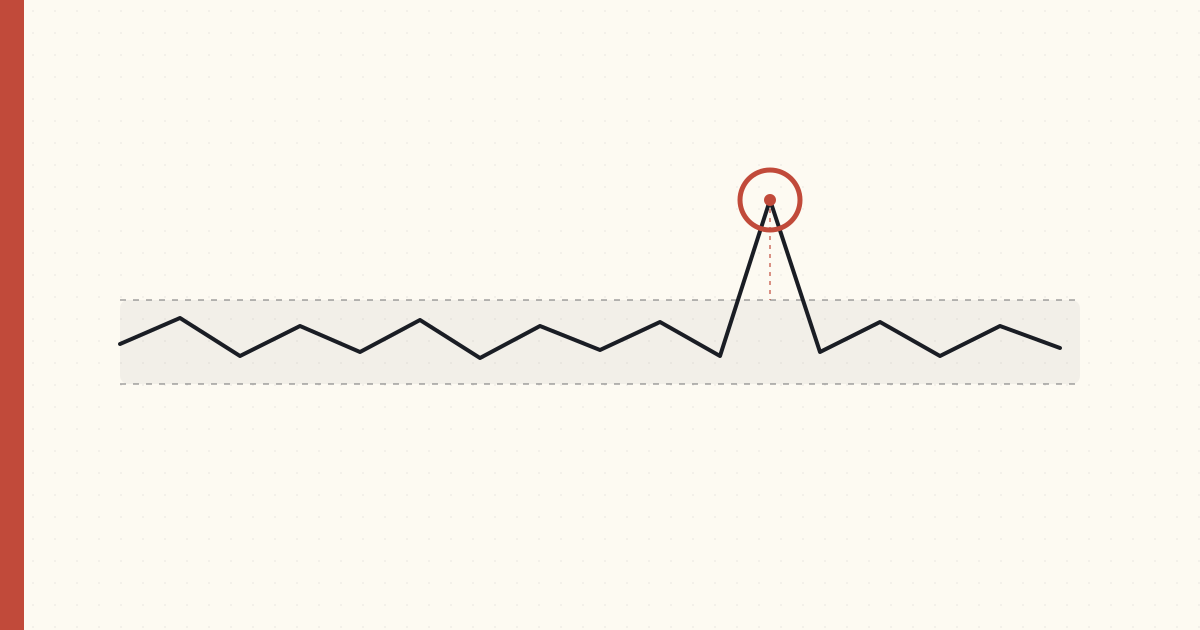
Detection and response: the smoke alarm, not the lock
Everything so far — boot, identity, authorization, encryption — is prevention. It's the locks. But locks fail: a cert leaks, a misconfiguration opens a door, a device gets physically compromised. Prevention is necessary and it is never sufficient. Detection is the layer that notices when something's wrong; response is what you actually do about it. Most teams build the first halfway and the second not at all.
Two tiers of detection
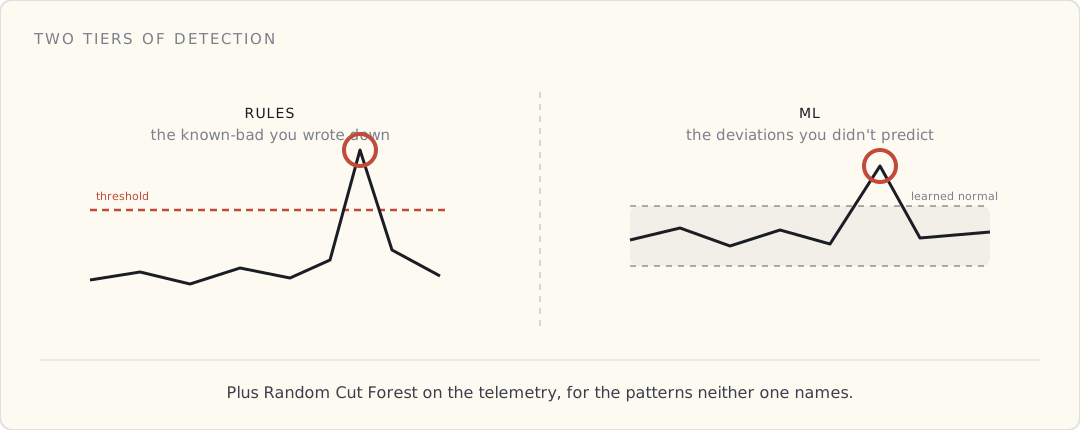
- Rules — the things you already know are bad. Static thresholds: a device sending 100× its normal message rate, a production device publishing to a debug topic, a spike in authorization failures. AWS IoT Device Defender Rules Detect. Fast to write — and they only ever catch what you thought to write down.
- ML — the things you didn't predict. Device Defender ML Detect builds a behavioral model per security metric — messages per minute, message size, connect/disconnect rate, source IP, auth failures — learns each device's normal over a training window, and flags deviations with a confidence (low / medium / high). No thresholds to guess; it learns "normal" and tells you when a device stops looking like itself.
- Custom anomaly detection on telemetry. For the behaviors the fixed security metrics miss — "this device's torque / battery / usage pattern went weird" — run an unsupervised model like Random Cut Forest (in Kinesis Data Analytics on the live stream, or in SageMaker). These signals straddle security and fleet health: a device behaving strangely might be compromised, or it might just be failing.
The honest part about ML detection
It isn't magic, and it has two costs you pay up front.
The cold start. ML Detect needs a training window — on the order of two weeks, with enough data — before it's useful. You're effectively blind to "abnormal" until it has learned "normal." Plan for it; don't ship and assume coverage on day one.
An anomaly is not an attack. This is the cost that wears teams down. Most anomalies are benign — a firmware update shifted a traffic pattern, a region had a network blip. You will tune false positives forever, and alert fatigue is the failure mode that quietly kills detection programs. The discipline is a feedback loop: every alert gets triaged, every false positive tightens the model.
The payoff is real, though. The one true positive that earns the whole program for us: a misconfigured firmware build that started talking to debug topics in production. No static rule would have caught it — the behavioral model did, because the device stopped looking like itself.
ML is the smoke alarm, not the lock
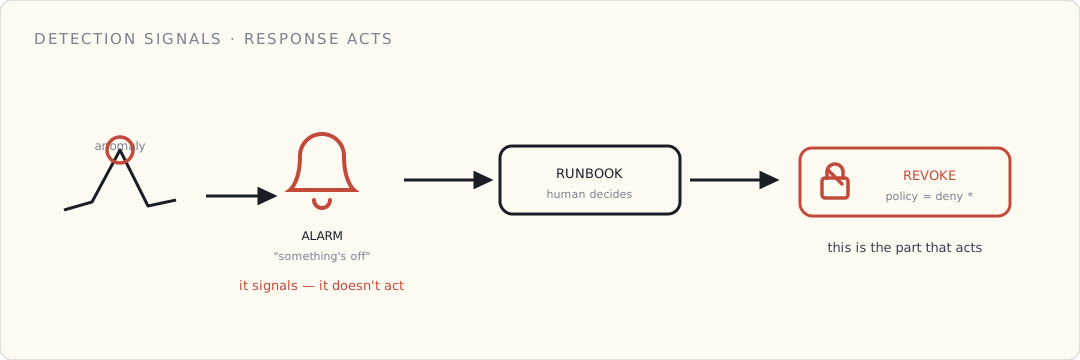
Here's the framing to hold onto: detection tells you something is wrong. It does not fix it. A smoke alarm doesn't put out the fire — it tells you there's a fire while you can still act. ML anomaly detection is exactly that. The acting is a separate thing, and it's the half teams under-build.
Response: the runbook that actually does something
A flagged anomaly is worthless without a practiced response.
- The one-button revoke. The incident runbook flips the suspect device's IoT policy to deny-all; on its next connection attempt it's refused, in under a minute. (This is the revocation from the identity and authorization layers, used in anger.) The device-side state machine handles "disconnected, can't reconnect, light the LED, stop publishing."
- The fleet-wide playbook. The scenarios you hope never to use: revoke an entire CA, push an emergency signed OTA, rotate every device cert. You don't expect to. You also don't run a connected product without the runbook written and drilled — we test ours on a quarterly cadence in dev.
Detection without response is a smoke alarm with no exit. Response without detection is an exit you never know to use.
Deployment-agnostic
- AWS: Device Defender ML Detect + Rules Detect; Random Cut Forest in Kinesis Data Analytics or SageMaker for telemetry anomalies.
- Azure: Microsoft Defender for IoT (agentless anomaly detection) + Stream Analytics' built-in anomaly functions.
- GCP: roll your own — Dataflow plus BigQuery ML's
DETECT_ANOMALIES, since the managed IoT service is gone.
What I'd tell a team
- Rules for the known-bad, ML for the unknown. You need both; neither alone is enough.
- Budget for the cold start, and tell people detection isn't live on day one.
- Treat ML output as a signal, not an action. It flags; humans and runbooks act.
- Build and drill the revoke runbook before you need it — the one-button revoke should be boring by the time it's real.
- Instrument for detection before you ship. You cannot detect what you never measured; the metrics have to exist from the very first device.
The smoke alarm doesn't make the building fireproof. It means that when prevention fails — and over a long enough fleet life, it will — you find out while you can still act, and you have a practiced way to act. That's the whole job of this layer: not to stop the fire, but to make sure it's never the first you hear of it.
What's next
Everything so far has been about one device — its boot, its identity, its permissions, its data, its behavior. The last post zooms out to the whole fleet: provisioning thousands of devices, and rotating and revoking their identities at scale, without a human in the loop.