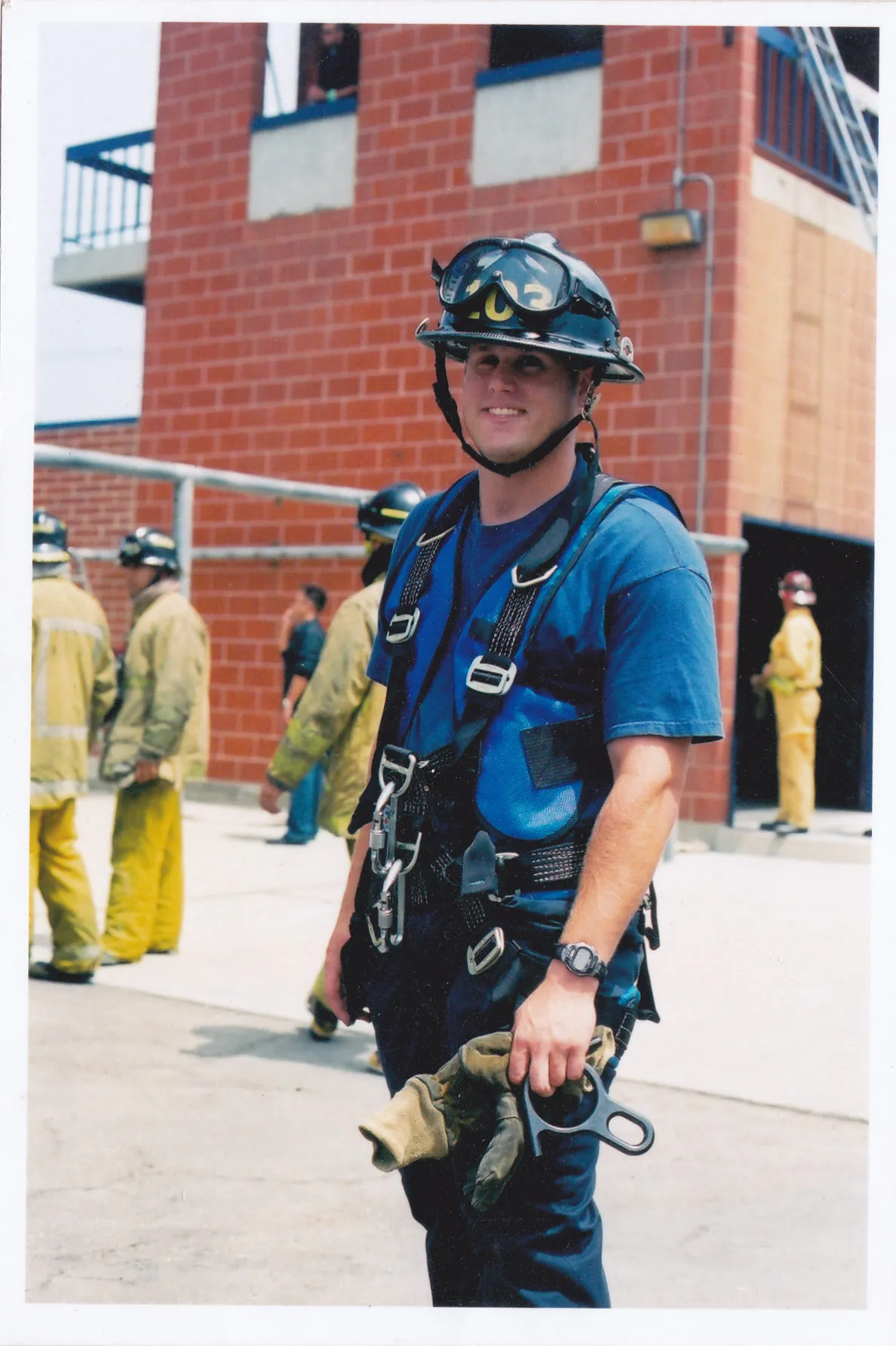
Volunteer firefighting — yes, it's a real thing you can do
Did you know you can become a volunteer firefighter and work at most public fire stations?
It's not easy. It is fun and rewarding. I went through the El Camino Fire Academy to get my certifications and then volunteered at several different stations across Southern California. Below is what the path actually looks like, what it costs you, and why I'd recommend it to anyone with the time and the appetite.

What "volunteer" actually means
It does not mean "show up at the station once a year and watch." Most fire departments that accept volunteers expect:
- Certification equivalent to a full-time firefighter (Firefighter I, sometimes Firefighter II)
- EMT certification at minimum, sometimes paramedic
- Weekly drill attendance — 2-4 hours a week, plus periodic full-shift training
- On-call availability — typically 24-72 hours a month of being actually on call, going on runs alongside paid crews
- Annual continuing education — wildland refreshers, hazmat operations, vehicle extrication
The training is real. The expectations are real. You are functionally a part-time professional firefighter; the only difference is the pay structure and how many hours you work.
What the fire academy is actually like
The El Camino Fire Academy's reputation is no joke. The core content meets the highest level of firefighter training — pump operations, vehicle extrication, structure fires, wildland ops, ropes and rescue. The physical fitness requirements for each recruit are strenuous and demanding. The academic standards are exceeded only by themselves.
What you actually do:
- 12-16 weeks of full-time training (or part-time over a longer period for volunteer-track candidates)
- A few hundred hours of classroom and field practical
- Live burn evolutions — yes, in a real burning building, in turnout gear, with an actual hose line
- Pump operations and apparatus driving
- Vehicle extrication ("the Jaws of Life is a real tool that real people use")
- Ropes and rescue, high-angle, confined space
- Hazmat operations
- The final practical exam, which is brutal and humbling
You will lose weight. You will gain muscle in places you didn't know existed. You will discover that wearing 60 pounds of gear in 90-degree heat is actually a skill, not just a condition.
Why I'd recommend it
A few reasons, in honest order:
- The training is portable. The certifications you walk out with — Firefighter I, EMT, hazmat operations — are useful in dozens of contexts beyond the station. Disaster response, search and rescue, even certain corporate safety roles. Real credentials.
- The community is unlike any other. Fire crews are small, tight, life-trusts-life teams. You will form friendships in 18 months that take 18 years in most other workplaces.
- You learn what an emergency actually feels like. Most adults have never been in a real emergency. After a year of volunteer service you will have been in dozens. The mental calibration this provides is irreversible.
- It compounds. Each run is a tiny apprenticeship in calm-under-pressure. Carries over to everything else — work, family, the merge onto the 405 at 5pm.
- It pays you back in identity. You will, occasionally, save someone's life or property. You don't talk about it much. You know.
The honest costs
- Time — see above; budget 80-120 hours a month if you go in serious
- Money — academy tuition (a few thousand), gear (your station may provide most of it), continuing education
- Family — the schedule eats nights and weekends; talk to your partner before you sign up, not after
- Risk — small but real. The training is good. Accidents still happen.
If full firefighting is too much, here's the lighter version
You can still help your city by becoming CERT (Community Emergency Response Team) certified. CERT is a 20-hour course; you walk out trained to assist your neighborhood in the first 72 hours of a disaster. Way less commitment, still meaningful, no on-call schedule.
Gratitude beat
Big thanks to every paid firefighter I trained next to who treated me like a real teammate even though I was the volunteer. The fire service has a culture of teach the one behind you that's increasingly rare in other professions. Thank you for the patience, the corrections, the occasional appropriate ribbing, and the trust on the rare calls where it mattered.
And to El Camino's academy staff: thank you for being uncompromising. The standards saved lives more than once. Thank you.